Portugal's Recovery Plan Runs Out of Calendar on Monday With Execution at 75 Percent and 14.46 Billion Euros Already in Beneficiaries' Hands
Castro Almeida takes stock of the PRR on Friday morning at Campus XXI, three days before the execution deadline. Works on schools, health centres and student residences will carry on past August, and the monitoring commission's chair warns the maintenance bill now lands on the state budget.

Portugal's Plano de Recuperação e Resiliência (Recovery and Resilience Plan, PRR) has one working day left. The deadline Brussels set for executing the plan falls on Monday, and on Friday morning at 10:30, at the government's Campus XXI headquarters in Lisbon, Economy and Territorial Cohesion Minister Manuel Castro Almeida takes stock of what was actually done with roughly 22 billion euros.
The last monitoring report from the Estrutura de Missão Recuperar Portugal puts execution at 75 percent. Payments to beneficiaries reached 14,463 million euros as of Wednesday, after another 163 million went out in the final week. Castro Almeida has repeatedly said he expects the plan to be executed in full, barring what he calls "some abnormality".
The deadline is formal, the concrete is not
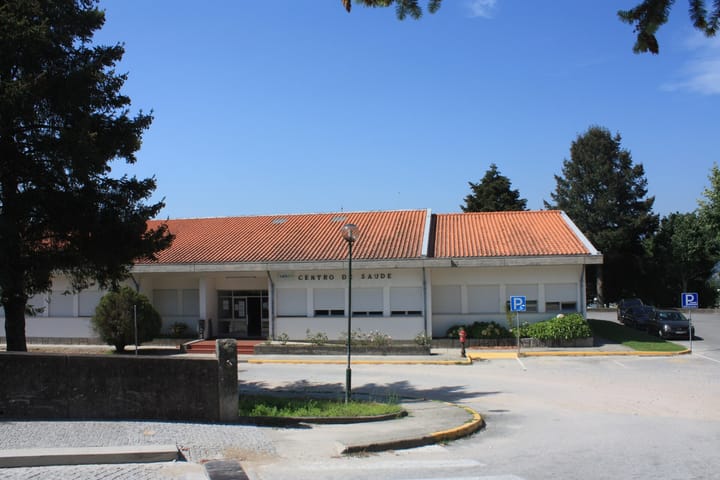
The distinction that matters for anyone living near a building site is between the deadline and the work. Pedro Dominguinhos, who chairs the plan's national monitoring commission, told Lusa that the final days will not be decisive and that Portugal has raised its odds of reaching 100 percent. He also said, plainly, that construction will carry on past August.
That applies to schools, health centres and student residences among others. In practice, the formal milestone is met when an investment reaches substantial completion; the scaffolding can stay up afterwards. It is a reading Brussels has accepted elsewhere, and it is the reason a plan at 75 percent execution can still be declared complete on paper.
What happens on Tuesday
Dominguinhos's warning is about the day after. Portugal, he argues, has to prepare for the post-plan period, because the projects still need money and that pressure lands on the state budget.
"The level of investment was particularly relevant, and the macroeconomic data, both national and from international bodies, show the importance of the PRR in keeping investment levels high, perhaps as never before," he said. But more important than the investments themselves, he added, is the capacity to sustain them, since that is how results and impacts are measured.
He put it in equipment terms. "It is not enough to have a computer platform, you have to maintain it. It is not enough to have a surgical robot, you need qualification and training for doctors and the rest of the staff, and the ability to buy the components for that robot." Brussels has been emphatic that assets financed by the plan must be kept for their stated purpose for at least five years.
How Portugal got here
The final stretch has been busy. Portugal filed a seventh and final revision of the plan in July to avoid returning money, having already banked a ninth tranche of 2.3 billion euros that lifted execution to its current level. In August the government pushed an extra 630 million euros into the health service and ordered four air ambulances against the same clock.
The construction sector is already looking past it. The builders' body AICCOPN has warned of a 2027 squeeze as the plan fades, and its most recent barometer counted 4.9 billion euros of public works out to tender by July, 28 percent below last year.
What This Means for Foreign Residents
- Nothing closes on Monday. If your local school, health centre or student residence is a PRR project and still unfinished, the work continues. The deadline is an accounting event, not a stop order.
- Watch the 2027 budget, not the ribbon-cuttings. The running costs of everything the plan bought now compete with other spending. That is where the real decisions about maintenance and staffing will be made.
- The five-year rule has teeth. Equipment and facilities financed by the plan must stay in their funded use. Expect this to shape how councils and health units allocate what they were given.
- Public works are slowing. If you follow local infrastructure, tendering volumes are already well below 2025. The pipeline after the PRR is thinner than the last two years suggested.