€4.9 Billion of Public Works Went Out to Tender by July, 28 Percent Below Last Year, Though July Itself Was 2026's Strongest Month
AICCOPN's latest barometer counts 3,477 tenders launched in seven months, down 31 percent. Contracts signed through open tender fell 34 percent, while direct awards and prior consultations grew 20 percent to €449 million.
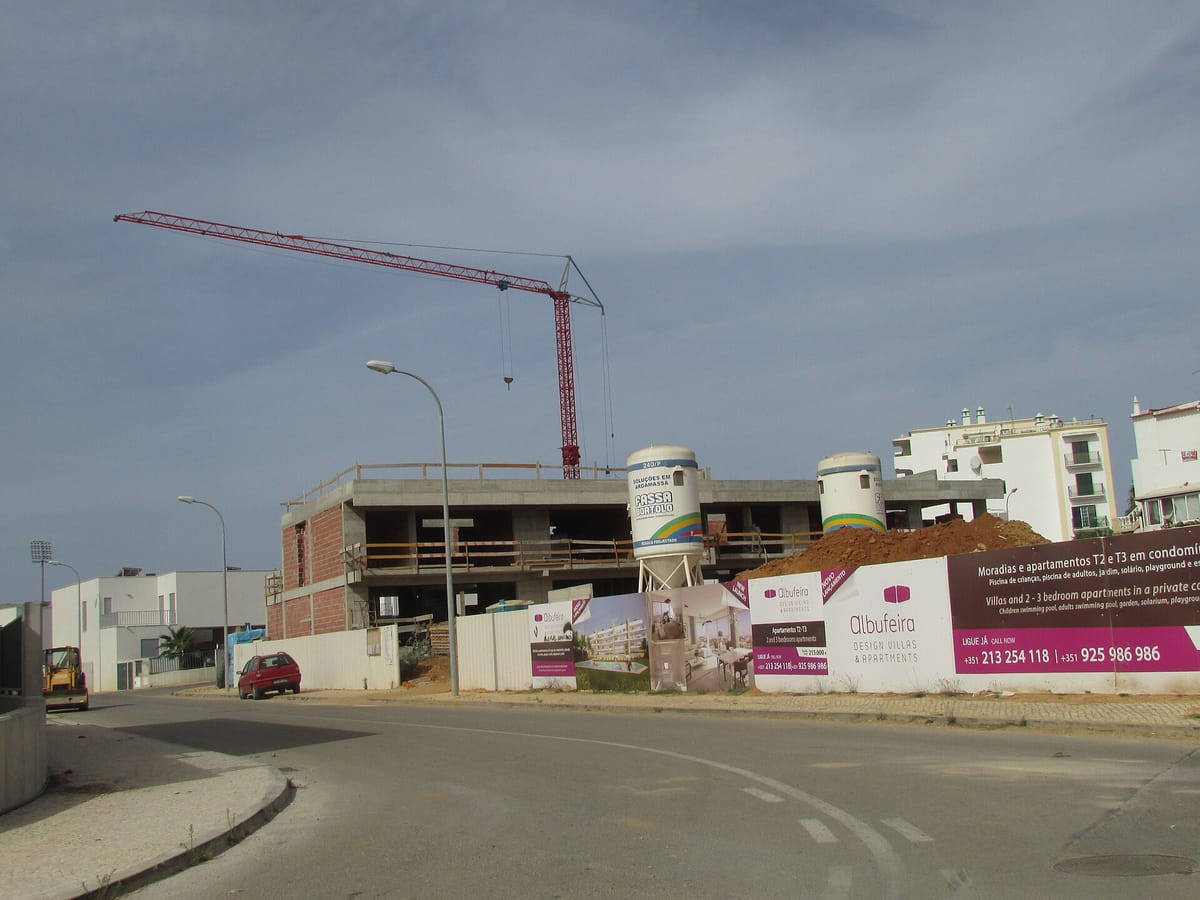
Portugal put €4,935 million of public works out to tender in the first seven months of 2026, 28 percent less than in the same period of 2025. The figure comes from the latest Barómetro das Obras Públicas published on Wednesday by AICCOPN, the national association of civil construction and public works contractors.
The count of procedures fell faster than the money. There were 3,477 public tenders launched between January and July, down 31 percent year on year. Fewer contests, and smaller ones.
The contracts side is worse than the tenders side
Tenders launched are a forward indicator. Contracts signed are what actually reaches a building site, and they are down more sharply.
Works contracts concluded exclusively through open tender and reported to the Portal BASE totalled €1,871 million, a year-on-year contraction of 34 percent. Taking all public works contracts signed and reported to the portal by 15 August, the total was €2,547 million, down 28 percent.
One line moved the other way. Contracts awarded through ajuste direto and consulta prévia, the direct-award and prior-consultation routes, grew 20 percent year on year to €449 million. The open-tender channel is shrinking; the discretionary channel is expanding.
That divergence is not accidental. In June this year the government raised direct-award ceilings and scrapped the mandatory execution-project review. When open tendering slows and direct award rises in the same year the thresholds were lifted, the composition of Portuguese public spending is changing as well as its volume.
July was the best month of the year
AICCOPN's own reading is not uniformly bleak. The association notes signs of monthly recovery, with July recording the best performance of the year so far, enough to soften the accumulated fall without reversing it.
That is a genuine improvement on where the series stood in mid-year. In July we reported the sector running 44 percent behind the previous year, with the builders' body warning of a 2027 squeeze. A 28 percent deficit is still a bad year; it is a considerably less bad year than 44 percent implied.
What is behind the fall
The dominant factor is the Recovery and Resilience Plan reaching its late stage. The PRR front-loaded an unusually large volume of public tendering into 2023 to 2025, and the comparison base for 2026 is therefore inflated. As those envelopes close, the flow drops back toward what ordinary state and municipal budgets sustain.
Cost is the second factor. Public bodies pricing works against a base built in a cheaper year find bids come in above budget, and the tender is pulled or relaunched. New-build construction costs climbed 6.9 percent in the year to May, driven by labour rather than materials, and company labour costs accelerated to 5.4 percent in the second quarter with construction pay leading.
What this means for you
- If you work in the sector: the private order book is carrying the industry this year. Labour demand is holding up because pay is rising, not because public volume is.
- If you are waiting on local infrastructure: a 31 percent drop in procedures launched is a queue that lengthens 18 to 30 months from now, not today. Municipal works announced this autumn will feel the gap in 2028.
- If you are buying or building: construction cost inflation running near 7 percent is the more immediate number for a household budget, and it is being driven by wages, which do not fall back the way material prices do.
- If you follow public spending: the €449 million direct-award line, growing while open tender contracts, is the figure worth tracking through the 2027 budget debate.
The next barometer will show whether July was a turn or a blip. Either way, the 2026 pipeline is thinner than the 2025 one by roughly a third, and the construction the state does not commission this year is construction that does not happen in 2028. On how a challenge to a public contract award is now handled, the ruling that restored a losing bidder's automatic suspension sets out the Court of Justice judgment of 17 September 2026 in Joined Cases C-266/25 and C-267/25, which found Article 25-A of the Public Procurement Code incompatible with the Remedies Directive because it let a contracting authority strip a challenge of its suspensive effect without the challenger being heard.