Portugal's Public Transport: Trains, Buses, Metro, and Getting Around Without a Car in 2026
Can you live in Portugal without a car? In Lisbon and Porto, absolutely. Elsewhere, it depends. Here's the reality of Portuguese public transport in 2026 — what works, what doesn't, and how to navigate it all. Lisbon's Transport Network Metro Four...
Can you live in Portugal without a car? In Lisbon and Porto, absolutely. Elsewhere, it depends. Here's the reality of Portuguese public transport in 2026 — what works, what doesn't, and how to navigate it all.
Lisbon's Transport Network
Metro
Four lines (Blue, Yellow, Green, Red), 56 stations, running from approximately 6:30am to 1:00am. Clean, efficient, and decorated with some of Europe's best station art (Olaias and Oriente are worth visiting just for the tiles).
- Coverage: Good in the centre but doesn't reach many residential areas (Benfica, Ajuda, much of the riverfront)
- Frequency: 3-8 minutes peak, 8-12 minutes off-peak
- Expansion: The Red Line extension to Alcântara is under construction (completion expected 2027-2028)
Trams and Elevadores
The iconic Tram 28 is now essentially a tourist attraction — expect 45-minute queues. Locals use Tram 25E for the same route with fewer crowds. The elevadores (funiculars) — Bica, Glória, Lavra — are charming but slow. The Elevador de Santa Justa is pure tourist trap (use the free walkway from Carmo instead).
Buses (Carris)
Extensive network covering areas the metro doesn't reach. The Carris app shows real-time arrivals. Key routes for expats:
- 728 — Restelo to Parque das Nações (riverfront route)
- 736 — Cais do Sodré to Campo de Ourique
- 744 — Marquês de Pombal to Moscavide (quick east-west)
Ferries (Transtejo/Soflusa)
Crossing the Tagus by ferry is both practical and spectacular. Key routes:
- Cais do Sodré → Cacilhas (10 min) — access to Almada, Costa da Caparica beaches
- Terreiro do Paço → Barreiro (30 min) — connects to CP train south
- Belém → Trafaria/Porto Brandão (20 min) — quiet riverside villages
The Navegante Pass
Portugal's best transport bargain. The navegante metropolitano pass costs €40/month and covers ALL public transport in the Lisbon metropolitan area: metro, buses, trains (CP within the zone), ferries, and trams. For a single municipality (e.g., just Lisbon), it's €30/month.
Compare with London (£170+/month for Zone 1-3) or Paris (€86.40/month for Zone 1-5). The navegante pass transformed Lisbon commuting when introduced in 2019.
Porto's Transport Network
Metro do Porto
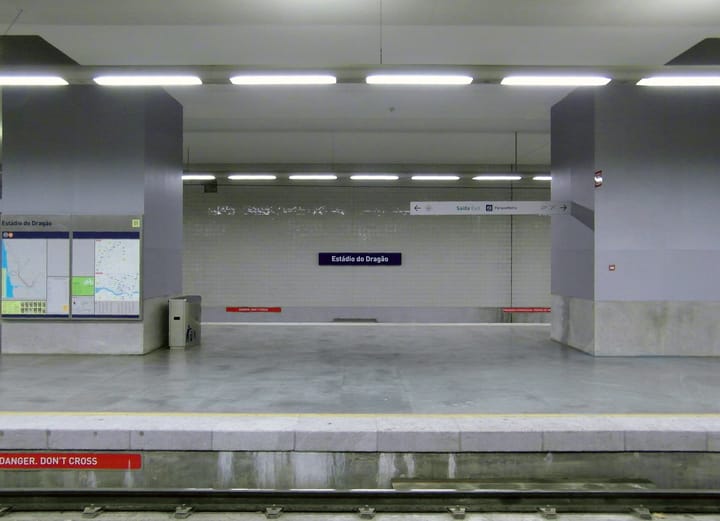
Six lines, mostly overground (light rail rather than underground), covering Porto and surrounding municipalities like Matosinhos, Maia, Vila Nova de Gaia, and Póvoa de Varzim. Runs 6:00am to 1:00am.
- Coverage: Better suburban reach than Lisbon's metro, but fewer central stations
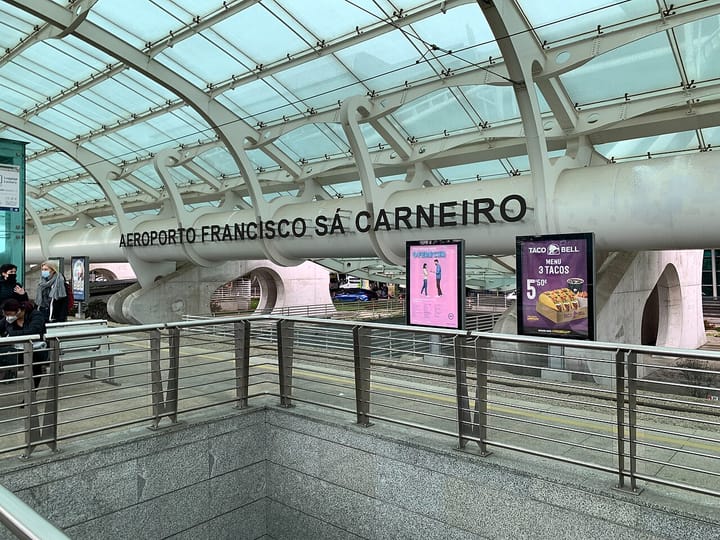
- Airport connection: Line E (Violet) runs directly to Francisco Sá Carneiro Airport — one of Europe's easiest airport transfers
- Expansion: The new Pink Line (crossing the river to Vila Nova de Gaia centre) is under construction
STCP Buses
Extensive but can be slow in traffic. The STCP app provides real-time information. Night buses (3 routes) operate after metro closes.
Andante Card
Porto uses the Andante card system with zones (Z2-Z12). Porto's equivalent of the navegante is the Andante pass — €40/month for the metropolitan area or €30 for just Porto municipality.
National Trains (CP — Comboios de Portugal)
Long-Distance Services
- Alfa Pendular — Portugal's fastest train. Braga → Porto → Coimbra → Lisbon → Faro. Lisbon-Porto in 2h40m, Lisbon-Faro in 3h20m. Book online at cp.pt for best prices (€15-30 advance vs €30-45 walk-up)
- Intercidades (IC) — Slightly slower, significantly cheaper. Same routes plus Guarda, Castelo Branco, Évora, Beja. Lisbon-Porto 3h10m for €20-25
- Internacional — Lisbon-Hendaye (connecting to France) and Porto-Vigo overnight services
Regional and Urban Trains
- Regional/InterRegional — slow but scenic, stopping at small towns. No reservations needed. Great for day trips
- Urban lines: Lisbon (Sintra, Cascais, Azambuja, Sado lines) and Porto (Aveiro, Braga, Guimarães, Marco, Caíde). Covered by navegante/Andante passes within zones
- Douro line — Porto to Pocinho, following the Douro River. One of Europe's most beautiful train journeys
Discounts
- Sub23 pass: Anyone under 23 gets free national transport (trains, buses, metro) — one of Europe's most generous youth schemes
- 65+ discount: 50% off CP trains
- Family discount: 50% off for accompanying children under 12
- Advance booking: Up to 60 days ahead on cp.pt for the best prices
Intercity Buses
Rede Expressos / FlixBus
For destinations poorly served by trains (much of inland Portugal), long-distance buses fill the gap:
- Rede Expressos (rede-expressos.pt) — Portugal's main intercity bus network. Comfortable, WiFi, USB charging. Lisbon-Porto from €15, Lisbon-Faro from €18
- FlixBus — competing on major routes with sometimes lower prices
- Rodaleste — northeastern routes (Bragança, Chaves)
Local/Regional Buses
This is where Portuguese transport gets frustrating. Rural and small-town bus services are often infrequent (2-3 per day), oriented toward school/market schedules, and virtually non-existent on weekends. If you're living in the Alentejo or interior, a car is essential.
The Car Question
Outside Lisbon and Porto, Portugal remains car-dependent. Key facts:
- Motorways: Excellent network but expensive tolls (Lisbon-Algarve ~€22 one way). Electronic tolling via Via Verde or temporary toll cards at post offices
- Fuel: Among Europe's most expensive (€1.65-1.80/litre petrol, March 2026)
- Parking: Lisbon and Porto centres are nightmares. Most expats in these cities go car-free
- Electric vehicles: Growing charging network (Mobi.E), incentives for purchase, but rural coverage still patchy
Ride-Sharing and Alternatives
- Bolt — the dominant ride-hailing app in Portugal (cheaper than Uber in most cases)
- Uber — available in major cities
- BlaBlaCar — intercity ride-sharing, popular for Lisbon-Porto and university routes
- Gira (Lisbon) — bike-sharing, €25/year unlimited 45-min rides. Electric and conventional bikes
- Lime/Bolt scooters — e-scooters in Lisbon and Porto (€0.15-0.25/min)
Tips for Expats
- Get the navegante/Andante immediately — the monthly savings are enormous vs single tickets
- Download the apps: CP (trains), Carris/STCP (buses), Moovit (multi-modal journey planner)
- Strikes happen: Transport unions strike periodically, usually with advance notice. Check DGERT for upcoming strike notices
- Night transport: Both Lisbon and Porto have limited night bus services. After 1am, plan for Bolt/Uber
- Validate your card: Inspections are random but fines are €100+. Always tap in
The bottom line: Portugal's major cities have surprisingly good, extremely affordable public transport. The suburbs are decent. The rural interior is car country. Choose your location accordingly, and if you're on a budget, Lisbon or Porto without a car is entirely viable — and often preferable to the stress of driving and parking in narrow medieval streets.
Related reading: ECO's Special Report Pegs the Linha Circular at €380 Million — Inside the 80% Cost Blowout and 30-Month Delay