Assembleia da República Ratifies the 2023 Lisbon Acordo on School Equivalence Between Portugal and Brazil — Ensino Fundamental and Médio Get Automatic Recognition, the Embassy Drops Its 16,000 Yearly Validations, and Higher Education Stays Outside Scope
The Assembleia da República closed the third anniversary of the Cimeira Luso-Brasileira on Friday by voting through the Acordo Complementar ao Tratado de Amizade, Cooperação e Consulta entre Portugal e Brasil, the 22 April 2023 Lisbon protocol that...
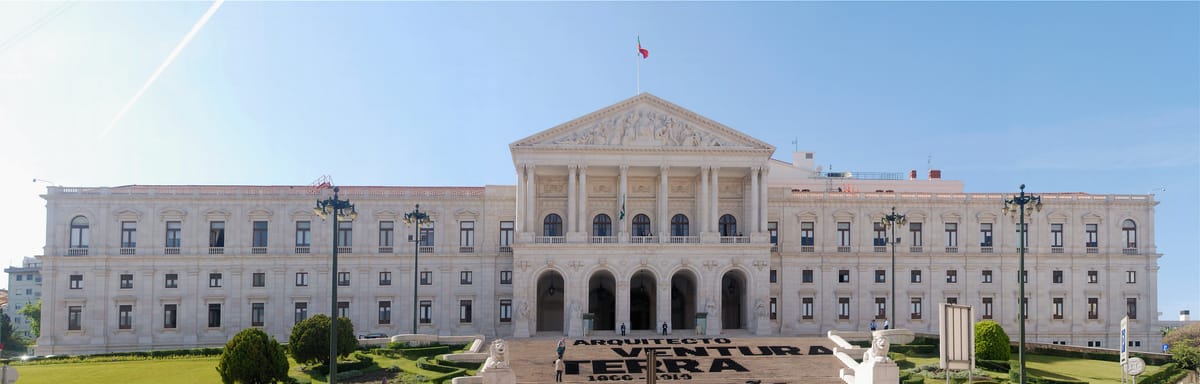
The Assembleia da República closed the third anniversary of the Cimeira Luso-Brasileira on Friday by voting through the Acordo Complementar ao Tratado de Amizade, Cooperação e Consulta entre Portugal e Brasil, the 22 April 2023 Lisbon protocol that swaps the embassy-stamped, paper-trail equivalência for an automatic, electronic recognition between the two basic-and-secondary school systems. Every parliamentary group voted yes; only Chega abstained. The agreement now needs publication in the Diário da República, promulgation by President António José Seguro and an exchange of ratification instruments with Brasília — at which point a two-year-old text written for an audience that has, in the meantime, become 49.5% of all foreign students in Portuguese public schools finally enters into force.
What was actually approved
The text the deputies voted on is a 10-article Acordo Complementar signed in Lisbon on 22 April 2023 by Lula da Silva and António Costa during the XIII Cimeira Luso-Brasileira, alongside twelve other bilateral instruments. It complements — but does not amend — the 22 April 2000 Tratado de Porto Seguro, the broader Treaty of Friendship, Cooperation and Consultation that committed both countries, in principle, to recognise each other's school qualifications without ever spelling out the mechanics. The new protocol does the spelling out. It binds Portugal's ensino básico (1.º, 2.º and 3.º ciclos, nine years) and ensino secundário (three years) to Brazil's ensino fundamental (nine years) and ensino médio (three years), and it attaches an annex with a comparative table of year-by-year correspondences that both education ministries are bound to keep current through a Comissão Técnica Bilateral.
Equivalence under the new regime turns on two parameters and only two: the number of school years successfully completed in the system of origin, and the nature of the course or formation followed. With those two pieces of data the receiving school in Lisbon, Porto, São Paulo or Recife is meant to slot the incoming student straight into the matching year, regardless of when the certificate of origin was issued. The text is explicit on the temporal clause — recognition applies independentemente da data de emissão do título ou certificado — which closes the gap that historically forced families to chase old cartórios for stamps before re-enrolling a child after a move.
The embassy stops being a bottleneck
The current process, the one the Acordo Complementar replaces, runs through the Brazilian Embassy in Lisbon for Brazilian-issued school records and through the Portuguese consular network for the reverse direction. The Embassy itself flagged the load when the agreement was signed: in 2025 it validated more than 16,000 Brazilian school records online for use in Portugal, with each file requiring a manual conformity check before a Portuguese school could accept it. Once the new regime is in force, the embassy step disappears. Validation moves to direct school-to-school transmission via the Bilateral Technical Commission's electronic platform, with the comparative-table annex acting as the lookup that the receiving institution applies on its own.
Secretary of State for Portuguese Communities Emídio Sousa told the chamber on Friday that the protocol was "particularly urgent given recent years' notable growth in Brazilian citizens seeking study in Portugal" — a reference to the 49.5% share Brazilian children now hold of all foreign students in Portuguese public schools in the 2024-2025 academic year. PSD's Paulo Edson Cunha framed the vote as a starting point rather than an end state: "this is not a static agreement," he said, signalling that the comparative-table annex will be reviewed periodically by the Comissão Técnica.
Higher education stays outside the scope
The text approved on Friday does not touch ensino superior. Bachelor's, master's and doctoral degrees still flow through the existing university-by-university recognition process — registo, equivalência or reconhecimento — administered by Portuguese institutions and the Direção-Geral do Ensino Superior under Decreto-Lei 66/2018. Live and Bloco de Esquerda used the floor on Friday to push the government to negotiate an analogous protocol for higher education, picking up a thread that has been live since the February 2026 bilateral summit in Brasília where university validation was kept off the agenda. The 2023 agreement itself acknowledges the gap: it leaves the door open to a future complementary text "specifically intended for recognising university qualifications."
Chega's abstention was the only break in the consensus. The party tied its position to the broader debate over Brazilian-community policy in Portugal, which had already filled the chamber earlier in the week through the nationality-loss diploma blocked twice by the Tribunal Constitucional. Livre's Rui Tavares and Chega's Rui Paulo Sousa exchanged sharp words during the debate over Lula da Silva's April visit to Lisbon, but neither speech materially affected the vote.
What it changes for families on the ground
The practical change for a Brazilian family enrolling a child in a Portuguese public school in September 2026 — or for a Portuguese family doing the reverse in São Paulo — depends on how quickly the two governments line up the exchange of ratification instruments. Until that exchange happens, the embassy-validation route remains the only legal path. Brazil's Câmara dos Deputados approved the agreement at the CREDN committee level in 2025; the Senate side and the formal exchange are still pending. Portuguese ratification on the Lisbon side now removes the last domestic blocker. Once the diplomatic notes are exchanged, the agreement enters into force "by an indefinite period," with the Comissão Técnica Bilateral as the standing forum for any disputes over how a particular Brazilian school year maps onto a particular Portuguese cycle.
For the 49.5% cohort already inside the Portuguese public-school system the change is administrative, not academic — files that today take weeks of embassy queueing should clear inside a normal enrolment cycle. For the cohort still arriving from Brazil it removes the pre-departure paperwork run that has historically discouraged mid-year transfers. For the universities, nothing yet changes — the higher-education protocol that Bloco and Livre asked for on Friday remains a 2024 promise that neither government has so far converted into a signed text. On the school-enrolment side, our 2026 practical guide to enrolling a child in a Portuguese public school for the 2026/2027 year — the Portal das Matrículas online flow, the pré-escolar and 1.º ano window closing 1 June, the 6.º-to-9.º and 11.º window 16-29 June, the 2.º-to-5.º window 1-13 July, the 10.º and 12.º window 15-22 July, the documentary chain, the área-de-influência prioritisation, the PLNM Português Língua Não Materna support and the equivalência-de-estudos track for foreign academic records sets the latest reference.