Parliament Approves the New RJIES — Polytechnics Become Polytechnic Universities, Rectors Are Elected by the Academic Community, and the Anti-Endogamy Lock Survives the Final Reading
The Assembleia da República approved the new Regime Jurídico das Instituições de Ensino Superior on Friday, closing a five-year reform cycle that the previous parliament had repeatedly opened and shelved. The vote pattern was the...
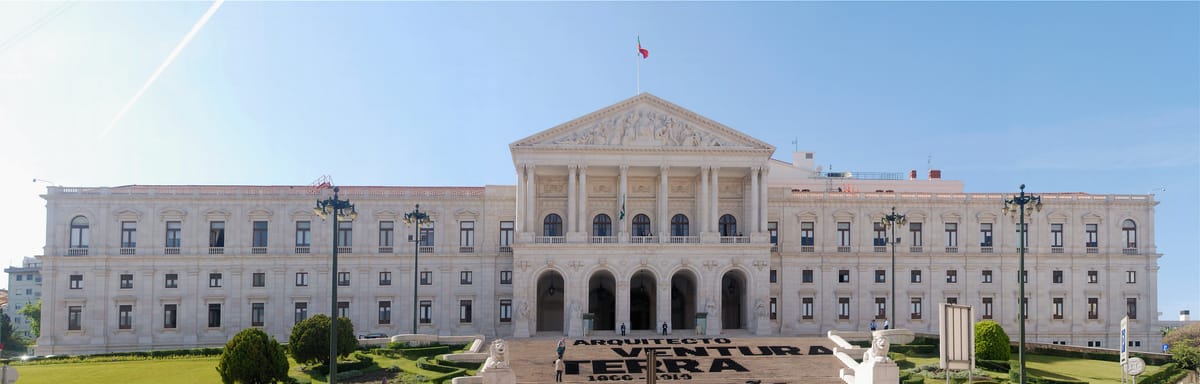
The Assembleia da República approved the new Regime Jurídico das Instituições de Ensino Superior on Friday, closing a five-year reform cycle that the previous parliament had repeatedly opened and shelved. The vote pattern was the right-wing-plus-Chega coalition that has been carrying most of the legislative agenda this session: PSD, CDS-PP, Chega and Iniciativa Liberal in favour, PS, PCP, BE and Livre against, PAN and JPP abstaining. The new RJIES is now headed for promulgation.
Polytechnics get the university label
The headline change is structural. Public polytechnic institutes that meet a quality threshold defined by the Agência de Avaliação e Acreditação do Ensino Superior (A3ES) will be entitled to convert into universidades politécnicas — keeping their applied-sciences vocation but gaining the right to award doctorates without the current dependence on partner universities. The decision had been telegraphed in the Government's December 2024 proposal and survived the parliamentary committee phase intact. Polytechnic students' unions have flagged a worry that the conversion will dilute the polytechnic identity; their position, formally registered in the Friday session by their representative association, is that the new framework "cannot decharacterise" the polytechnic subsystem.
Rectors elected by the academic community
The second structural change rewrites the governance model that has run Portuguese universities since the 2007 RJIES. Rectors will now be elected directly by the academic community — students, faculty and non-teaching staff — for a single mandate of six years. The current model, where the General Council appoints the rector after a closed deliberation, is replaced. The shift answers a long-running critique that the General Council route concentrated executive power in a small body whose external members were often appointed by the rector they were meant to oversee.
The anti-endogamy and anti-nepotism lock
The reform's quieter but more consequential clauses target academic endogamy and the nepotism circuits that the public RJIES debate has been chasing for a decade. External members of governing bodies can no longer hold teaching posts in any other Portuguese higher-education institution and cannot serve on more than one General Council. The new code retains the existing restriction on hiring teachers or researchers in organisational units with high endogamy rates if they obtained their doctorate from that same institution less than three years earlier. General Councils are given a five-year mandate, deliberately offset from the four-year mandate of the rectors they oversee — a structural separation designed to prevent the council and the rector from being elected by the same demographic in the same cycle.
Mergers between public and private — the contested clause
The most disputed clause in Friday's vote opens the door to mergers between public and private higher-education institutions, subject to A3ES vetting. PS, BE and PCP framed the clause as a privatisation route by stealth; PSD argued the merger pathway is the only realistic vehicle for the regional-network rationalisation the system needs over the coming decade. The clause survived without amendment. Whether any institution actually moves through it will depend on Government incentives and on the willingness of A3ES to greenlight cross-sector consolidations.
What the reform does and does not do
The new RJIES does not change the funding formula or the propinas regime, both of which run on separate legislation. It does not introduce tuition liberalisation. It does not directly address the precarity ladder for early-career researchers — that file remains with the FCT and the labour-package negotiations that broke down on Wednesday. What it does is open the polytechnic-to-university conversion path, hand election authority to the academic community, and tighten the structural separation between the people running an institution and the people scrutinising them. The reform takes effect at the start of the 2026/2027 academic year, with a transition period for institutions that need to redraw their statutes.
Sources: Assembleia da República plenary record (8 May 2026); Público; Observador; RTP.