Portugal's New Taxi Fare Rules Start on 14 October, Charging for Distance and Time Together Over the Whole Ride
The transport regulator has fixed 14 October as the start of Portugal's new national taxi tariff. As published in June, it sets a 2 euro flag fall, per-kilometre and per-minute prices capped for 2026, and higher time rates at night and weekends.
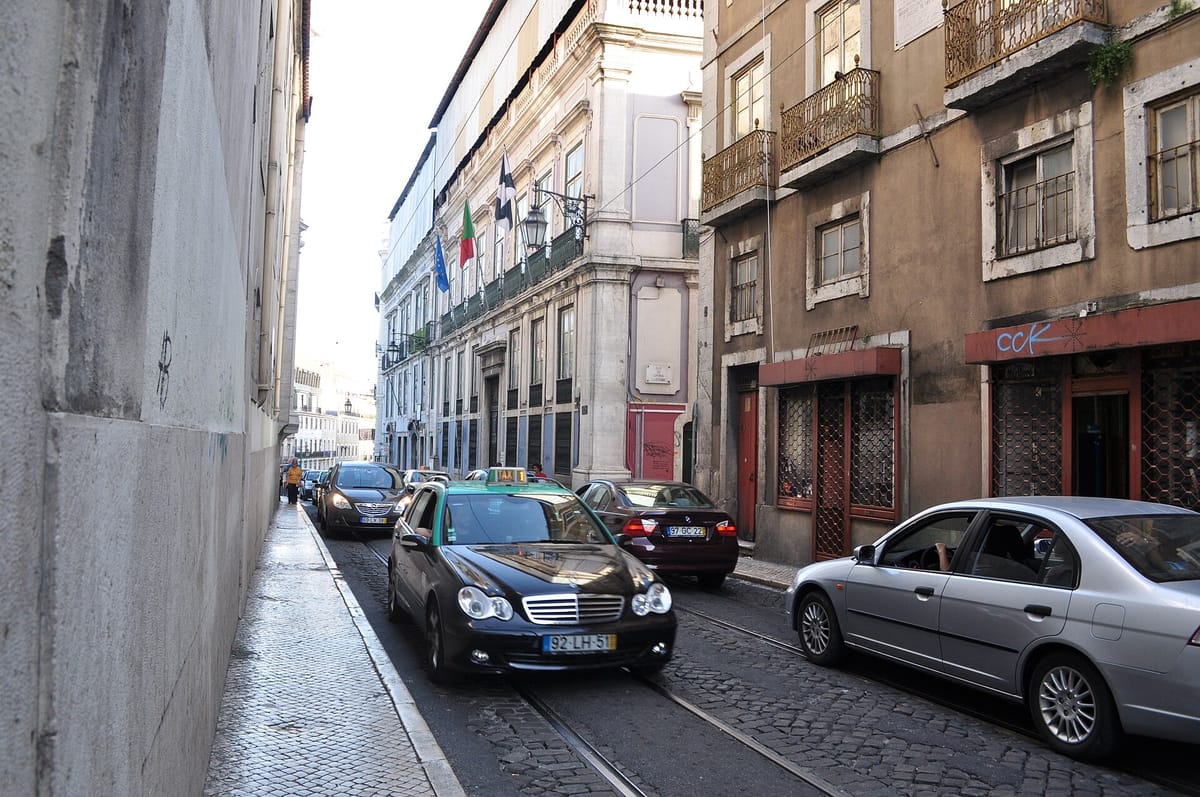
Portugal's new national rules for taxi fares will take effect on 14 October, the Autoridade da Mobilidade e dos Transportes (Mobility and Transport Authority, AMT) said in a statement dated 1 October. The regulation sets a simpler formula: a 2 euro starting charge, then a price per kilometre and a price per minute, which the AMT says are applied together over the whole journey, and it scraps most extra charges.
The date settles a question left open since the summer. The rules were published in the Diário da República (the official gazette) as Regulamento n.º 717/2026 on 9 June, suspended on 19 June after taxi associations asked for changes, and then tied by a further amendment at the end of July to the new ride-hailing law. That amendment set the start for the 30th day after the overhauled ride-hailing law came into force.
That law, Lei n.º 59/2026 (Law 59/2026), was published on 25 August and took effect on 1 September. The AMT said the 30 days are working days, under the Código do Procedimento Administrativo (Code of Administrative Procedure), which puts the start on 14 October.
The figures below are those of the regulation as published in June. The AMT's note says the regulation enters into force "adjusted": the extra 30 days were meant to let the regulator finish its analysis of how the taxi and ride-hailing laws fit together and make any changes it finds necessary, and it said earlier that it was weighing proposals from the taxi sector. By Sunday it had published no adjusted text, so the values could still change before 14 October.
How the new fare is worked out
The regulation, made under Decreto-Lei n.º 101/2023 (the 2023 decree-law on taxi services), sets a national reference tariff. Under its annex, a standard taxi carrying up to four passengers charges:
- a flag fall (bandeirada) of 2 euros, with no distance or time included;
- a price per kilometre that is the same everywhere, whatever the start and end of the trip and whatever the time of day or year;
- a price per minute for the whole length of the journey, raised by a multiplier at night and on weekends and public holidays: 1.25 on weekday nights, 1.50 on weekend and holiday days and 1.75 on weekend and holiday nights.
Daytime runs from 07:00 to 22:00 and night from 22:00 to 07:00. Taxis licensed for more than four passengers charge a 4 euro flag fall and double the reference price per kilometre, and must display a notice saying that their fare is higher.
The full reference values in the annex are 0.73 euros a kilometre and 0.34 euros a minute. They will not apply straight away. Because the AMT judged that the new model could mean significant fare rises, the regulation caps the increase in its first year, 2026, at 9 percent, and sets the prices that apply this year at 0.58 euros a kilometre and 0.28 euros a minute. Later updates are decided yearly by the AMT's board, depending on operating costs and on operators reporting the data the regulation requires.
As an illustration of our own, using the 2026 figures: a 10 kilometre weekday daytime ride lasting 20 minutes would come to 2 euros plus 5.80 euros for distance plus 5.60 euros for time, or 13.40 euros.
Fewer extras, and tolls on top
Most supplements disappear. The AMT said when it published the rules that only the charge for calling a taxi is kept: 0.80 euros when you book by phone, through a dispatch centre or through an app, which the driver must enter at the start of the trip and which must be visible on the meter. Motorway tolls are paid by the passenger and added to the amount on the meter.
From 2027, fares will be updated every 1 April. The price per kilometre and the flag fall follow the consumer price index excluding housing published by the Instituto Nacional de Estatística (Statistics Portugal, INE) each December, and the price per minute follows the national minimum wage.
Local transport authorities may still set their own fares, such as fixed prices to certain zones. At big hubs such as airports and cruise terminals, where fixed fares exist, the regulation says the option of paying by meter instead should be considered, posted where passengers are picked up and requested before the trip starts. That is relevant to Lisbon, where fixed fares from the airport begin on 15 October, the day after the national rules take effect.
Taxis booked through apps may offer a fixed price, the meter price or dynamic pricing, and the platform must show the price and formula, the driver's photograph, the registration and a button leading to the Livro de Reclamações Eletrónico (the official electronic complaints book).
Not every meter will change on day one
The regulation gives operators up to 70 days after it takes effect to adapt their meters to the new tariff, so for a while the price you see may still follow the old structure, depending on the car.
The two main taxi associations, the Federação Portuguesa do Táxi (Portuguese Taxi Federation, FPT) and the Associação Nacional dos Transportes Rodoviários em Automóveis Ligeiros (ANTRAL), asked the regulator over the summer for transition factors to avoid abrupt price shocks, and argued that the model favours big cities over low-density areas, according to the Lusa news agency.
What it means for you
If you take taxis regularly, slow journeys, night rides and weekend or holiday trips will weigh more on the time element, while a 2 euro flag fall is lower than today's, according to Lusa. Ask for a receipt if a fare looks wrong; the electronic complaints book and the AMT handle complaints. The rules apply in mainland Portugal; the Azores and Madeira can adopt them by decision of their regional governments.