Portugal's Long-Awaited Pension-Reform Report Reaches the Minister's Desk, but the Government Will Not Release It Yet
The expert group led by economist Jorge Bravo has delivered its report on the future of Social Security — covering complementary savings, early retirement and the TSU — but the government is holding it back until a disclosure event 'in the coming weeks,' as opposition parties demand to see it. What
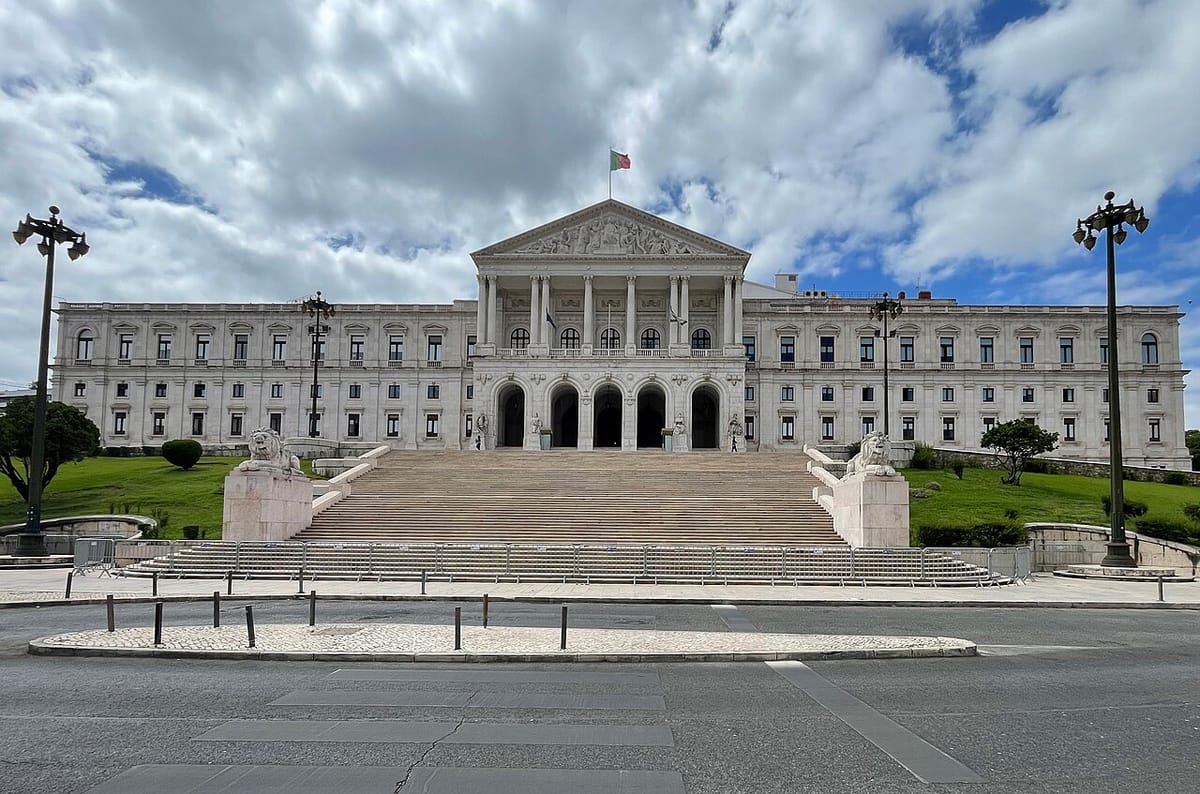
The report that could set the direction of Portugal's pension system for the next generation is now sitting with the government — but nobody outside it has been allowed to read it. The expert working group tasked with mapping the future of Social Security, led by the economist and pensions specialist Jorge Bravo, has delivered its final document to the Ministério do Trabalho, Solidariedade e Segurança Social (Ministry of Labour, Solidarity and Social Security), and the minister, Maria do Rosário Palma Ramalho, confirmed she received the completed version at the end of July. Publication, however, has been deferred to a formal presentation event the government says will come "in the coming weeks."
This is the next step in a process we flagged earlier this summer, when the report was still due. It has now actually landed — later than its original deadline, but with its remit intact. Rather than restate that background, the news here is that the document exists, is in the government's hands, and is being kept under wraps while the opposition pushes to see it.
What the report is meant to tackle
The group was created by ministerial order (Despacho 1452/2025) to look at the parts of the system that most directly shape how much people will eventually retire on, and how sustainable the whole apparatus is. Its brief covered four connected questions:
- Complementary and capitalisation pensions — how to build up a bigger role for supplementary retirement savings alongside the state pay-as-you-go pension, and whether any element of individual capitalisation should feature.
- Early retirement — a reassessment of the rules that let people draw a pension before the legal age, and the penalties attached to doing so.
- The TSU — an actuarial review of the Taxa Social Única (the Single Social Tax, the combined social-security contribution split between employer and worker), broken down across the different benefits it funds.
- Partial retirement — mechanisms that would let workers wind down gradually, drawing part of a pension while still working part-time.
The government has already signalled one limit on the debate. It has said there is no plan to swap the existing model for "individual capitalisation at the expense of complementary pensions," framing both as add-ons rather than a structural replacement for the public system. In plain terms: ministers are not, at least for now, proposing to privatise the core state pension, but they are interested in how private and workplace savings can be layered on top of it.
A fight over publishing it
The decision to hold the report back until a set-piece event — and to first send it to a range of "national and international reference institutions" for review — has drawn immediate fire from opposition parties. Both the Iniciativa Liberal (Liberal Initiative) and the Bloco de Esquerda (Left Bloc) have formally demanded access to the final document, arguing that a report on the future of everyone's pensions should not be kept from Parliament and the public while the government decides how to present it. The tug-of-war means the substance of the recommendations is likely to leak out in stages before any official release.
Why it matters for your retirement
Even without the text, the direction of travel is set by the system as it already works — and it is tightening. The legal retirement age has climbed to 66 years and nine months in 2026 and is due to rise again, to 66 years and eleven months, in 2027. Anyone retiring early faces the fator de sustentabilidade (sustainability factor), a cut that has grown to 17.63% this year on top of a further 0.5% reduction for each month drawn before the legal age. And Portugal's switch to a full-career formula for calculating new pensions is already trimming awards by around 10%. A reform package that leans harder on complementary savings would be a response to exactly these pressures.
For foreign residents building a retirement in Portugal, the practical reading is this:
- Nothing changes today. This is a report, not a law. Current rules on the retirement age, early-retirement penalties and the pension formula still apply, and any change would need legislation and, almost certainly, negotiation with the social partners.
- Watch the disclosure event. Once the report is public, it will frame the government's pension agenda — and, potentially, the 2027 budget debate. If early retirement or the TSU are in play, that has direct consequences for when and on how much you can retire.
- The steer toward complementary savings is the signal to act on. If the state pension is being nudged to do relatively less, private and workplace retirement savings do relatively more. Our guides to building a PPR (Plano Poupança Reforma) portfolio and to the Seguro Social Voluntário set out the two main ways residents top up their retirement.
- Know where you stand now. If you are near retirement, the current rules are what count — our guides to claiming the state old-age pension and to taking early retirement explain the thresholds and the penalties as they stand.
A locked-away report is, for the moment, mostly a political story. But the questions inside it — how long you must work, how much the state will pay, and how much you are expected to save yourself — are the ones that decide the shape of every resident's retirement. When it finally surfaces, it will be worth reading closely.