Portugal's Immigration 'Green Lane' Delivers 3,328 Work Visas in First Year — Mostly Agriculture and Construction
Portugal's Via Verde para a Imigração (Immigration Green Lane), a fast-track visa scheme launched in April 2025, processed 5,183 applications in its first year and approved 3,328 work visas—a 64% success rate. Agriculture absorbed 60% of new...

Portugal's Via Verde para a Imigração (Immigration Green Lane), a fast-track visa scheme launched in April 2025, processed 5,183 applications in its first year and approved 3,328 work visas—a 64% success rate. Agriculture absorbed 60% of new arrivals, construction 30%, with recent upticks in commerce, services, and manufacturing. The program, designed to channel regulated labor migration after the chaotic manifestação de interesse (expression of interest) era, is now the government's flagship model for employer-driven immigration.
The data, released by the Ministry of the Presidency to Rádio Observador, show applications originated from 34 consular posts across 29 countries, with the New Delhi consulate processing the highest volume. Average approval time: 21 days, compared to 90–180 days under standard procedures.
How the Green Lane Works
The protocol operates as a state-private partnership. Qualifying employers—companies with annual turnover above €20 million or 150+ employees, or members of participating business associations—submit documentation directly to the Directorate-General for Consular Affairs (DGCACCP). Consulates fast-track verification, while AIMA (the Agency for Integration, Migration, and Asylum) and border security authorities approve visas in parallel.
Employers must guarantee housing plans, Portuguese language training access, and professional development opportunities before workers arrive. This contrasts sharply with the manifestação de interesse system, abolished in 2023, which allowed migrants to enter on tourist visas and regularize later—creating a backlog of 400,000+ pending cases that paralyzed AIMA for over two years.
Secretary of State Rui Armindo Freitas described the scheme as "a confluence of government and business will" that "finally delivers a functional immigration system." He emphasized the Green Lane doesn't replace standard visa pathways but accelerates access for vetted employers with integration capacity.
Expat Implications: Labor Market and Economic Context
For foreign residents and aspiring immigrants, the Green Lane's success signals a structural shift: Portugal now prioritizes employer-sponsored immigration over speculative arrival. This mirrors trends in Canada's Express Entry or Germany's skilled-worker visa reforms, where demand-driven pathways replace open-door policies.
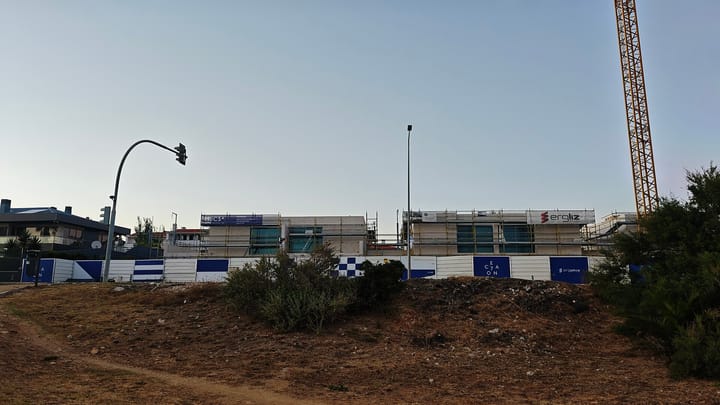
The sectoral breakdown reveals where demand concentrates. Agriculture's 60% share reflects chronic labor shortages in Alentejo's tomato, olive, and wine industries, exacerbated by rural depopulation. Construction's 30% reflects a housing boom driven by tax policy shifts and surging tourism infrastructure investment.
The growing interest from commerce and services suggests diversification beyond seasonal, low-wage sectors. This aligns with manufacturing resilience and digital economy growth, sectors where skilled foreign workers increasingly compete for roles once dominated by Portuguese nationals.
SME Access: The Association Workaround
Smaller companies—those below the €20 million or 150-employee thresholds—can access the Green Lane by joining signatory business associations. Freitas framed this as an intentional design: "The protocol ensures entities have organizational sophistication to comply." He urged micro-enterprises to join trade groups, calling it "motivation for greater associative vitality."
Critics argue the threshold excludes family-run businesses in hospitality and retail—sectors with equally acute labor shortages. However, the government maintains the Green Lane targets employers capable of providing integration infrastructure, not ad-hoc hiring.
Context: Post-Manifestação de Interesse Reforms
The Green Lane emerged from Portugal's reckoning with unregulated immigration. Between 2018 and 2023, manifestação de interesse allowed anyone to enter on a tourist visa, register intent to work, and wait—often years—for resolution. By 2024, AIMA faced a 400,000-case backlog, prompting what Freitas called "perhaps the biggest public administration operation in decades": 700,000 appointments (500,000 unique individuals) to clear pending files.
The chaos made Portugal "Europe's gateway for irregular immigration," Freitas said, with many arrivals disappearing before case resolution. The Green Lane represents the corrective: pre-vetted jobs, employer accountability, and consular verification before entry.
This shift mirrors Portugal's broader move toward administrative discipline, where reactive policy gives way to planned, data-driven governance.
Challenges Ahead
While the 64% approval rate suggests rigorous vetting, the 36% rejection rate—1,855 applications—raises questions about documentation quality, fraud risk, or employer non-compliance. The government hasn't disclosed rejection reasons, but consular officials in high-volume posts (New Delhi, Luanda, Brasília) have flagged forged contracts and misrepresented job offers.
Integration outcomes remain unmeasured. The program requires employers to provide housing and training, but AIMA lacks capacity to audit compliance post-arrival. Portugal's track record on immigrant integration is mixed: while municipal services struggle with waste and infrastructure, social cohesion indicators remain stable.
For expats evaluating Portugal's immigration landscape, the Green Lane offers a template: employer-backed pathways are viable, but speculative entry is over. Whether this model scales to Portugal's long-term demographic needs—700,000+ immigrants required by 2050 to stabilize the workforce—depends on business participation and state enforcement.
One year in, the Green Lane proves Portugal can run a functional immigration system. Whether it can run one at the scale the economy demands is the next test.
Related reading: Casais Crosses €1 Billion and Splits Into Four — 6,000-Employee Construction Group Launches Four SGPS Holdings On the listed-construction tape, our preview of Mota-Engil's Q1 2026 earnings (Wednesday 13 May, market close) sets the latest reference.