Portugal Lines Up Private Operators to Run Four CP Commuter Lines on Six-Year Contracts, With Cascais First
The Government plans to hand four of CP's busiest commuter lines — starting with Cascais — to private operators on six-year contracts, with tenders targeted for 2028. CP would keep its brand and the rest of the network, but workers call it a step toward privatisation.
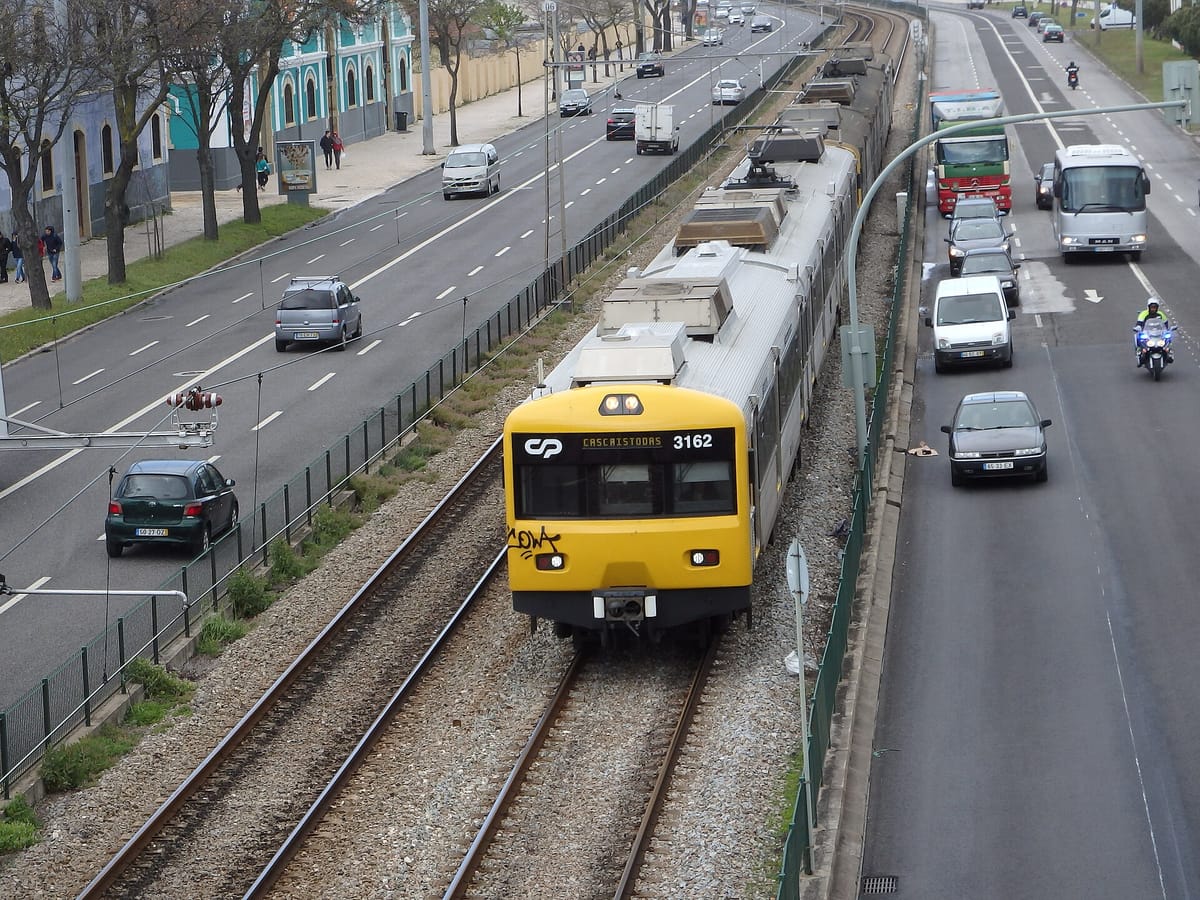
Portugal is preparing to open some of its busiest commuter railways to private operators for the first time, under a plan that would hand the running of four suburban lines now worked by the state operator CP (Comboios de Portugal) to outside companies on six-year contracts. The scheme is still at the study stage rather than out to tender, but the shape of it is now clear — and the Government intends to start with the Cascais line outside Lisbon.
The four lines in the frame are the urban and suburban services identified as candidates in CP's own analysis: Cascais, Sintra/Azambuja, the Sado line (Barreiro to the Praias do Sado) and the Porto suburban network. These are commuter routes, not the long-distance Intercidades or Alfa Pendular services, and between them they carry the bulk of CP's passengers.
How the model would work
Under the plan set out by the Ministry of Infrastructure and Housing, led by Miguel Pinto Luz, the first subconcessions would run for a reduced term of six years, to 2034 — the year CP's own extended public-service contract with the State expires. Officials describe the shorter term as a deliberate "learning period" for a sensitive change affecting CP's largest passenger segment. Private operators would initially pay CP rent for the trains they use, with an eventual option to buy rolling stock; the Government's longer-term ambition is for operators to supply their own trains under longer contracts.
Cascais is furthest along because it runs on its own, largely self-contained infrastructure, making it the simplest line to hand over as a standalone operation. It carried roughly 38 million passengers in 2024. Sintra, the highest-volume line, is more complicated because it is woven into the wider Lisbon network. A decision on whether to run a single tender or two is expected around September 2026, with tenders themselves targeted for 2028.
One constraint is shaping the whole exercise: EU rules cap how much of a country's public-transport service can be subconcessioned — no more than about a third, measured by value or distance — which is precisely why the Government has to be careful about how many lines it bundles into each tender.
Who might run the trains
Portugal already has one privately operated passenger railway: Fertagus, which has run trains across the 25 de Abril bridge since 1998 under a concession extended to 2031. Its shareholder Barraqueiro, along with the international operator Transdev, has signalled interest in the new subconcessions. The lines would keep the CP brand, and CP would continue to run every service not put out to tender — as well as remaining the sole operator of Portugal's future high-speed network, a separate project.
Pinto Luz has insisted there is "no attempt to privatise CP," noting the company turned a profit in 2025, and the plan is tied to the operator's largest-ever order of new trains — 153 units, of which 98 are earmarked for suburban lines, with deliveries due to begin in 2029. The intention is for the private operators to run those new trains.
The opposition
The move is contested. CP's workers' commission has called it "one more step in the privatisation of rail transport" and a "direct attack" on a strategic public company, arguing that carving out the profitable suburban lines would gravely undermine CP's finances — with public investment made but profits handed to private groups, as it says happened with Fertagus. The company's own president had already come out publicly against the idea earlier this year. No strike has been called over the plan so far.
What This Means for You
- If you commute by train around Lisbon or Porto: the day-to-day service you use could, within a few years, be run by a private operator rather than CP — starting with the Cascais line — though the CP brand and, for now, the network would stay in place.
- On fares and service: the Government has not published fare plans, and the Cascais mayor has floated the idea of free travel on that line, but nothing has been decided. Watch the tender terms in 2028 for how ticketing and service levels would be guaranteed.
- Timeline: this is a plan under study, not a done deal. A one-versus-two tender decision is due around September 2026, tenders in 2028, and new trains from 2029.
For residents who rely on Portugal's commuter rail, the practical question is less about who owns CP than about whether opening the lines to competition improves the frequency and reliability of a network Brussels has repeatedly flagged as thin outside the big cities. The answer will not arrive until the trains — and their new operators — actually do. On the rail and public-transport side of the file, the plan to widen the €20 Green Rail Pass to city suburbs sets out the promise to extend the flat-rate train pass into Lisbon and Porto. Update: the decree extending the 20-euro Green Rail Pass to Lisbon and Porto commuter trains and to Fertagus is in force from 26 September 2026; CP still has to set the start date and the rules of use. Update: the transport regulator's figures show the 20-euro Green Rail Pass more than doubled regional train journeys in 2025 while long-distance punctuality fell to 37 percent.