CP President Pedro Moreira Goes Public Against the Subconcession of the Suburban Lines — €430,000 Deloitte Study Lands on Pinto Luz's Desk and the Strategic Plan Has No Provision for It
CP president Pedro Moreira broke ranks publicly Monday at FEUP — the operator's strategic plan contains no provision for subconcessioning its most profitable suburban lines. Deloitte's €430,000 study landed on Pinto Luz's desk 24 April.
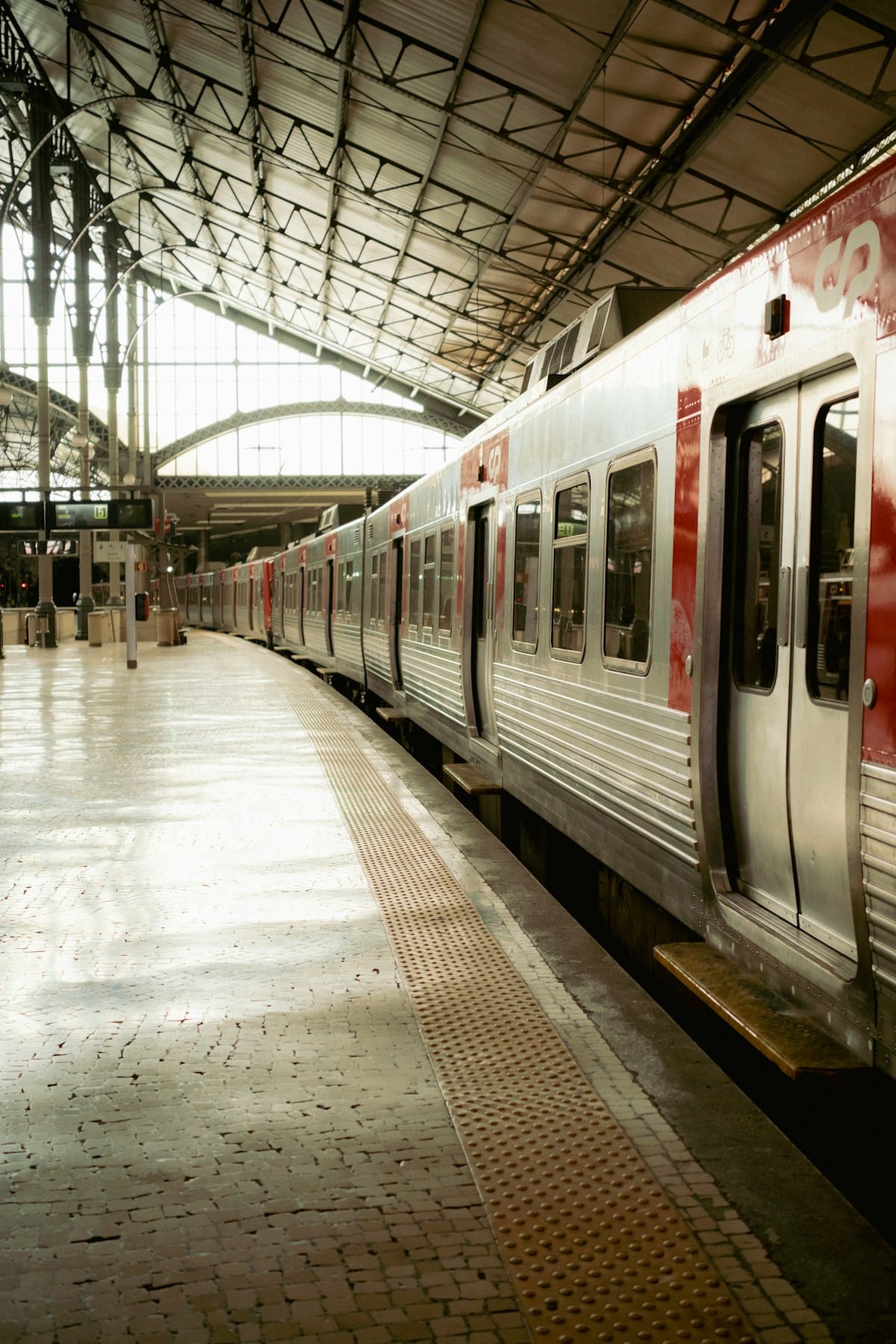
Pedro Moreira, the Comboios de Portugal president installed under the current government, used a Monday session at FEUP — the Faculty of Engineering of the University of Porto — to put on the record what every CP worker has been saying for months: the publicly-owned operator does not believe the subconcession of its most profitable suburban lines is a good idea. Público, which broke the story on Wednesday morning, quotes Moreira saying CP's concern is that, if the process advances, "the interests of the workers are safeguarded" and that subconcession should only proceed "if the conditions that are important for the operation are guaranteed." The intervention is unusually direct for the head of a state-owned company against an explicit cabinet plan.
What the Government Wants
Infrastructure Minister Miguel Pinto Luz has framed the project as a way to "empower CP, not deplete its capital." The mechanism on the table — and the one CP itself has been asked to model — would temporarily concession the operation of specific passenger services to private operators through competitive tender, while CP retains its position as network concessionaire and overall public-service obligation holder. The government has been consistent that this is not privatisation; the lines remain public, the trains remain public, and CP keeps the master concession.
The lines under study are some of the busiest and most profitable on the Portuguese network: Cascais, Sintra/Azambuja and Sado on the Lisbon side, and Aveiro, Guimarães, Braga and Marco on the Porto side. Together they carry the bulk of Portuguese commuter rail traffic and generate the operating margin that subsidises the long-distance and regional network. The choice of routes is what has made the proposal politically combustible: CP unions and the PCP have called the model "a step toward privatisation" precisely because the lines being earmarked are the ones whose revenue keeps the rest of the system running.
The Deloitte Study
The technical groundwork for the proposal is a €430,000 strategic-positioning study contracted from Deloitte on 6 October 2025 and delivered on 24 April 2026. It models how the suburban services could be opened to competitive tender, the operating-margin implications for what remains of CP, and the procurement architecture. Private operators Barraqueiro — owner of the Fertagus concession that already runs the cross-Tagus service to Setúbal — and the international group Transdev were consulted by Deloitte on preferred concession models, which gives a clear read on which counterparties the government expects to bid.
The detail Moreira flagged at FEUP is that CP's own strategic plan, the document the company submitted to its supervisory tutela, contains no provision for subconcessioning. The plan was built around the assumption that operational synergies between suburban, regional and long-distance services would stay inside one operator. Fragmenting the most lucrative segment, in CP's own modelling, costs the company those synergies and reduces its capacity to subsidise the unprofitable but legally mandatory parts of the network. This is the gap between government ambition and operator strategic plan that the next phase has to bridge.
The Political Calendar
Ten Socialist MPs filed parliamentary questions on the dossier on 19 March, and the government responded on 14 April. The Wednesday Público story is the first time CP's own president has gone on the record against the cabinet plan, and it lands the same week the company moves out of the state's budgetary perimeter — a structural reform we covered in early April that gives CP more management autonomy and, by design, more political space to push back. The tutela now has to choose: proceed with the model the Deloitte study supports, or accept that the operator it owns thinks the dossier needs more work.
What This Means for Expats
- Lisbon and Porto commuters are most exposed: Cascais, Sintra and the Porto-area lines you ride to work are the ones being modelled. Service quality, fare integration with Andante and Navegante, and timetable stability are all at stake in the next round of decisions.
- Subconcession is not privatisation, but it changes accountability: If a private operator runs your line, customer-service complaints and operational performance reporting move out of CP and into the concessionaire. The Autoridade da Mobilidade e dos Transportes will be your new touchpoint for systemic issues.
- Fares and passes likely stay structured under public-service obligations: The Lisbon and Porto metropolitan-area passes are anchored in legislation, not in the operator's commercial discretion. Any subconcession contract would inherit those obligations.
- Watch for the next governance move: CP just left the state's budgetary perimeter, which reduces direct cabinet control. If the government still pushes the subconcession through against the operator's stated position, expect that tension to surface in the autumn budget cycle.
- Network access is the structural variable: The competitive opening of European rail under EU law means private operators can already bid for paths on the Portuguese network independently of CP. The current subconcession debate is one of several routes by which the public monopoly is gradually being unbundled.
No firm timeline has been put on the next cabinet decision. Pinto Luz's ministry now holds both the Deloitte study and CP's strategic plan; the company's first-quarter operating numbers and the next ANTT tariff review will likely be the indicators that frame how the government times its response. On the rail-safety and infrastructure side, our 25 May read on the Eurostat 2024 rail-safety release — Portugal at the top of the EU fatalities-per-thousand-kilometres-of-network ranking at 6.2 deaths per 1,000 km against Hungary 5.8, Slovakia 5.7, Lithuania 4.6 and Poland 4.3, EU bloc toll easing 10.8% to 750 with 65.6% from unauthorised track intrusion and 25.5% at level crossings sets the latest reference. On the consumer-protection side of the file, our 30 May read on Friday's Conselho de Ministros consumer-facing package — a complementary Diretiva (UE) 2020/2184 drinking-water transposition adding the desalination and materials-in-contact layer to the 2023 statutory base, a standalone cross-modal passenger-rights statute covering road, rail, maritime and fluvial transport, and the merger of the old Direção-Geral do Consumidor into the new Direção-Geral da Defesa do Consumidor, Comércio e Serviços (DGDCCS) sets the latest reference. On the rail, CP and public-transport side of the file, the plan to open CP's commuter lines to private operators sets the latest reference.