Portugal Sends 57% of Waste to Landfills — Far Above EU Average and Among Europe's Worst Performers
Portugal remains among the European countries most dependent on landfills for waste disposal, with 57% of municipal waste sent to dumps in 2022 — well above the European and Central Asia average of 37%, according to the World Bank's *What a Waste...
Portugal remains among the European countries most dependent on landfills for waste disposal, with 57% of municipal waste sent to dumps in 2022 — well above the European and Central Asia average of 37%, according to the World Bank's *What a Waste 3.0* report released this week.
The data, based on figures provided by Portugal's Environmental Agency (APA), places the country alongside Malta, Romania, Greece, Cyprus, Bulgaria, Latvia, Hungary, and Croatia as the EU laggards in waste circularity.
In stark contrast, eight EU member states already send 5% or less of their waste to landfills, including Austria, Denmark, Belgium, the Netherlands, and Sweden. The European Union is on track to meet its 2035 target of reducing landfill disposal to 10% — but Portugal is not.
More Waste, Fewer People
The World Bank projects Portugal's waste generation will rise from 5.27 million tonnes in 2022 to 5.84 million tonnes by 2050 — a 10% increase — even as the country's population is expected to shrink from 10.4 million to 9.8 million over the same period.
The arithmetic is bleak: more waste, fewer people. Portugal's per capita waste generation stands at 519 kilograms per year (as of 2024 data from the National Waste Report), or roughly 1.4 kilograms per person per day.
For context, that's higher than the EU average and approaching the levels seen in wealthier northern European countries — but without the recycling and composting infrastructure those countries have built to manage the volume.
Why Portugal Lags
Portugal's recycling rate for municipal waste sits at 32% — less than half the EU target of 55% for 2025. The country met European packaging recycling targets for paper, plastic, metal, and wood in 2022, but fell short on glass (56.9%, missing the 60% target).
The deeper problem is systemic. Portugal's waste management infrastructure is fragmented, underfunded, and reliant on landfills as the default solution. The 2026 State Budget acknowledged the risk of imminent landfill capacity exhaustion and committed to the TERRA Action Plan as a structural response — but implementation timelines remain unclear.
Meanwhile, waste generation continues to climb. The 2024 National Waste Report recorded 5.55 million tonnes of municipal waste, up from 5.27 million in 2022 — an increase of 5.3% in two years, despite a stable or declining population.
What This Means for Expats
For foreign residents in Portugal, the waste crisis is both a daily reality and a policy failure that affects quality of life:
Municipal services: Waste collection in Portugal is generally reliable in urban areas, but recycling infrastructure — particularly for organic waste — remains patchy. Expats accustomed to comprehensive composting or multi-stream recycling systems will find Portugal's offerings limited, especially outside Lisbon and Porto.
Cost: The cost of waste management is embedded in municipal taxes (IMI) and waste collection fees. As landfill capacity tightens and EU penalties loom, those costs are likely to rise. Portugal already faces fines for missing EU recycling targets, and those penalties are typically passed on to taxpayers.
Environmental impact: Landfills are not just eyesores — they're methane emitters, groundwater contaminants, and biodiversity destroyers. Portugal's reliance on landfills undermines its ambitions to be a leader in renewable energy and climate policy. For expats who moved to Portugal partly for environmental reasons, the waste gap is a jarring disconnect.
Leading Cities Show What's Possible
The World Bank report highlights best practices that Portugal could emulate:
- **Ljubljana, Slovenia** recycles 68% of waste and reduced landfill use by 95% over the past decade.
- **San Francisco, USA** diverts 80% of waste from landfills through aggressive composting and recycling mandates.
- **Kamikatsu, Japan** recycles or composts over 80% of waste through a zero-waste community program.
Portugal's 32% recycling rate is less than half these benchmarks. The gap is not technological — it's political will, infrastructure investment, and behavior change.
Food Waste: Half a Kilo Per Person Per Day
Portugal also performs poorly on food waste. According to the National Statistics Institute (INE), each Portuguese resident discards 182.7 kilograms of food per year — roughly 500 grams per day.
In 2023, Portugal wasted 1.9 million tonnes of food, with 66.8% of that waste coming from households. The retail sector accounted for 12%, hospitality 11.5%, primary production 6.8%, and industry 2.9%.
For expats, this presents both a challenge and an opportunity. Portugal's food culture prizes fresh ingredients and home cooking, but the lack of food-sharing networks, surplus redistribution systems, and composting options means much of what's bought goes uneaten and unrecovered.
The Path Forward
Portugal has the policy frameworks in place — the TERRA Plan, packaging extended producer responsibility, and EU directives on waste reduction. What it lacks is execution. The country needs:. (Background: see our piece on the EuroVelo 1 Atlantic Coast and Ecovia do Litoral guide.)
- **Organic waste infrastructure:** Separate collection and composting for food and garden waste, especially in urban areas.
- **Deposit return systems:** Proven to boost recycling rates for bottles and cans.
- **Behavioral campaigns:** Public education on waste separation and reduction.
- **Enforcement:** Fines for non-compliance and incentives for municipalities that hit recycling targets.
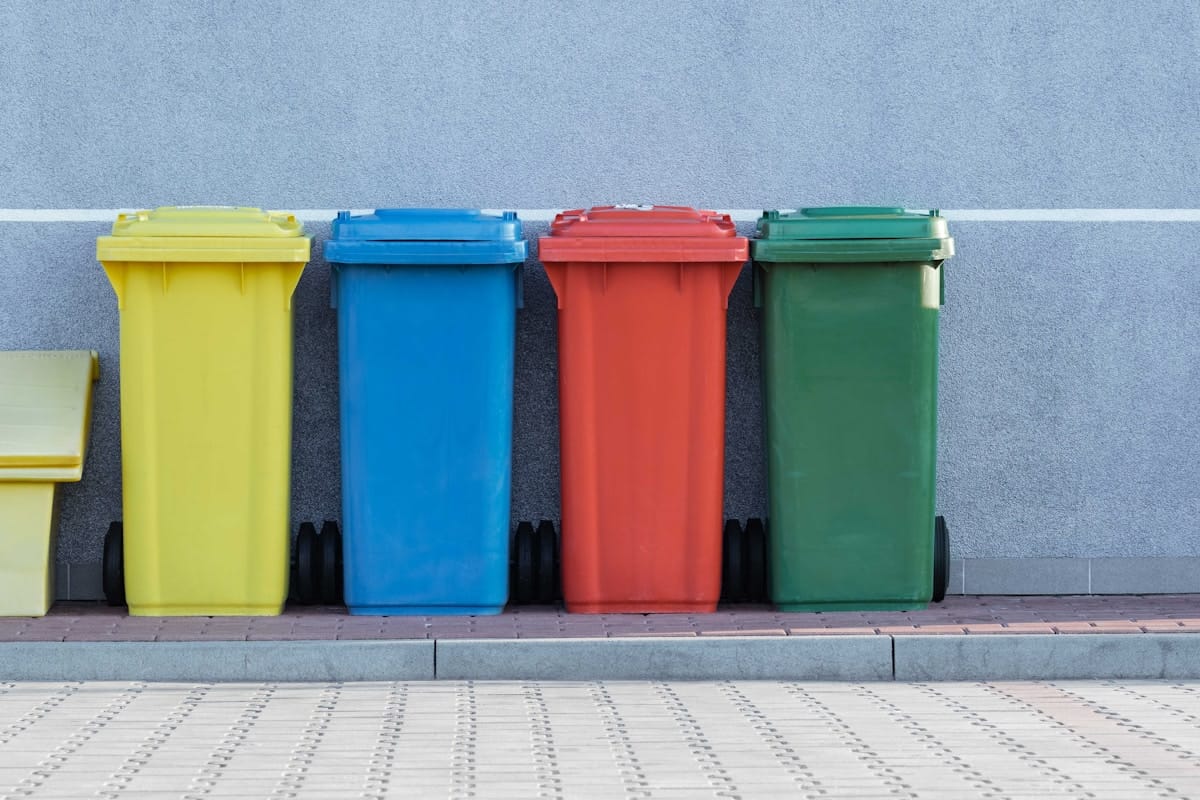
For now, Portugal's waste is a story of opportunity lost. The country collects almost all of its waste — a luxury many lower-income nations don't have — but then buries most of it. Until that changes, Portugal will remain an environmental laggard in a bloc that's setting the global standard for circularity. For foreign residents on the Portuguese household-waste rail, our 2026 guide to recycling and household waste in Portugal — the four Ecoponto colour codes, the biorresíduos rollout under Decreto-Lei 102-D/2020, the new Volta deposit-return system for beverage containers, and the dedicated channels for oil, batteries, electronics, monstros and textiles sets the latest reference.