Healthcare in Portugal
Researched and written with AI tools from official sources. How we make our guides
How Portugal's public health service works for residents: who can use it, what you pay, prescriptions, private insurance, and what to do in an emergency.
Last verified: October 2026.
Who this is for
- You are moving to Portugal, from the EU or outside it, and want to know how healthcare works.
- You arrived on a visa with travel insurance and want to know what it does not cover.
- You are deciding whether to add private insurance, or need a pharmacy, a specialist, or emergency care.
Not for you if: you only need the steps to get your health user number at the health centre. Read Registering with the SNS in Portugal instead.
Updated October 2026. Since March 2026, a person with a family doctor who has had no contact with the public health service for more than five years loses that doctor. They keep their registration.
Portugal has a public National Health Service, the Serviço Nacional de Saúde (SNS), that every legal resident can use. Most care in it is free: family doctor visits, tests your doctor orders, hospital care, and surgery. The only common charge is €14 to €18 if you walk into a hospital emergency department without being referred. You register at your local health centre, which takes one visit and costs nothing. Many residents also use private clinics for faster specialist appointments. This guide explains how the two fit together.
How the SNS is organised
The SNS is funded by taxes and run by the Ministry of Health. On the mainland, each area is run by a local health unit (Unidade Local de Saúde, or ULS). It combines the area's health centres and its hospital. You will deal with three parts of it.
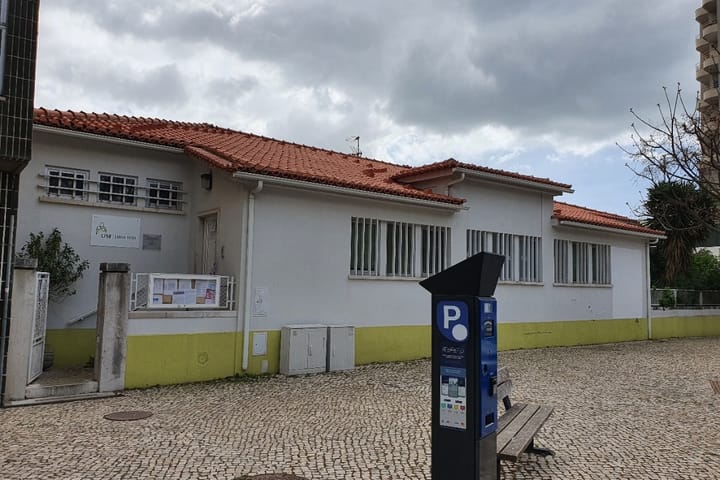
- The health centre (centro de saúde). Your first stop for anything that is not an emergency. Your family doctor (médico de família), nurses, vaccinations, and referrals are here. Health centres also offer psychology, nutrition, and oral health care.
- The hospital. Specialist appointments, tests the health centre cannot do, surgery, and the emergency department (urgência).
- SNS 24. The phone line (808 24 24 24), website, and app. Nurses answer clinical calls 24 hours a day. Administrative questions are answered from 08:00 to 22:00. A call costs the same as a call to a landline.
The weakness of the SNS is access, not quality. In June 2026, about 1.67 million of the 10.8 million people registered at a health centre had no family doctor. Where you live matters far more than your nationality (see "Getting a family doctor" below).
Who can use the SNS
You can register with the SNS and have it pay for your care if you are:
- A Portuguese citizen.
- An EU, EEA, or Swiss citizen living in Portugal.
- A non-EU citizen with a valid residence permit.
- An applicant for, or holder of, international protection.
- A child under 18 living in Portugal. Children do not need a residence permit or a tax number (NIF) for full cover. They have 90 days after turning 18 to provide them.
If you have no residence permit yet, you can still get a health user number. But the SNS only pays for your care once your record holds an identity document, a NIF, a full Portuguese address, and a valid residence permit.
If you have lived here more than 90 days without legal status, you can still get urgent and vital care paid by the SNS. Bring a certificate from your parish council (junta de freguesia) showing more than 90 days of residence, every time you need care. Some care is free whatever your status. This includes maternity and child health, family planning, and vaccinations.
If you are a visitor, you do not register. EU visitors use their European Health Insurance Card (EHIC) for medically necessary care. UK visitors use the GHIC or a UK EHIC. Everyone else pays or claims on travel insurance. Any hospital emergency department will treat you in an emergency.
Before you register: the travel insurance gap
If you came on a national visa (D7, D8, D2, and so on), you probably bought travel insurance for the application. Read the policy. Visa policies usually cover urgent care and repatriation. Most do not cover routine GP visits, repeat prescriptions, long-term conditions, dental care, or physiotherapy.
Until your SNS record is complete, that policy and paid private clinics are what you have. So do things in this order:
- Get your NIF (tax number). The health centre needs it for a complete record. See Getting a NIF (Tax Number) in Portugal.
- Register at your health centre as soon as you have your residence document. Do not wait until you are ill.
- Decide about private insurance once you know how long you will wait for a family doctor where you live.
How to register
You register in person at the health centre for your address. If you do not know which one that is, call SNS 24 on 808 24 24 24. If you do not have a health user number (número de utente) yet, you get it at the same visit. Registration is free.
Bring:
- Your passport or national ID card.
- Your residence permit, or your EU registration certificate from the town hall (Câmara Municipal).
- Your NIF.
- Your full address in Portugal, with proof such as a rental contract or a utility bill.
- Proof of any health benefits you have, such as an exemption or an S1 form.
One visit for three numbers. You can ask for your NIF, social security number (NISS), and health user number together. This works if you have asked for or hold a residence permit, are an EU citizen, or have applied for international protection. You do this at one of 12 Espaços Cidadão (citizen service desks), including Braga, Porto, Lisbon, Loures, Setúbal, Lagos, and Olhão. It is free. This gives you the numbers, but it does not enrol you at a health centre. You still go to your centre afterwards.
The full steps, the record statuses, and what to do if your record is marked incomplete are in Registering with the SNS in Portugal.
If you are an EU, EEA, Swiss, or UK pensioner, the country that pays your state pension usually pays for your Portuguese healthcare. Ask that country for an S1 form. Register it at a Segurança Social office first, then take it to your health centre. If you start working in Portugal, you normally move to Portuguese cover instead.
Getting a family doctor
Once your record is complete, ask to be put on the list for a family doctor. In June 2026, the share of registered people with a family doctor was:
| Region | Share with a family doctor (June 2026) |
|---|---|
| North | 97.6% |
| Centre | 90.5% |
| Alentejo | 81.3% |
| Algarve | 78.2% |
| Lisbon and Tagus Valley | 70.0% |
Pregnant women, people with several chronic conditions, and families with children under 12 get priority when a place opens.
While you wait, you can still use the health centre. You can be seen by the doctor on duty for same-day problems, see a nurse, and get vaccinations. SNS 24 can book you in.
The five-year rule. If you have a family doctor but no contact with any SNS service for more than five years, you lose the doctor. You keep your registration and can still use the health centre. In a household with children under 18, at least one adult keeps the doctor.
What the SNS costs
Since June 2022 the SNS has charged almost nothing. These are free:
- Family doctor and nurse appointments at the health centre.
- Same-day appointments at the health centre.
- Tests and scans ordered by an SNS doctor.
- Hospital specialist appointments on an SNS referral.
- Hospital stays, surgery, maternity care, and vaccinations.
The one charge left is a hospital emergency visit you make on your own, without a referral, when you are not admitted.
| Type of emergency department | Fee |
|---|---|
| Basic emergency service (urgência básica) | €14 |
| Medical and surgical emergency (urgência médico-cirúrgica) | €16 |
| Large central hospital (urgência polivalente) | €18 |
| Most you pay for one visit, including tests | €40 |
You pay nothing if SNS 24, your health centre, or the INEM ambulance service sent you there, or if you are admitted. If you cannot pay on the day, you have 10 days from when you are notified.
You pay nothing at all if you are exempt. The exempt groups include:
- Pregnant women and women who have just given birth.
- Everyone under 18.
- People with a disability rating of 60% or more.
- Unemployed people registered at the job centre, with their spouse and dependants (an income limit applies).
- Voluntary blood donors, and living organ and tissue donors.
- Transplant patients, firefighters, and asylum seekers and refugees.
- Households on a low income.
The low-income exemption. Your household qualifies if its average monthly income per person is €805.70 or less in 2026. To work it out, add up the gross yearly income of everyone on the same tax return. Divide by the number of people, then by 12. You apply online in your SNS 24 personal area, under "Documentos e Certificados" then "Taxas Moderadoras". You can also apply at your health centre, a Balcão SNS 24, or an Espaço Cidadão that offers it. It is free and decided within 10 working days.
You carry no paper; the exemption sits on your record. It is checked again every year by 30 September using your tax data.
Prescriptions and pharmacies
Prescriptions are electronic. Your doctor sends you a message with the prescription number and codes. Any pharmacy can dispense it, and you can collect items at different pharmacies or at different times.
The State pays part of the price of most prescribed medicines. There are four levels:
| Level | State pays |
|---|---|
| A | 90% |
| B | 69% |
| C | 37% |
| D | 15% |
Pensioners on a low income get more: 5 percentage points more on level A and 15 more on levels B, C, and D. The income limit is a household income of no more than 14 times the monthly minimum wage a year.
Where a cheaper equivalent exists, the pharmacist must tell you about it. Bring a list of your current medicines with their active ingredients. Brand names often differ from country to country.
Duty pharmacies. Every pharmacy must post the local rota of duty pharmacies (farmácias de serviço) where you can see it. A duty pharmacy may charge up to €2.50 extra per customer outside normal hours. It cannot charge this if you bring a prescription dated that day or the day before.
Specialists, tests, and surgery
Your family doctor is the gatekeeper. If you need a specialist, the doctor refers you and you join the hospital's list for a first appointment. The SNS sets maximum guaranteed waiting times, graded by clinical priority. Waits for some specialties can still be long.
The government is moving to a new system for surgery waiting lists. When your hospital is at risk of missing the maximum time, you will be able to choose another SNS, private, or social sector hospital. In August 2026 the Ministry of Health said the system was still being tested. It will launch fully only when the move is safe. Do not plan around it yet.
Private healthcare and insurance
Portugal has a large private sector of hospitals and clinics. Many residents use it for a quick specialist opinion, scans, dental care, and physiotherapy. They keep the SNS for their family doctor, prescriptions, maternity care, and anything that needs a hospital stay. You can mix the two freely.
Paying directly. Private prices are not regulated. Ask the clinic for a quote before you book.
Private health insurance. Portuguese insurers sell individual and family plans, and many employers offer group cover. Before you buy, check three things:
- Waiting periods before some types of care are covered, such as hospital stays.
- Exclusions for conditions you already have.
- Yearly limits for each type of care, and the co-payment per appointment.
Prices depend on your age and the cover you choose. Get quotes directly from insurers.
International insurance covers you outside Portugal too, usually at a much higher price. It can make sense if you travel a lot or have a condition Portuguese insurers will not cover.
ADSE. If you work for the Portuguese State, you can join ADSE, the public sector health scheme. Members pay 3.5% of their salary or pension. It gives lower prices at private providers that have an agreement with it.
Dental, eye, and mental health care
Dental. The SNS covers little adult dental care, although some health centres have oral health services. Plan to pay privately or through insurance. The dental voucher scheme (cheque-dentista) covers children and young people at set ages and pregnant women followed by the SNS. It also covers older people receiving the Complemento Solidário para Idosos and people living with HIV. Ask at your health centre.
Eyes. You can see an eye specialist through the SNS on a referral. Plan to pay for glasses and contact lenses yourself.
Mental health. Health centres offer psychology services, and hospitals have psychiatry. The wait can be long. For support now, the SNS 24 line (808 24 24 24) has a psychological counselling service in Portuguese and English.
Emergencies
Call 112 for any emergency: medical, fire, or police. Calls are free. For a medical emergency the call goes to INEM, which sends the ambulance.
Go straight to the hospital emergency department for chest pain, signs of a stroke, difficulty breathing, heavy bleeding, a serious injury, or a severe allergic reaction. It is open 24 hours and treats everyone. Patients are seen in order of how urgent their condition is, not in order of arrival.
For everything else, call SNS 24 first on 808 24 24 24. A nurse will give advice, book a same-day appointment at your health centre, or refer you to the right emergency department. A referral from SNS 24 also means you pay no emergency fee.
Private emergency departments are often faster for minor problems if you are willing to pay or your insurance covers it. For anything life-threatening, call 112.
Using your EHIC when you travel
Once you are registered with both the SNS and Segurança Social, you can ask Segurança Social for a Portuguese European Health Insurance Card. You need your NISS and your health user number. Apply online in Segurança Social Direta, or at a Segurança Social office or a Loja do Cidadão. It is free, arrives by post in 5 to 7 working days, and lasts three years. If you travel within 10 days and the card has not arrived, ask for a provisional replacement certificate. It covers you for three months.
If you are covered by an S1 from another country, that country issues your EHIC instead. UK pensioners with a registered S1 get a UK-issued card.
Common problems
- Not registering because you have insurance. Register anyway. It is free, and it is the only way to get free hospital care and subsidised medicines.
- Treating your visa policy as health cover. It is mostly for emergencies and repatriation, and it runs out. Register with the SNS in your first months.
- Leaving your record incomplete. If data is missing after 180 days, your record is marked incomplete. The SNS does not pay for your care until you complete it.
- Using an EHIC after you move. The EHIC is for temporary stays. Once you live here, register with the SNS, or with an S1 if one applies to you.
- Going to the emergency department with a sore throat. You will wait for hours and may pay a fee. Call SNS 24.
- Arriving without records. Bring a summary of your medical history, your current prescriptions, and your vaccination records.
If something goes wrong
Every health provider, public or private, must have a complaints book (livro de reclamações). You can also complain directly to the health regulator, the Entidade Reguladora da Saúde (ERS), by letter or through the form on its website. Its helpline is 309 309 309. For private and social sector providers, you can also use the electronic complaints book at livroreclamacoes.pt.
After you are registered
- Set up the SNS 24 app. You can see prescriptions, test results, and vaccinations, and book health centre appointments.
- Keep your address and phone number up to date at the health centre. Moving house? See Changing Your Registered Address in Portugal.
- Go to your first family doctor appointment when it comes, even if you feel well. It puts your history and prescriptions on file.
- Retiring here? Retiring in Portugal covers healthcare alongside visas, pensions, and tax.
This guide is general information, not medical or legal advice. Rules change; check the official source before you act, and in an emergency call 112.
Sources
This guide is written from official sources and, where relevant, organisations' own websites.
- gov.pt, registering at a health centre: https://www.gov.pt/servicos/inscrever-se-no-centro-de-saude (who can register, documents, number issued at the centre, SNS 24 to find your centre), checked 1 October 2026
- gov.pt, getting an SNS user number: https://www.gov.pt/pt/servicos/pedir-o-numero-de-utente-do-sns (number on first visit; data needed for the SNS to pay), checked 1 October 2026
- gov.pt, Migrantes: cuidados de saúde em Portugal (updated 23 June 2026): https://www.gov.pt/guias/migrantes-cuidados-de-saude-em-portugal (SNS 24 number, hours, and call cost; 112 free; EHIC for residents), checked 2 October 2026
- gov.pt, NIF, NISS, and health number for foreigners: https://www.gov.pt/servicos/pedir-os-numeros-de-identificacao-fiscal-seguranca-social-e-nacional-de-utente-saude-para-estrangeiros (eligibility, 12 Espaços Cidadão, free), checked 1 October 2026
- ACSS, National Register of Users (page updated 30 September 2026): https://www.acss.min-saude.pt/2025/07/16/registo-nacional-de-utentes/ (record statuses, 180 days, minors, five-year rule and household exception, priority groups; legal basis Despacho n.º 14830/2024, Despacho n.º 40/2025, and Despacho n.º 3118/2026 of 11 March), checked 1 October 2026
- ERS, access of foreign citizens to the SNS: https://www.ers.pt/pt/utentes/perguntas-frequentes/faq/acesso-de-cidadaos-estrangeiros-a-prestacao-de-cuidados-de-saude-no-servico-nacional-de-saude/ (who can use the SNS, minors, 90-day parish certificate route, care free for all), checked 1 October 2026
- ERS, user fees: https://www.ers.pt/pt/utentes/perguntas-frequentes/faq/taxas-moderadoras-do-sns/ (only unreferred emergency visits charged, exempt groups, 10 days to pay, €805.70), checked 1 October 2026
- ULS Santa Maria, user fees FAQ (July 2024): https://www.ulssm.min-saude.pt/wp-content/uploads/2025/05/2024.07.23_FAQ_taxas_moderadoras.pdf (€14, €16, €18, €40 cap, referral and admission rules), checked 1 October 2026
- gov.pt, low-income exemption from user fees: https://www.gov.pt/servicos/pedir-a-isencao-de-taxas-moderadoras-por-insuficiencia-economica (€805.70 in 2026, how to calculate, where to apply, 10 working days, yearly review by 30 September), checked 1 October 2026
- SNS Transparency Portal, users enrolled in primary care (June 2026 data): https://transparencia.sns.gov.pt/explore/dataset/utentes-inscritos-em-cuidados-de-saude-primarios/ (1.67 million without a family doctor; regional shares), checked 1 October 2026
- Infarmed, compiled pharmaceutical law, medicine subsidy levels: https://www.infarmed.pt/documents/15786/1072289/107-D8_Port_195-D_2015_VF.pdf (levels A to D: 90%, 69%, 37%, 15%), checked 1 October 2026
- ACSS, special subsidy regimes for medicines: https://www.acss.min-saude.pt/2016/09/19/regimes-especiais-de-comparticipacao-de-medicamentos/ (pensioner top-up and income limit), checked 1 October 2026
- ACSS, prescription and dispensing rules: https://www.acss.min-saude.pt/wp-content/uploads/2016/11/Normas_Dispensa_20240304_vf.pdf (electronic prescriptions, any pharmacy, partial dispensing, duty to mention the cheapest equivalent), checked 1 October 2026
- Diário da República, Portaria n.º 209/2026/1, of 7 May: https://files.diariodarepublica.pt/1s/2026/05/08800/0001300016.pdf (duty rota posted in view, €2.50 maximum duty surcharge and exception), checked 1 October 2026
- Government of Portugal, new surgery access model, 4 June 2026: https://portugal.gov.pt/gc25/comunicacao/noticias/novo-modelo-de-acesso-a-cirurgia-coloca-os-utentes-no-centro-da-decisao (patient choice of hospital), checked 1 October 2026
- Government of Portugal, note to the press, 17 August 2026: https://portugal.gov.pt/pt/gc25/comunicacao/comunicados/nota-a-comunicacao-social-4 (new surgery access system still in testing), checked 1 October 2026
- ADSE, contribution: https://www2.adse.pt/sou-beneficiario/desconto/ (3.5% contribution), checked 1 October 2026
- DGS, dental voucher: https://www.dgs.pt/paginas-de-sistema/saude-de-a-a-z/cheque-dentista.aspx (eligible groups), checked 1 October 2026
- gov.pt, SNS 24 psychological counselling in English: https://www.gov.pt/noticias/linha-de-aconselhamento-psicologico-do-sns-24-disponivel-em-ingles (English service on 808 24 24 24), checked 1 October 2026
- gov.pt, European Health Insurance Card: https://www.gov.pt/servicos/requerer-o-cartao-europeu-de-seguro-de-doenca-da-seguranca-social (who can apply, NISS and health number needed, free, 5 to 7 working days, three-year validity, provisional certificate), checked 1 October 2026
- Your Europe, health cover when living abroad: https://europa.eu/youreurope/citizens/health/when-living-abroad/health-insurance-cover/index_en.htm (S1 for pensioners and posted workers, EHIC for temporary stays, cover moves when you work), checked 1 October 2026
- UK Government, healthcare in Portugal: https://www.gov.uk/guidance/healthcare-in-portugal (UK S1 registered at Segurança Social then the health centre; UK-issued card for S1 holders; GHIC for visitors), checked 1 October 2026
- ERS, complaints: https://www.ers.pt/pt/utentes/reclamacoes/ (complaints book, electronic book for private and social providers, ERS form, 309 309 309), checked 1 October 2026
- Diário da República, Decreto-Lei n.º 113/2011, of 29 November (user fees and exemptions, as amended by Decreto-Lei n.º 37/2022), as linked from gov.pt: https://dre.pt/application/conteudo/146061
- Diário da República, Portaria n.º 480-A/2025/1 (IAS of €537.13 for 2026): https://diariodarepublica.pt/dr/detalhe/portaria/480-a-2025-993056222
Last verified October 2026. Rules and fees change; check the official source before acting.