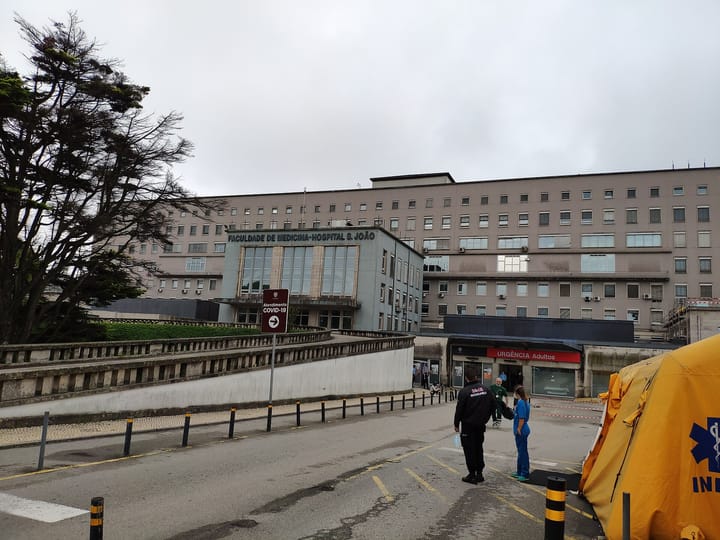
Hospital Emergency Rooms Closing as Portugal Restructures Maternity Care
The obstetrics and gynaecology emergency room at Barreiro Hospital will close permanently as part of a broader restructuring of maternity services on the Setubal Peninsula. Health Minister Ana Paula Martins confirmed the decision during a...

The obstetrics and gynaecology emergency room at Barreiro Hospital will close permanently as part of a broader restructuring of maternity services on the Setubal Peninsula. Health Minister Ana Paula Martins confirmed the decision during a parliamentary hearing, stating bluntly that "the Barreiro emergency room will close because it does not have the conditions to remain open."
The closure is not a sudden crisis but the culmination of a long-running staffing problem. The three obstetrics emergency departments on the Setubal Peninsula had been operating on a rotation model due to a chronic shortage of specialists, a system the minister described as subjecting healthcare workers to "inhuman effort." The new arrangement consolidates emergency obstetrics at Garcia de Orta Hospital in Almada, with a second regional emergency department planned at the Vila Franca de Xira and Beatriz Angelo local health units.
Martins was careful to note that scheduled deliveries will continue at Barreiro. "Babies will continue to be born in Barreiro, obviously. Not all births are emergencies," she said. The distinction matters, but it is unlikely to fully reassure families in a region where the nearest emergency obstetrics service may now be significantly further away.
The restructuring reflects a pattern playing out across Portugal's National Health Service. Faced with a persistent shortage of specialists — particularly in obstetrics, anaesthesiology and emergency medicine — the government is consolidating services into fewer, better-staffed units rather than maintaining a wider network that cannot be reliably operated. The logic is sound from a patient safety perspective: a well-staffed emergency department is better than three that take turns closing. But it raises legitimate concerns about access, particularly for families in more remote areas or those without private transport.
The minister also acknowledged delays in publishing the Global Reference Framework for the NHS, the strategic document that sets healthcare indicators and targets through 2028. She expects the hospital contracting process to be completed by the end of March, meaning that for the first quarter of 2026, hospitals have been operating largely on historical demand patterns rather than formally agreed targets.
For Portugal's growing foreign resident population, the healthcare question is not abstract. Access to maternity care, GP appointments and emergency services are among the most common practical concerns raised by immigrants and expats settling in the country. The restructuring may ultimately improve service quality, but the transition period — as families adjust to new geography and new referral patterns — will be difficult.
The broader question remains whether consolidation alone can solve the NHS's structural staffing deficit, or whether more fundamental reforms to recruitment, retention and medical training are needed. On the maternity-rights side of the file, the rewrite of Portugal's law on rights in pregnancy and childbirth sets out what Lei n.º 57/2026 removed, what it added, and why episiotomy and caesarean rates are now due to be published hospital by hospital.