Portugal's First Total Solar Eclipse Since 1912 Arrives Wednesday, and Doctors Want You in Certified Glasses
Portugal sees its first total solar eclipse since 1912 on Wednesday, 12 August — total only from the uplands near Bragança and partial elsewhere, with about 94% of the Sun covered in Lisbon. Health officials are urging ISO 12312-2 certified glasses, warning that around one in five eye injuries can b
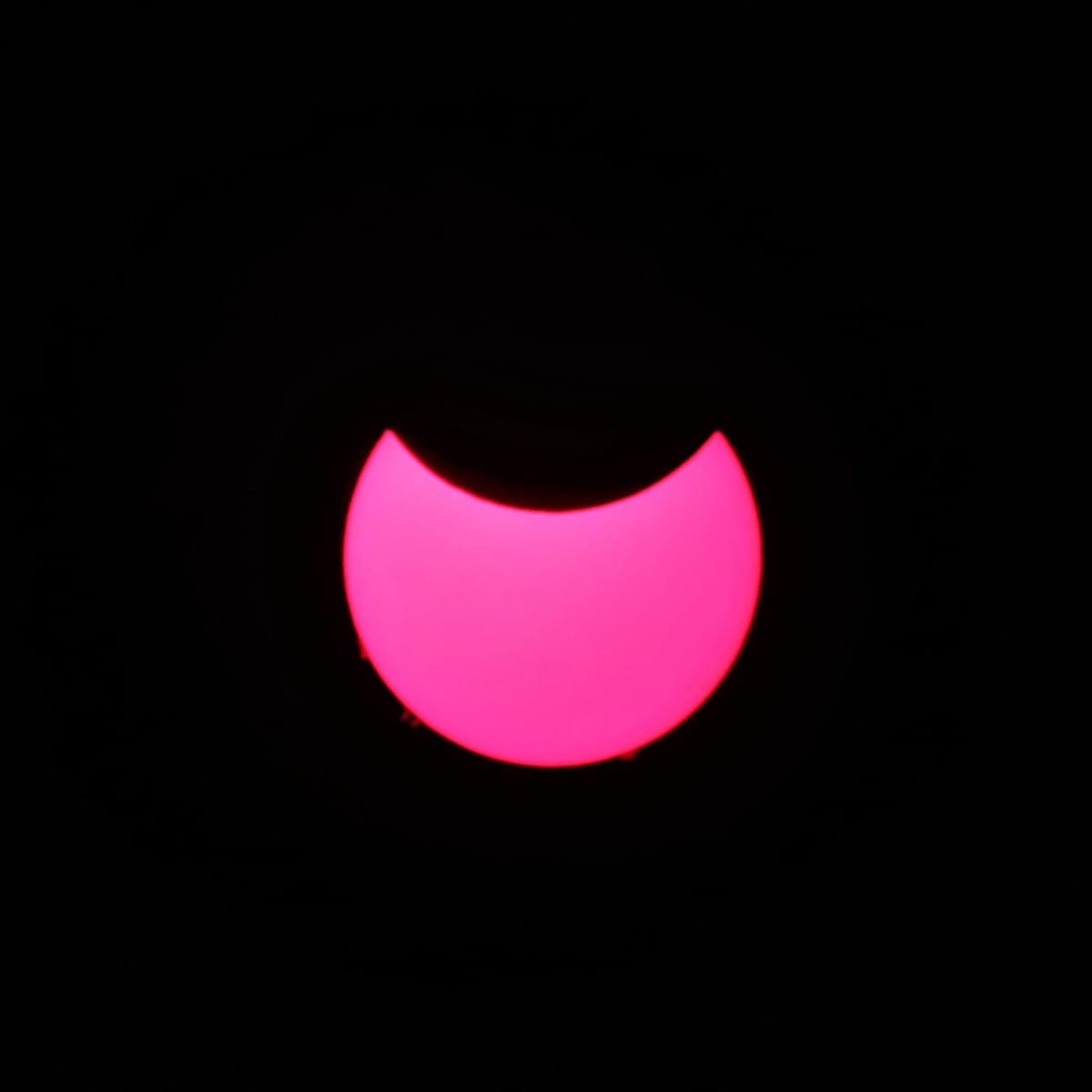
For the first time in more than a century, the Moon will slide fully across the face of the Sun over Portuguese soil. On Wednesday, 12 August, a total solar eclipse (eclipse solar total) will cross the northern hemisphere, and though the band of total darkness falls mainly over northern Spain, it grazes one small corner of Portugal — the uplands of the Parque Natural de Montesinho (Montesinho Natural Park), above Bragança, where day will turn to night for roughly 26 seconds. It is the first total eclipse visible from the mainland since 1912, and the country will not see another until 2144.
Everywhere else, the spectacle will be partial but dramatic. In Lisbon the eclipse begins at about 18:39, reaches its maximum near 19:35 with roughly 94% of the Sun obscured, and ends around 20:28, low on the western horizon as the summer sun sets. Obscuration climbs to between 92% and 99% across the mainland and reaches about three-quarters in the Azores and Madeira. The Instituto Português do Mar e da Atmosfera (Portuguese Institute for the Sea and Atmosphere, IPMA) is forecasting mostly clear skies, with only a modest chance of low cloud along some northern and central stretches of coast.
With the event two days away, the loudest official message is about eyesight, not scheduling. The Direção-Geral da Saúde (Directorate-General of Health, DGS) issued formal safe-viewing guidance on 6 August, and the warning is blunt: looking at even a heavily eclipsed Sun without proper protection can burn the retina, and while most people recover, doctors estimate that around one in five of those who suffer such injuries are left with a lasting loss of visual acuity. The damage is painless as it happens, which is precisely what makes it dangerous.
The only safe way to watch directly is through eclipse glasses certified to the ISO 12312-2 standard and bearing the CE mark, or through telescopes and binoculars fitted with dedicated solar filters. Ordinary sunglasses, smoked glass, photographic film, X-ray sheets and improvised filters offer no protection whatever. Certified glasses have been selling for a few euros, and some outlets and science centres have made free pairs reservable; anyone who notices blurred vision, a blind spot or distorted colour after watching should contact Linha SNS 24 on 808 24 24 24.
The Serviço Nacional de Saúde (National Health Service, SNS) has said it sees no need for a special reinforcement of emergency ophthalmology, but the country's two largest hospital centres are taking precautions, with São José in Lisbon and São João in Porto each rostering two on-call eye specialists for the evening.
The other rush is for beds. Accommodation across the Bragança district — the only place on Portuguese soil to catch totality — has been sold out for months, with guesthouses reporting reservations that filled within days of opening. Across the border, where the path of totality is wider and the total phase lasts longer, Spanish authorities are bracing for a wave of "astrotourism" that some estimates put as high as ten million visitors. For most residents, though, the advice is simpler: find a clear view to the west on Wednesday evening, put on certified glasses, and look up.