Portugal's Farming Sector Declares Nearly 500 Million Euros in Storm Losses as Government Aid Remains Out of Reach
Nearly 500 million euros in agricultural losses have been declared across Portugal following the devastating winter storms that struck from late January into February, according to the Confederation of Portuguese Farmers (CAP). But six weeks on, the...

Nearly 500 million euros in agricultural losses have been declared across Portugal following the devastating winter storms that struck from late January into February, according to the Confederation of Portuguese Farmers (CAP). But six weeks on, the sector's biggest grievance is not the scale of the destruction. It is that not a single euro of targeted government aid has reached the field.
"The last figure I saw in the survey came close to 500 million euros. The numbers are self-declared and still need to be verified, but we're not even at that stage yet. Nobody has applied for anything," said Luís Mira, secretary-general of the CAP, in statements to the Lusa news agency on Saturday.
A bureaucratic bottleneck with real consequences
The storms — a succession of Atlantic depressions named Kristin, Leonardo and Marta — killed at least 19 people in Portugal over a three-week period, with more than half of the deaths occurring during recovery operations. Beyond the human toll, the weather events destroyed or severely damaged thousands of homes, businesses and farms, particularly in the Centre, Lisbon and Tagus Valley, and Alentejo regions.
The Ministry of Agriculture confirmed in mid-February that 4,208 damage declarations had been filed by farmers at that point, totalling 303 million euros. The figure has since climbed to nearly 500 million euros as more reports come in, though verification has yet to begin.
The government announced in late January a measure to restore productive capacity, covering investments between 5,000 and 400,000 euros with aid rates of up to 100 percent for amounts below 10,000 euros. Farms in municipalities declared in a state of calamity were also eligible for an emergency payment of up to 10,000 euros per applicant.
But CAP says this falls far short of what is needed. "There are no deadlines, no amounts, no rules. A survey was done, but that's where it stops," Mira said.
A sector already under pressure
The storm damage comes at a particularly difficult moment for Portuguese agriculture. Food prices have recently hit all-time highs, driven partly by energy costs linked to the ongoing energy crisis. The Pingo Doce supermarket chain's parent company, Jerónimo Martins, recently warned that the fuel crisis could force consumers to make difficult choices.
For farmers whose greenhouses, orchards and irrigation systems were destroyed, the delay in processing aid claims compounds an already fragile situation. Many are unable to replant or repair without upfront capital, and the spring growing season is already well underway.
The CAP has called on the government to move beyond the survey phase and establish a clear, accessible framework for aid applications. In a statement, the confederation noted that similar weather events in other EU member states have triggered faster relief mechanisms, including direct emergency transfers within weeks of the disaster.
Recovery still underway
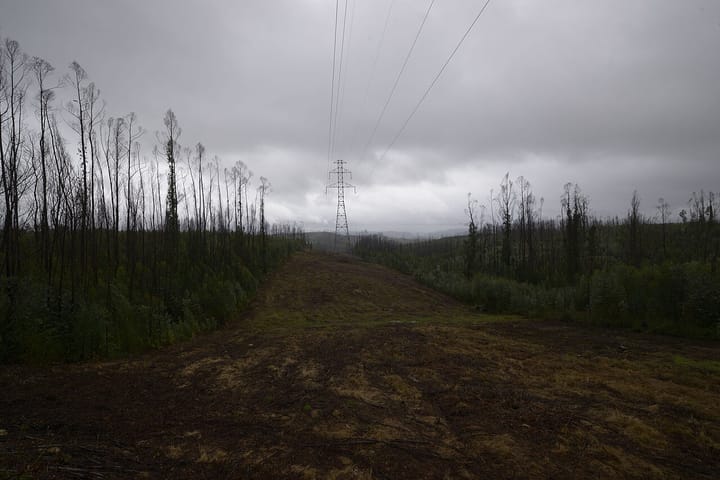
Across the affected regions, the physical scars of the storms remain visible. The Mondego flood inquiry, launched after dike failures in the Coimbra district, is now underway with five engineers appointed to investigate what went wrong and how climate risks were assessed. Meanwhile, emergency beach nourishment in the Algarve has begun to repair coastal erosion, and the Portuguese Environment Agency has signalled concern about cliff instability along the Alentejo coast.
The prime minister acknowledged earlier this month that Portugal may run a budget deficit in 2026 as the combined weight of storm recovery and the energy crisis strains public finances. For the farming sector, that admission may be cold comfort without a concrete timeline for when aid will arrive.
See also: Portugal Approves Deportation Bill