Portugal's Environment Agency Rejects a Solar Plant Beside a Serra do Marão Wind Farm to Protect Wolves and a Natura 2000 Landscape
APA has issued an unfavourable environmental impact statement on a 15.9 MW solar plant planned beside the Penedo Ruivo wind farm in Baião and Amarante, citing wolves, Natura 2000 habitat and municipal planning bans, and says a redesign on the same site would not solve the problems.
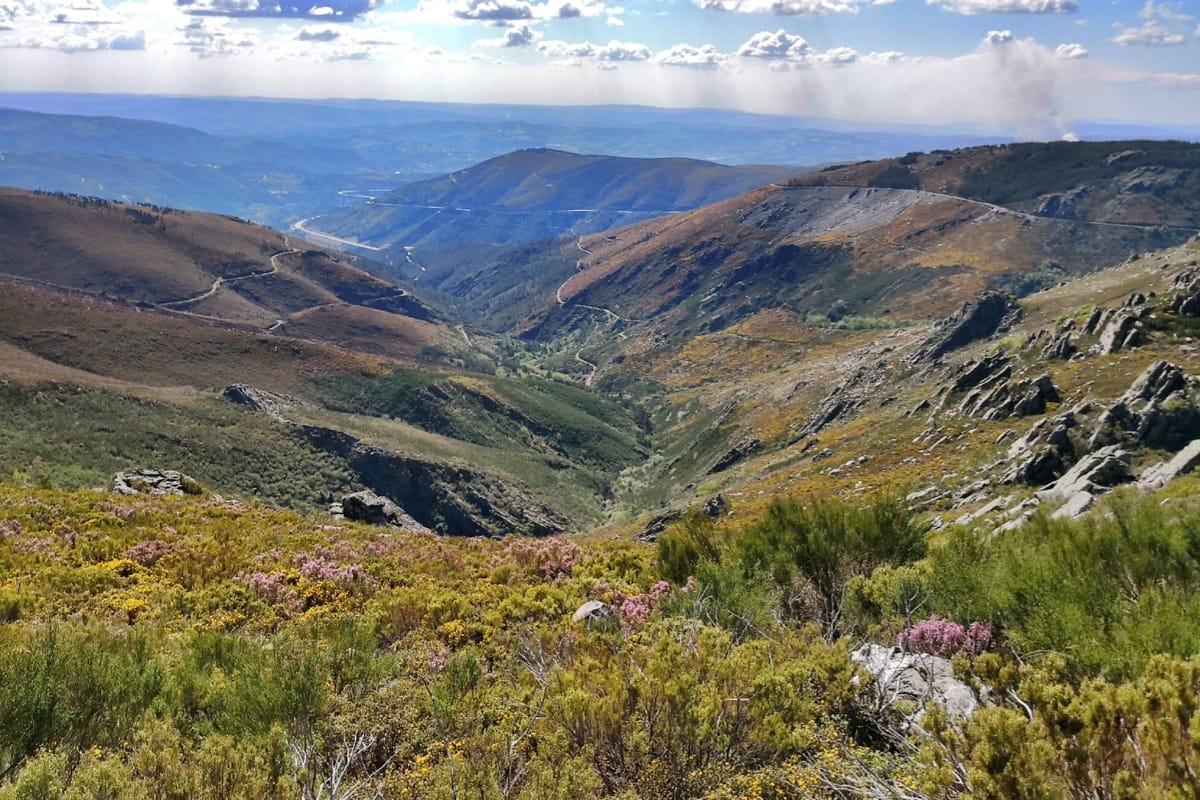
The Agência Portuguesa do Ambiente (Portuguese Environment Agency, APA) has refused environmental approval for a solar plant that was to be built alongside an existing wind farm in the Serra do Marão. Its Declaração de Impacte Ambiental (environmental impact statement, DIA), signed by APA president José Pimenta Machado on 20 July and now published on the government's Participa consultation portal, concludes that the project's significant negative impacts cannot be reduced enough and that it "is not compatible with safeguarding the values present". The decision was reported by Lusa (the Portuguese news agency) on Saturday.
What was planned
The promoter, Energiekontor Portugal, wanted to add solar panels to its Penedo Ruivo wind farm, which has run since December 2005 with ten turbines and 13 megawatts (MW) of capacity. The solar plant would have had 15.9 MW of peak capacity (12.3 MW of grid connection) from 25,038 panels, producing an estimated 24.86 gigawatt hours a year over a 30-year life. It would have occupied a fenced area of about 21.3 hectares, with panels and inverters covering about 7 hectares, and needed 3.9 km of new access tracks.
The site lies in the joint parish of Teixeira and Teixeiró, in Baião, and in the parish of Ansiães, in Amarante, both in the Porto district.
Why it was refused
The DIA names three decisive factors: ecology, landscape and land-use planning. The whole site sits inside the Alvão/Marão Zona Especial de Conservação (Special Area of Conservation), part of the EU's Natura 2000 network, and part of it overlaps the Paisagem Protegida Regional da Serra da Aboboreira (Serra da Aboboreira Regional Protected Landscape).
- Wolves. The statement singles out the Iberian wolf, saying the plant would fragment its habitat in an area already crowded with wind turbines, roads, dams, quarries and power lines. The assessment commission's opinion cites the 2019 to 2021 national wolf census, which found a 54 percent fall in the Alvão/Marão population over 18 years.
- Planning rules. The municipal master plans of both Baião and Amarante ban energy infrastructure inside the Aboboreira protected landscape.
- Local opposition. The Câmara Municipal de Baião (Baião Municipal Council) gave an unfavourable opinion, citing wolves, bats, birds of prey, the mountain landscape and archaeological remains.
The public consultation, held from 13 March to 24 April, drew 666 submissions. According to APA's consultation report, 656 of the 661 individual citizens who took part opposed the plant and five supported it. The joint parish council backed the project; the Douro and Tâmega municipal association, which manages the Aboboreira protected landscape, and the conservation groups FAPAS (Portuguese Association for Biodiversity Conservation) and Palombar (Association for the Conservation of Nature and Rural Heritage) opposed it.
What happens next
Under Decreto-Lei n.º 151-B/2013 (Decree-Law 151-B/2013, the environmental impact assessment law), an unfavourable DIA ends the assessment procedure, and the licensing body, the Direção-Geral de Energia e Geologia (Directorate-General for Energy and Geology, DGEG), may only license a project of this kind after a favourable or conditionally favourable statement.
Unlike the Peniche kaolin mine refused earlier this month, this decision leaves little room for a redesign on the same ground. APA writes that, given the site's position inside the conservation area, the Serra do Marão state forest perimeter and the protected landscape, any modification "within the study area would tend to maintain the main significant negative impacts" it identified. The agency accepts that the plant would have helped Portugal's renewable energy targets, but says that reusing the wind farm's connection and substation does not reduce the ecological and landscape impacts.