Portugal's 'Company in an Hour' Service Now Takes Months as Registry Delays Mount
Portugal's Empresa na Hora, built to incorporate a company in a single session, now leaves founders waiting months for an appointment — the earliest mainland slot was October — as commercial registries buckle under a backlog the workers' union calls an 'unequivocal collapse.'
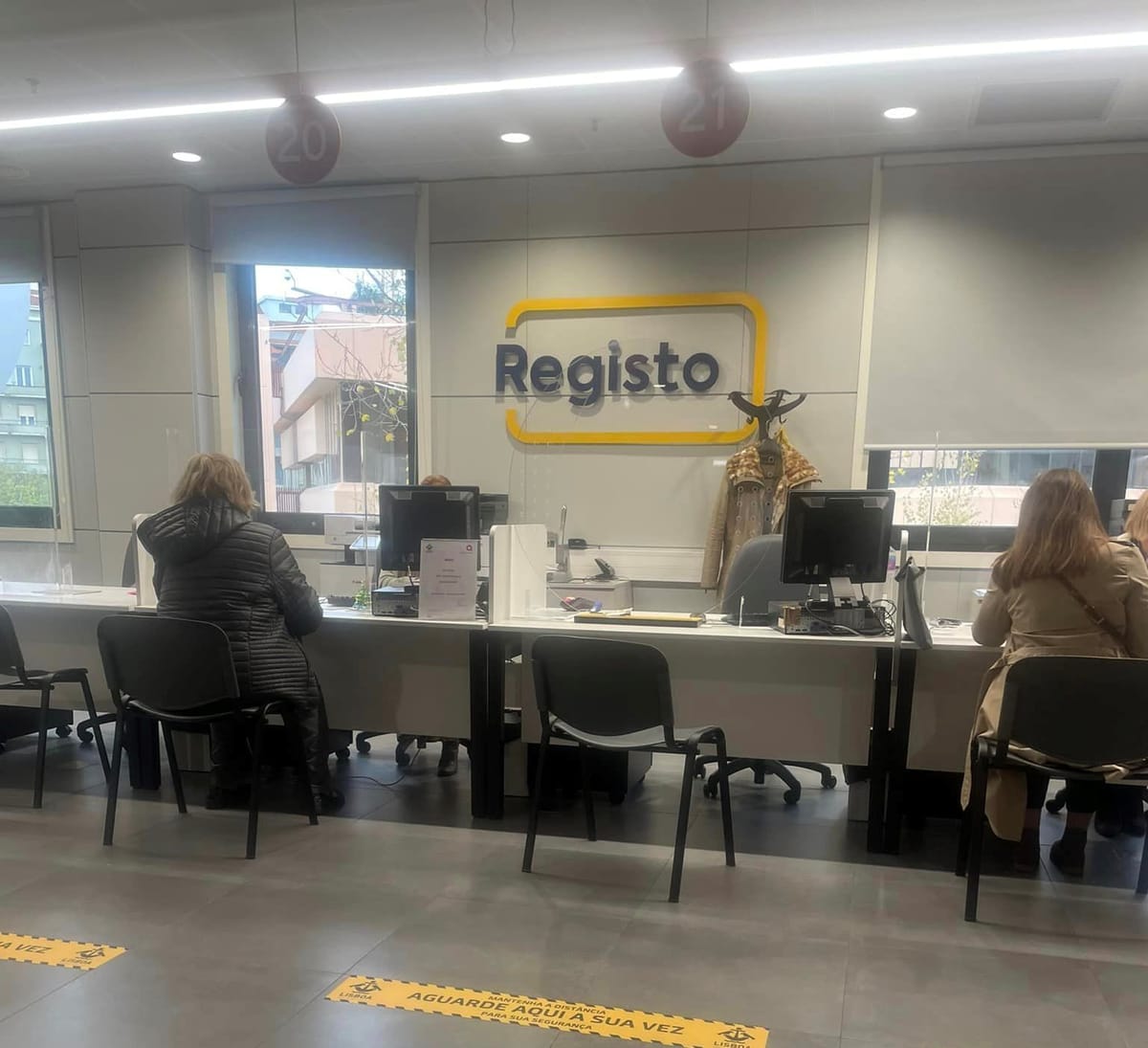
Portugal built its reputation for painless company formation on a single promise: walk into a counter, and walk out an hour later with a registered business. Two decades on, that promise is fraying. Founders who want to use Empresa na Hora (Company in an Hour) — the same-day incorporation service launched in 2005 — are now waiting months simply to secure an appointment, as the country's commercial registries buckle under a mounting backlog, the online outlet ECO reported on Tuesday.
The scale of the delay is easiest to misread. The headline figure — more than 2,000 days — is not how long it takes to register one company. It is an aggregate: the sum of all accumulated delay-days across the pending dispatches and acts sitting in commercial registries nationwide. According to data from the registry workers' union drawn from the state's own numbers, the conservatórias (registry offices) had reached 2,082 accumulated delay-days for online commercial acts in June and 2,099 days at the counters — up 82 and 68 days respectively on May alone.
What that backlog means in practice is scarcity of appointments. On the SIGA booking portal, the soonest in-person slot for Empresa na Hora anywhere in the country was in Ponta Delgada, in the Azores; on the mainland, the earliest opening was in October, in Viseu. The incorporation act itself still takes minutes once you are at the desk — the Institute of Registries and Notaries (Instituto dos Registos e do Notariado, IRN) put the historical average at about 41 minutes, and more than 369,000 companies have been created through the service since 2005. The bottleneck now sits before and after that desk, in getting seen and in the queue of subsequent acts.
The strain is not confined to businesses. In June, 237 of the country's 404 registry services — nearly 59% — were running behind, and delays worsened at almost half of them. Vehicle registration fared worst of all, its accumulated backlog more than doubling from 845 to 1,738 days in a single month. Overall, the union calculated that delays deepened by around 13% between May and June, language it summed up as a descalabro inequívoco, an "unequivocal collapse."
Behind the numbers is a staffing gap the IRN itself describes as being of "complex proportions." The union counts 1,113 professionals lost between 2022 and 2026, including 80 registrars, with hundreds of registrar and registry-officer posts left unfilled against a workforce of roughly 4,259 spread over more than 600 service fronts. Demand, meanwhile, has surged — up around 74% between March 2025 and May 2026 — much of it driven by residents rushing to lodge paperwork ahead of the tightening of Portugal's nationality law.
The IRN's new president, Blandina Soares, who took office on 1 March, has been running a recovery plan since June and says delays have been cleared in 20 registry offices in 30 days. The union is unconvinced, and has pressed for transparency on which offices were fixed and how many pending cases remain — noting that the IRN stopped publishing its delay data in July, once the figures laid the backlog bare.
For anyone planning to incorporate here — including foreign founders drawn by Portugal's start-up-friendly image — the practical takeaway is to book early and not count on the "hour" in the name. It is also a reminder that a registry system already stretched thin sits behind much of the everyday bureaucracy residents rely on, from company filings such as the central register of beneficial owners to routine acts like updating a registered address. On the Portuguese identity-document and registry-security tape, our report on the overnight theft of 500 citizen cards, 200 passports and two official dry seals from the Chaves registry office, and what it means for anyone with a document waiting at a counter sets the latest reference.