Five Hundred Citizen Cards, Two Hundred Passports and Two Dry Seals Left a Chaves Registry Office Through a Broken Door
PSP is investigating an overnight break-in at the Chaves registry office in which 500 citizen cards, 200 passports, two safes, 500 euros and two official dry seals were taken. Nobody has said whether the documents were blank stock or finished cards awaiting collection, and that is the whole story.
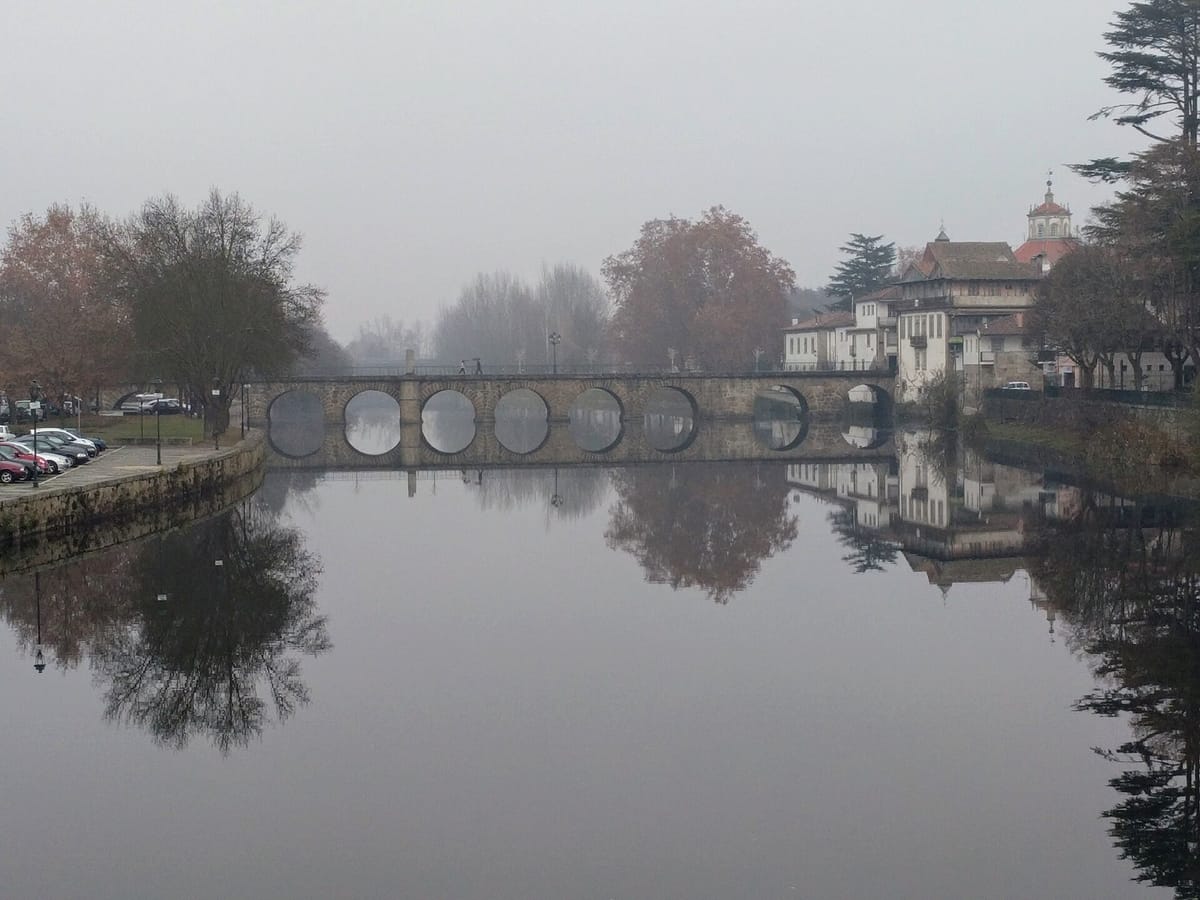
Sometime in the early hours of Wednesday 2 September, someone broke the door of the Conservatória do Registo Civil, Predial e Comercial de Chaves (the Civil, Land and Commercial Registry Office of Chaves) and left with an inventory that does not look like an ordinary burglary. According to what was reported to officers and confirmed by a PSP source in Vila Real to the Lusa news agency, the haul was 500 cartões de cidadão (citizen cards), 200 passports, two safes, 500 euros in cash and two selos brancos, the embossed dry seals that Portuguese public offices press into paper to authenticate it.
PSP officers spent Wednesday morning at the building collecting evidence. By Wednesday evening neither the Instituto dos Registos e do Notariado (Institute of Registries and Notaries, the IRN) nor the Ministry of Justice had said publicly whether the documents were blank stock or finished cards and passports waiting for their owners to collect them, and that distinction is the whole story.
What was taken
- 500 citizen cards and 200 passports, the two documents that between them establish identity and the right to cross a border.
- Two selos brancos, the embossed seals used to certify copies and validate photographs on official paper.
- Two safes and 500 euros in cash.
- Entry was made by forcing the door of the building, which houses the civil, land and commercial registries under one roof.
The same night, the PSP also logged an attempted break-in at a dental clinic in Chaves. On the previous night, fuel, batteries and machinery were taken from a construction site at Torneiros, in the Vila Real district. Whether the three are connected is a question for the investigation, but the pattern of a small, well-chosen night raid on a public building sits oddly alongside the other two.
Why the geography matters
Chaves is a border town. It sits in Trás-os-Montes little more than ten kilometres from the Galician frontier at Vila Verde da Raia, on a road that carries a heavy daily traffic of Portuguese and Spanish residents in both directions. A registry office there also serves one of Portugal's largest emigrant populations, families whose documents are requested from abroad and then held at the counter until somebody comes home to collect them. It is exactly the kind of office that would be holding a large batch of finished documents at any given moment.
How a citizen card actually reaches you
This is where the practical stakes sit, and it is worth being precise about it. When you apply for a Cartão de Cidadão, the finished card can either be posted to your home address by registered mail at no extra cost, or held for collection at an IRN counter of your choosing. If you choose collection, you have one year from the date of the request to pick it up; after that the card cannot be collected at all.
Crucially, the card and its activation codes travel separately. The PIN letter goes to the address associated with the card, and you have to produce it at the counter to take the card away. A card removed from a counter without its PIN letter is therefore useless for the things the card does electronically: it will not authenticate you on the Portal das Finanças, it will not sign a document, it will not open an ePortugal session. What it will do, in the wrong hands, is work as a physical identity document in any face-to-face situation where nobody checks the chip.
The same logic applies to the passport, which is personalised centrally and then delivered to the issuing desk. A passport in circulation that its holder has never touched is a serious problem precisely because the holder does not know to report it.
The seals are the quiet part
Of everything on the list, the two selos brancos may be the most consequential item, and they are the one that will get the least attention. A dry seal is not a decoration. It is the physical mark that turns a photocopy into a certified copy and a photograph into an attested photograph, and Portuguese criminal files already contain cases in which a misused official dry seal was used to validate large volumes of fraudulent paperwork, including criminal-record certificates fed into an illegal immigration network. A seal does not expire, cannot be cancelled remotely, and leaves a mark that looks exactly like the genuine article because it is the genuine article.
A registry network already under strain
The theft lands on a service that has had a difficult year. Portugal's registry network has been running with heavy staff shortages and a growing backlog: we reported in August that the backlog grew 13 percent in a single month while the IRN stopped publishing the totals that showed it, and later that the government had put forward a pay plan worth up to 288 euros a month, backdated to July 2025, to make registry careers attractive again. An office that has to reissue several hundred documents at short notice, on top of its normal queue, is not an office with spare capacity.
There is also a timing problem. Portugal spent the summer narrowing the set of documents that count as identity: an EU security deadline retired the old paper identity card as a travel document in August, leaving only the citizen card and the passport. The pool of documents that matter is smaller than it was, which makes each one that goes missing count for more.
What this means for foreign residents
- If you have a document waiting at a counter anywhere, check on it. This applies well beyond Chaves. If you applied for a card or passport and chose counter collection rather than home delivery, and you have not picked it up, call the office and confirm the document is still there. Documents sitting uncollected are the ones nobody misses.
- Know the cancellation route before you need it. The IRN's instruction is to cancel the card first and only then request a new one. Cancellation is available online through ePortugal, or by telephone on the Linha Cartão de Cidadão at +351 210 990 111, which runs 24 hours a day. A replacement card carries the same validity date as the original, so cancelling does not cost you time on the clock.
- A police report is worth having even when it is not strictly demanded. If you believe a document of yours has been taken rather than lost, file it. Our guide to reporting a crime in Portugal sets out the difference between a queixa and a denúncia, the six-month clock on some offences, and your right to a free interpreter at the counter.
- Expect identity checks to get slower near the border, not faster. Several hundred genuine Portuguese documents unaccounted for, in a town on a busy frontier crossing, is the kind of thing that produces additional scrutiny at car-hire desks, bank counters and border checks for a while.
- Watch for a data-protection dimension. If the stolen cards were personalised, they carry names, photographs, dates of birth, tax and social-security numbers. Anyone whose card was in that batch has an interest in knowing, and Portuguese data-protection law gives you a one-month reply deadline when you ask a public body what it holds on you.
What happens next
The immediate test is administrative rather than criminal. If the documents were personalised, the IRN can identify every affected person from the office's own records, cancel the card numbers centrally, and write to the holders. That is a mechanical job and it can be done quickly. If it is not done quickly, several hundred people will find out that their documents are gone the way people usually do: at a counter, being told that the number on the screen has been invalidated.
The seals are the part that cannot be undone by a database update. Once an embossed seal is outside the building, every certified copy it produces will look authentic to the naked eye, and the only defence is that offices know which seal numbers are compromised. Whether that information travels beyond the PSP investigation, and how fast, is the question worth asking of the Ministry of Justice this week.