Portugal's Ambassador Rules Out a Mass Return of Portuguese From Quake-Hit Venezuela
Ambassador Frederico Silva says only 'a very small number' of Portuguese have been repatriated after June's La Guaira earthquake, which killed at least 6,125 people — 138 of them Portuguese and luso-descendants. The deeply rooted community, he says, wants to rebuild in Venezuela.
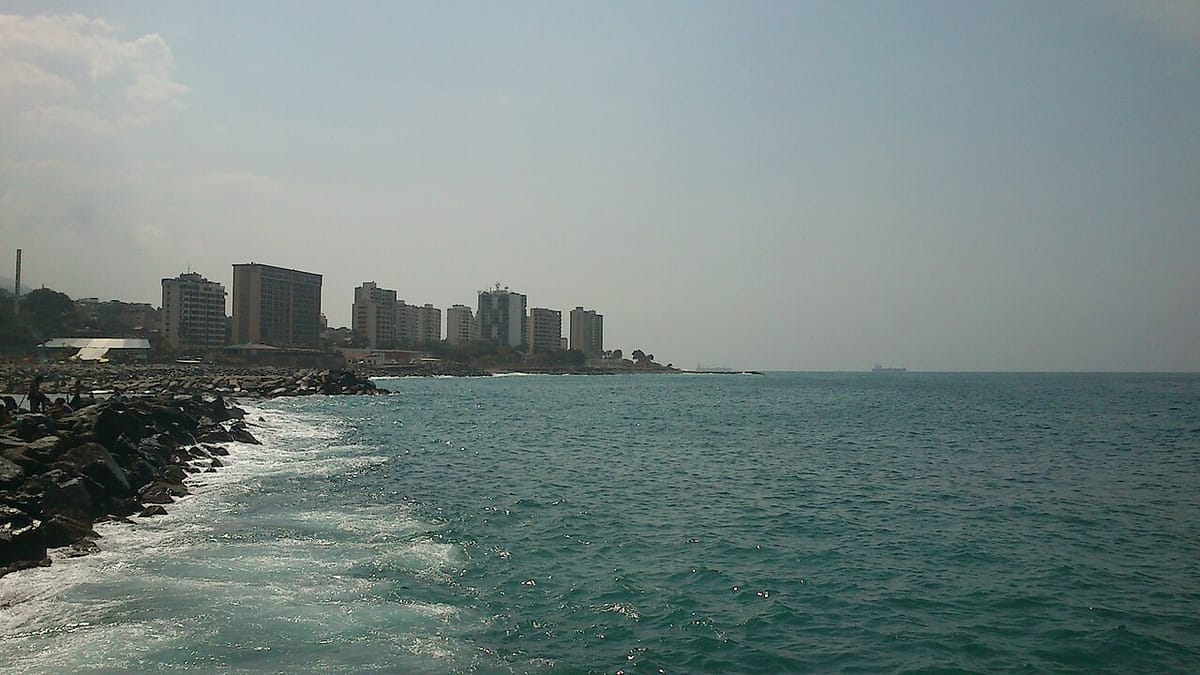
Portugal's ambassador to Venezuela, Frederico Silva, has ruled out any mass return of the country's large Portuguese community after June's double earthquake in La Guaira, saying only "a very small number" of people have been repatriated.
Speaking to the Lusa news agency at a social, cultural and educational aid event organised by the Portuguese Embassy in Naiguatá, in the coastal state of La Guaira, the diplomat said the community "wants to stay" and rebuild rather than leave. "Those who lost [their livelihoods] want to reconstruct their way of life, their family and living context, here in Venezuela," he said, describing a mood of "sadness, of shock, but of determination to keep living in this beautiful country."
The scale of the disaster remains stark:
- The 24 June double quake struck La Guaira, the coastal state next to Caracas, leaving at least 6,125 people dead and 1,579 missing, according to Venezuelan authorities.
- Among the confirmed dead are 138 Portuguese nationals and luso-descendants, Portugal's Ministério dos Negócios Estrangeiros (Ministry of Foreign Affairs) has said.
- Repatriations have been "a very, very small number," the ambassador stressed, because the Portuguese and Portuguese-descended community is "deeply integrated into Venezuelan society."
Venezuela is home to one of the largest Portuguese diasporas in the Americas, built over decades and drawing heavily on emigrants from Madeira. Portugal moved quickly after the quake: the Madeiran government mobilised consular help for islanders with family in La Guaira, Lisbon shipped eight tonnes of donated medicine, and TAP rerouted its Venezuela service to Valencia after damage around Caracas.
On the ground, the relief effort leans on the same community ties. Dennis Díaz, the Cáritas coordinator in Naiguatá, thanked Portugal and local Portuguese residents for supporting the Catholic charity's work, and praised the Portuguese medical NGO Assistência Médica Internacional (International Medical Assistance, AMI) for providing mental-health support to survivors. "These situations unleashed a host of emotional and mental problems, like panic and anxiety," he told Lusa. "AMI has accompanied us, listened, gone into the communities."
Silva said Portugal "will always be willing, case by case, to analyse and support repatriation requests," but insisted there was "no massive or significant trend" in that direction. He framed the community's presence as an asset worth preserving, calling its legacy in Venezuela "brilliant."
What This Means
- Repatriation is case-by-case, not automatic. Portuguese-Venezuelan families seeking help for relatives should contact the Embassy in Caracas or the Foreign Ministry directly rather than assume an organised evacuation.
- Consular capacity is being tested. The Embassy says it has almost completed a detailed assessment of how the quake hit the community's housing and livelihoods, and is coordinating with Venezuelan authorities on longer-term support.
- Humanitarian channels run through Portuguese NGOs. AMI and Cáritas are among the organisations delivering medical and psychological aid on the ground.
- It underlines Portugal's diaspora posture. The response fits a wider push to keep the country connected to its emigrant communities, from consular services to new programmes aimed at luso-descendentes.
With reconstruction only beginning, the Embassy's focus now is on helping the worst-affected families rebuild in place. For a community that has called Venezuela home for generations, the message from its own ambassador is that leaving is the exception, not the plan.