Portugal's 2027 Budget Passes Its First Vote With Only PSD and CDS in Favour, Five Parties Against and the Final Vote Set for 24 November
The 2027 budget passed its first vote on Wednesday: PSD and CDS for, PS, PAN and JPP abstaining, five parties against. The Government warned of a 300 million euro margin for changes. Written comments go to Parliament until 4 November; the final vote is on 24 November.
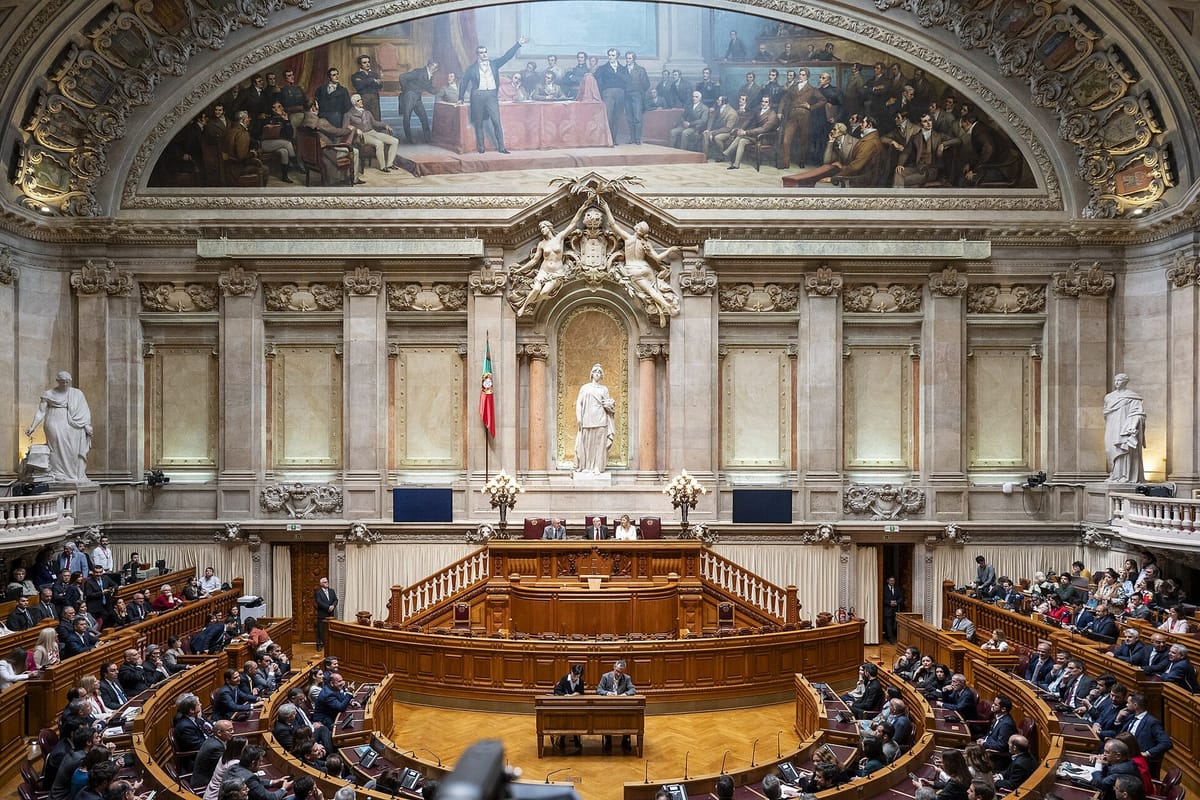
Portugal's 2027 State Budget passed its first vote in Parliament on Wednesday evening, 28 October, as expected. Only the two governing parties, PSD and CDS-PP, voted for the bill at this first-reading stage (the vote na generalidade). The Socialists (PS), PAN and JPP abstained. Chega, the Liberal Initiative (IL), Livre, the Communists (PCP) and the Left Bloc (BE) voted against, RTP reported, citing Lusa, and Observador's live coverage recorded the same result. This is the third budget from a PSD/CDS-PP coalition government.
Parliament's own page for the bill, Proposta de Lei 110/XVII, had not yet listed the plenary vote early on Thursday.
How the parties explained their votes
The PS leader, José Luís Carneiro, called it "a bad budget" but defended the abstention. In his closing speech he said that causing a political crisis now would be like "throwing fuel on a fire", and that leaving the country on duodécimos (monthly stopgap spending based on the previous year's budget) would be gravely irresponsible. He also said the PS would table a rule at the detailed stage so that there is "no increase in tax revenue at the expense of the sacrifices of the Portuguese". He accused the Government of raising fuel taxes "on the quiet" by changing ministerial orders five times. The party will also bring back its proposals on fuel and on zero VAT for basic food.
Livre said a budget "against the country" allowed only one vote, against; PAN said that "abstention is not approval", according to RTP.
Speaking to reporters in Loures that evening, Carneiro said PSD and CDS had "mistreated and disregarded" the Socialists during the debate with "incomprehensible political attacks". The Prime Minister, he said, "has to define a profile" for how he deals with the PS, RTP reported.
The Government's warning for the detailed stage
Closing the debate for the Government, the Minister of the Presidency, António Leitão Amaro, spoke of a government "at the helm, leading us along a narrow road". He reminded the parties that the budget has a margin of only 300 million euros: "Whoever proposes more spending has to say which spending they eliminate. Whoever wants to give up revenue must say what will stop being done, or which taxes they will raise." Earlier, the PSD's parliamentary leader, Hugo Soares, said that even parties voting against had a responsibility "not to distort" the budget at the detailed stage, Observador reported.
What happens next
The bill now goes to the detailed stage (especialidade), where it is examined line by line. The dates come from Parliament's budget page:
- 29 and 30 October, then 2 to 6 November: the Budget Committee hears ministers. Under Parliament's budget calendar, parties can table amendments from 29 October until 6 November, the day the Finance Minister is heard (our full timetable).
- 18 to 23 November: debate and votes on the detail.
- 24 November: the final global vote.
What it means for you
None of the budget's measures, such as the IRS changes or housing spending, takes effect yet, and any of them can still be amended before 24 November. Anyone can still have a say: Parliament is taking written comments on the bill, sent to the Budget, Finance and Public Administration Committee (COFAP), until 4 November. Requests to be heard in person must reach the committee by Friday 30 October. We covered the opening day of the debate, and the clash over the rental law, on Wednesday.