Portugal Used More Electricity Than Ever From January to September, and Imported a Record Nine Terawatt-Hours From Spain
Consumption reached 40,486 GWh, up 3.4 percent, as September heat lifted demand and wind output fell by a third. Net imports of 9,075 GWh were a record for the period.
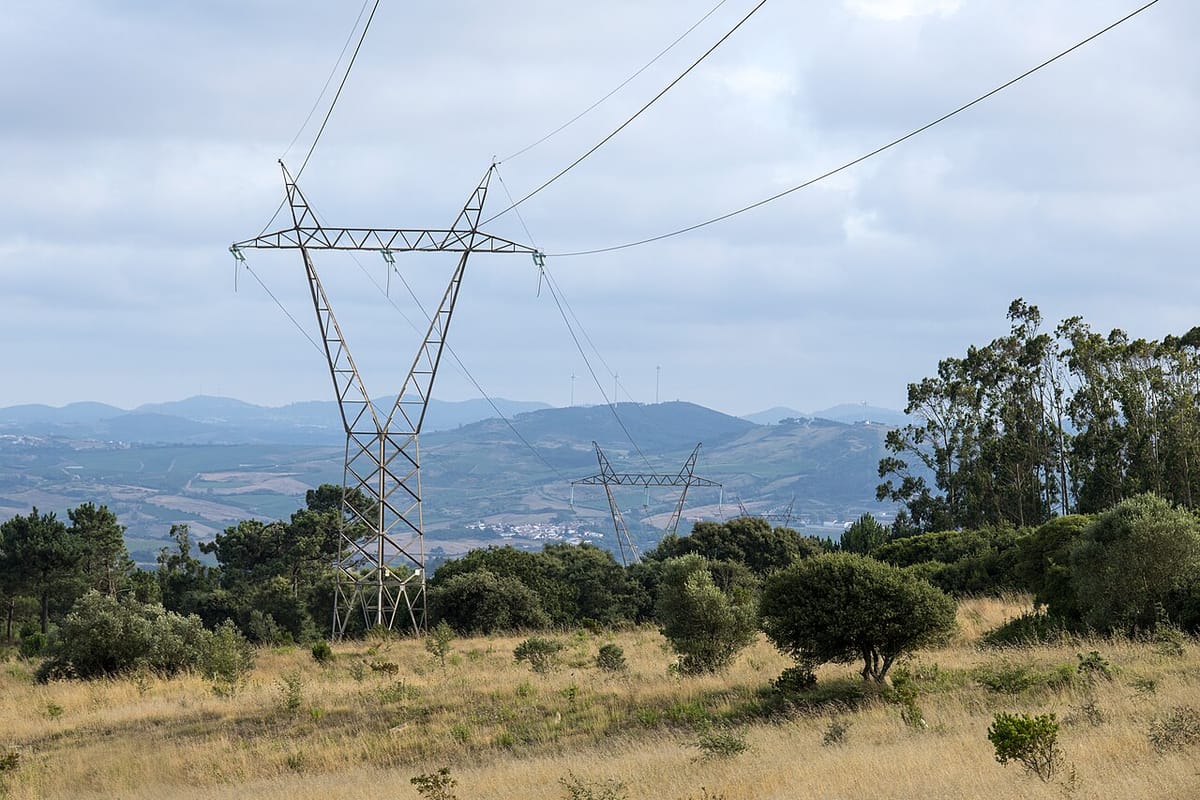
Portugal used more electricity in the first nine months of 2026 than in the same period of any year in the grid operator's records, and a record amount of it came across the border from Spain. Figures published by REN (Redes Energéticas Nacionais, the national grid operator) on its Data Hub on Thursday show consumption of 40,486 gigawatt-hours (GWh) from January to September, up 3.4 percent on the same months of 2025, which held the previous high.
September alone took 4,448 GWh, 6.8 percent more than a year earlier and the highest September in REN's monthly series, which starts in 2010. REN said the month's rise was driven by high temperatures, according to the Lusa news agency. Once the effects of temperature and working days are removed, REN put the increase at 3.3 percent for the month and 2.9 percent for the nine months.
A weak month for wind, a strong one for imports
The weather that pushed demand up did little for wind. Wind farms produced 729 GWh in September, 32.9 percent less than a year earlier. Solar rose 18.8 percent to the same 729 GWh, and hydro, at 711 GWh, was up 48 percent on September 2025. Gas-fired power stations produced 18.5 percent less.
The gap was filled from Spain. Portugal's net imports of electricity reached 1,616 GWh in September, up 45.7 percent on the year and more than a third of everything the country consumed that month. Exports fell by 70 percent, to just 87 GWh. By REN's count, renewables supplied 52 percent of September's consumption, other domestic generation 13 percent and imports 35 percent, almost exactly the split we reported for August.
Over the nine months, net imports came to 9,075 GWh, 44 percent more than in the same period of 2025 and the highest January to September total in the Data Hub series, slightly above the 8,850 GWh of 2023. REN described it as the highest import balance ever for the period. Imports covered 22 percent of consumption.
Where the rest came from
Domestic renewables still did most of the work. Over the nine months REN credits them with 64 percent of consumption: hydro 24 percent, wind 23 percent, solar 13 percent and biomass 5 percent. Natural gas supplied 14 percent.
The weakness this year is in production rather than demand. Total domestic generation fell 1.9 percent over the nine months, and renewable generation 4.4 percent, as hydro and wind both produced less than in 2025. Solar is the one major source that keeps growing: it produced 9.2 percent more than a year earlier.
The record follows a run of high readings. REN reported record consumption for the first half in July, and the Data Hub shows the system's all-time peak demand, 10,265 megawatts, was set on 20 January this year.
Gas use falls, and more Russian gas arrives at Sines
Natural gas went the other way. Consumption fell 11.8 percent in September to 3,434 GWh, with a 15.4 percent drop in gas burned for power and a 10 percent drop among other users. Over nine months it was almost flat, at 33,168 GWh, up 0.5 percent.
Almost all of Portugal's gas arrives as liquefied natural gas (LNG) at the Sines terminal. Five ships unloaded there in September, and the Data Hub's breakdown by origin shows that one fifth of September's cargo by energy, 1,123 GWh, came from Russia. Over the nine months Russian LNG came to 3,310 GWh, 8 percent of the total and 51.6 percent more than in the same period of 2025. Nigeria supplied 58 percent and the United States 34 percent.
Portugal intends to end Russian LNG imports by the start of 2027, under the EU rules phasing out gas purchases from Russia, as we reported in September.
Much of the extra gas landed at Sines this year has gone on to Spain. Gas sent out through the interconnections reached 2,124 GWh in September, against 338 GWh a year earlier, and 9,728 GWh over the nine months, more than double 2025. REN called it the highest export balance through the interconnection with Spain ever recorded for the period. So while Portugal bought a record amount of electricity from its neighbour, it sent its neighbour more gas than in any January to September on record.
What it means for households
Import volumes do not feed straight into household bills. Portugal and Spain share a single wholesale electricity market, and households pay the price in their supply contract or, on the regulated tariff, a price set by the energy regulator. That regulated tariff rose 2.7 percent on 1 October. Our guide to understanding your energy bill explains how to compare offers and switch supplier.
Sources: REN Data Hub, monthly electricity balance, transmission grid balance and peaks, natural gas consumption, Sines LNG terminal and transmission grid balances for September 2026, and the electricity balance for earlier years (datahub.ren.pt); REN figures on temperature-corrected consumption and record import and export balances as reported by Lusa.