The Regulated Electricity Tariff Rises 2.7 Percent on 1 October, Turning This Year's Promised 1 Percent Increase Into 1.7
ERSE has moved the energy component of the regulated tariff by half a cent a kilowatt hour, and says the reason is the war between Iran and the United States working through gas prices into electricity. It reaches 779,000 clients directly, and the free market buys in the same wholesale market.
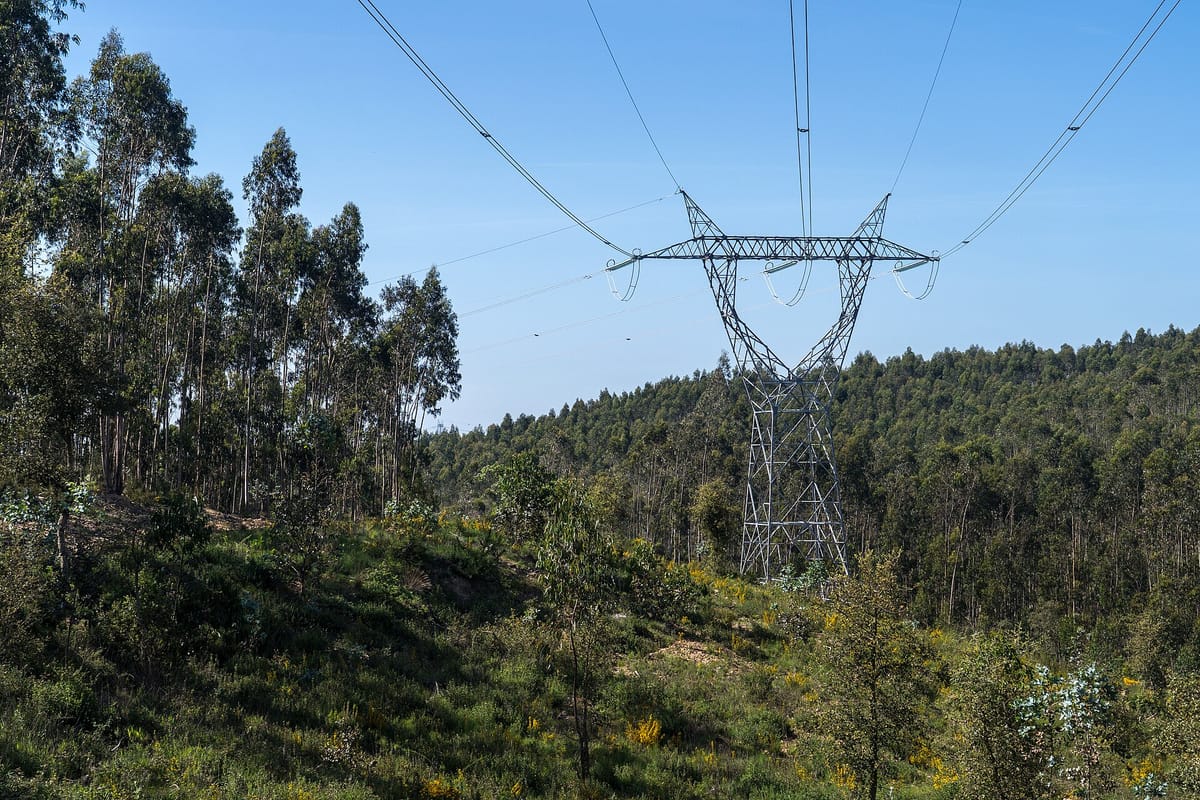
The energy regulator announced on Tuesday evening that the price of electricity in Portugal's regulated market goes up on 1 October. The increase is 0.005 euros per kilowatt hour on the energy component of the tariff, which for most households on that tariff works out at about 2.7 percent on the average monthly bill. It also rewrites the year: the annual price rise for 2026, announced at the end of 2025 as 1 percent, is now 1.7 percent.
The Entidade Reguladora dos Serviços Energéticos (ERSE, Energy Services Regulatory Authority) reviews the adequacy of the regulated energy tariff every quarter, against what it actually costs the supplier of last resort to buy the electricity it sells. The mechanism is written into the tariff regulation and it is not discretionary: if the gap between the forecast purchase cost and the real one reaches 0.010 euros per kilowatt hour in either direction, the energy tariff moves by 0.005 euros per kilowatt hour in that direction. The gap this time is 0.0176 euros per kilowatt hour, well past the trigger.
What it does to a bill
ERSE published two worked examples for mainland Portugal, both including taxes and levies apart from the DGEG charge.
- A couple with no children, on 3.45 kVA of contracted power and 1,900 kWh a year, goes from a monthly bill of about 36.82 euros to 37.77 euros. The increase is 0.95 euros a month.
- A couple with two children, on 6.9 kVA and 5,000 kWh a year, pays 97.73 euros a month from October. The increase is 2.70 euros.
Those are the two household types the regulator treats as most representative, and they bracket most of the affected population. In cash terms this is a small increase. Its interest lies in where it came from.
The Middle East, then gas, then electricity
ERSE is unusually direct about the cause. The size of the rise in wholesale prices through 2026, it says, "was difficult to predict when the tariffs for 2026 were set, since it is due in large part to the effects of the war between Iran and the United States, which pushed up the price of natural gas and, consequently, of electrical energy."
The second half of the explanation is seasonal. The impact became obvious from the third quarter onward, the regulator notes, because that is the period when renewables carry the smallest share of national generation. Portugal spent the summer with weak hydro output, which means gas plants set the closing price in the wholesale market for more hours of the day, and the price a gas plant needs pulls up the cost of every megawatt hour sold in those hours. Observador reported on Tuesday that this has been holding the daily Iberian price above 100 euros per megawatt hour, and that European gas reached its highest level since 2023 this week, near 80 dollars per megawatt hour.
This is the same shock that has been showing up elsewhere in Portuguese prices for weeks. It is behind the fuel-price argument now running through Parliament, and it was the proximate cause of Monday's jump in the Euribor. What changed on Tuesday is that it has now reached a regulated household tariff, which is the slowest-moving price in the chain.
Who this actually reaches, and who should still pay attention
The regulated market is small. ERSE puts it at 779,000 clients as of June 2026, roughly 4.6 percent of total electricity consumption in the country. If you signed a contract with EDP Comercial, Galp, Iberdrola, Endesa, Repsol or any other commercial supplier, you are in the free market and this decision does not apply to you directly. If you have never chosen a supplier and your bill comes from the comercializador de último recurso (supplier of last resort), it does.
The regulator is careful to say that the change "does not condition the free market to pass on the same price update", because each supplier follows its own procurement strategy. That is true as a matter of law and misleading as a matter of expectation. Free-market suppliers buy in the same wholesale market, and several are already reflecting higher wholesale prices in what they offer. The regulated tariff is better read as a public, dated confirmation of a cost increase the rest of the market has been absorbing quietly.
ERSE's own advice is to watch for changes in the price conditions your supplier applies, and to check its price simulator for the current set of offers. Households on the regulated tariff are also the ones most likely to be on it by inertia rather than by choice, which is worth a look at how the two markets differ before the October bill arrives.
Two other dates sit close to this one. The regulated natural gas tariff for the gas year running from October 2026 to September 2027 was fixed in June at plus 6.4 percent, and takes effect on the same day. And from 2027 the regulator will reconfigure six million electricity meters and simplify the time-of-use bands, a change that will alter how much of your consumption falls in the cheap window.
The new energy tariff applies from 1 October 2026. Nobody needs to do anything for it to take effect; it arrives on the bill.