Portugal Logged 3,658 Patient Safety Incidents Last Year, and Nine in Ten Came From Staff Rather Than Patients
The DGS released the Notifica figures for World Patient Safety Day. Falls and pressure ulcers lead both lists, the total has sat near 3,500 a year since 2022, and the system is anonymous and non-punitive by design: it is not the complaints route.
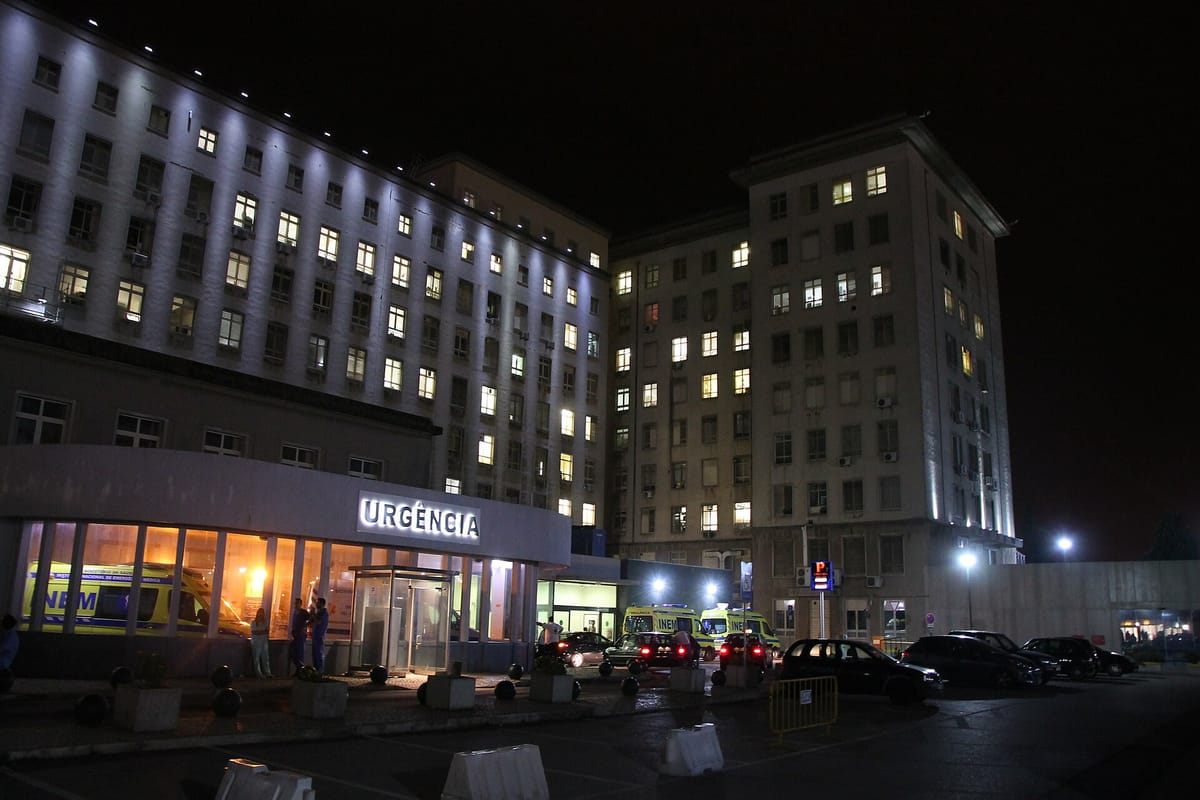
Portugal recorded 3,658 patient safety incidents in its national reporting system last year. Health professionals filed 3,421 of them. Patients and members of the public filed 237.
The figures were released by the Direção-Geral da Saúde (Directorate-General for Health, or DGS) to mark World Patient Safety Day, which falls on 17 September. They come from Notifica, the national system through which anyone involved in Portuguese healthcare, staff or patient, can report something that went wrong.
The single largest category in both groups is what the system calls patient accidents, which covers falls and pressure ulcers. Those accounted for 37 percent of what professionals reported and 24 percent of what citizens reported. Among professionals, incidents relating to behaviour came next at 22 percent, followed by infrastructure, buildings or premises at 10 percent. Among citizens the same two categories represented 20 percent and 14 percent.
What the number is, and what it is not
The DGS attaches a caveat to its own data that is worth taking seriously. The Notifica figures correspond to incidents reported to the system. They do not necessarily represent the total number of incidents that occurred in the health system. A rise in notifications can mean a service is getting worse, or it can mean people have finally started telling someone.
The series suggests the second reading has driven most of the movement. Carla Pereira, who heads the DGS Division of Planning and Quality Improvement, told the Lusa news agency that reporting has existed in Portugal since 2014. In 2015 the system logged 1,516 notifications. Numbers fell in 2021 during the migration from the old recording platform to the current one. "Since 2022 there has been a considerable increase," Pereira said, adding that around 4,000 notifications were recorded in 2023 and that the figure has since settled at roughly 3,500 a year.
On that reading, 3,658 is not a spike. It is the plateau the system reached once the new platform bedded in.
A notification is not a complaint
This is the distinction the DGS spends most of its public communication trying to land, and it matters to anyone using Portuguese healthcare.
Notifica is free, anonymous and confidential. It does not identify the person making the report, nor the professional or professionals involved in the incident. It is explicitly non-punitive: the stated purpose is not to find someone to blame but to understand how an incident happened and stop it happening again. That is the opposite of the reclamação (formal complaint) route, which is adversarial by design and attaches names.
"Notification is an anonymous act, it is an act that allows learning, it is an act to avoid future incidents," Pereira said. Health professionals file the overwhelming majority of reports, she noted, because they have a more established reporting culture than patients do.
"It is important to notify, because if we do not notify we do not find the risks and the weaknesses that often remain unknown in the provision of healthcare," she said. Knowing them, she argued, is what allows the service to understand the contributing factors and put improvement measures in place.
The system covers units of the Serviço Nacional de Saúde (National Health Service, or SNS), private institutions and the continuing care network. If an institution is not listed on the platform, the person reporting can name it themselves. The DGS says 94 SNS managers and six from the social sector were registered on the system in 2025 alone.
Notifica runs at notifica.dgs.min-saude.pt and its rules sit in Norma n.º 017/2022 of 19 December 2022 on the notification and management of patient safety incidents. It was built jointly by the DGS and the Serviços Partilhados do Ministério da Saúde (Shared Services of the Ministry of Health, or SPMS), the same body whose systems went down in the June 2026 SNS outage. The categories it accepts run well beyond falls: medication and intravenous fluids, including look-alike and sound-alike drug names, clinical processes and procedures, documentation, healthcare-associated infection, medical devices, blood products, diet, oxygen and gases, administrative process, and organisational resources.
This year's theme is the long illnesses
The World Health Organization has given 2026 the slogan "Safe care for life!" and pointed it at noncommunicable diseases: long-term conditions such as cardiovascular disease, cancers, diabetes and chronic respiratory disease, which the WHO says account for 74 percent of deaths worldwide. Landmarks in a number of countries are lit orange on 17 September to mark it.
Pereira framed the Portuguese version of that in terms of what patients are being asked to do. "The aim is to ask people to take part and to have a more active role in defining their care plan, to understand their plan and to know how to watch for the clinical signs they are asked to watch for," she said. Understanding the plan, she argued, improves monitoring of the disease and cuts the risks that come from missing information or from struggling to follow clinical instructions.
She put a matching duty on the other side of the desk. Professionals should encourage patients to ask questions and adapt how they communicate to the person in front of them, she said, particularly in an ageing population and in cases where care is also being delivered by family members or other carers.
"It is not enough just to ask: 'did you understand?'," she said. "You need other strategies, and you need to encourage patients to ask questions."
That last point lands hardest on patients working in a second language, a group Portuguese hospitals now serve in numbers. At Amadora-Sintra, four in ten patients are foreign nationals. A care plan that was never really understood is not a communication failure at the margins of the system. On the DGS's own framing, it is a safety risk.