Portugal Fell 300,000 Homes Short of What It Needed in Five Years, a Bank of Spain Study Finds — a Proportionally Deeper Hole Than Spain's
A Bank of Spain study puts Portugal's 2021-2025 housing shortfall at about 300,000 homes — 6.6% of all households, proportionally deeper than Spain's — against a near-zero eurozone average. Why a central-bank number matters for anyone renting or buying here.
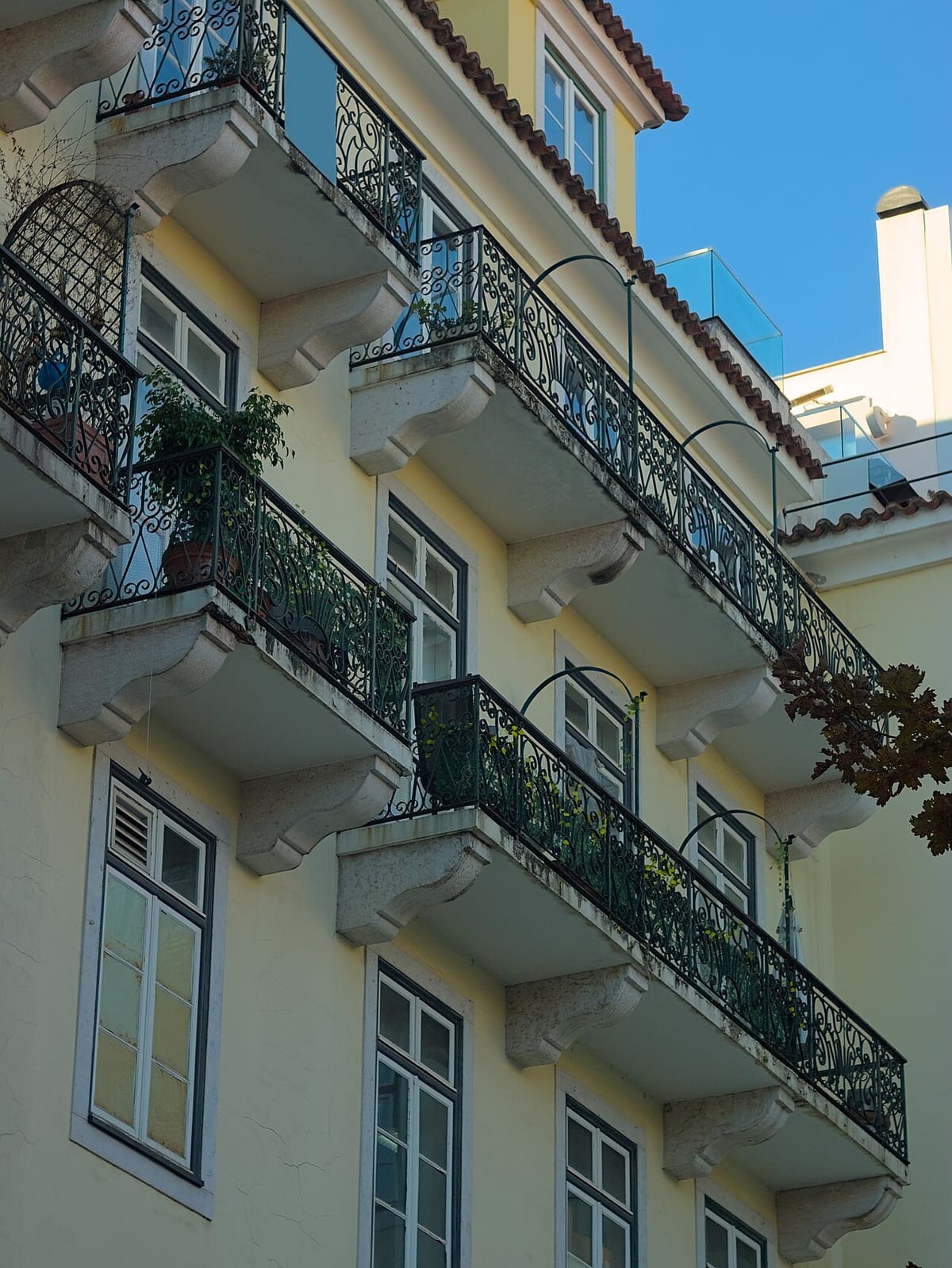
Portugal built far fewer homes than it needed over the last five years, and a new study from Spain's central bank puts a hard number on the gap: between 2021 and 2025 the country came up roughly 300,000 homes short of what population and household growth required. In proportional terms that shortfall is deeper than Spain's — a striking result for two countries usually discussed together as the epicentre of Europe's housing squeeze.
The figure comes from an analysis by the Banco de España (Bank of Spain), which measured the shortfall by comparing the number of new households forming each year with the number of homes approved for construction two years earlier — a lag that reflects how long it takes to actually build. On that measure, Portugal's accumulated 2021–2025 deficit is equivalent to about 6.6% of all the country's households as of last year.
Proportionally worse than Spain, and far above the eurozone
Spain, the larger economy, racked up a bigger absolute gap — around 750,000 homes over the same period — but that is equivalent to only 3.7% of Spanish households. Measured against the size of each housing market, in other words, Portugal's hole is close to double Spain's. Both dwarf the wider currency bloc: the study pegs the eurozone's average housing deficit at roughly 0.5% of the total housing stock, so the Iberian pair sit at the extreme end of the problem rather than in the middle of it.
The Bank of Spain's explanation is not only about how little gets built. It also points to how little of the housing stock in Portugal and Spain is public: both countries have among the smallest social-housing sectors in the European Union, which leaves the private market to absorb almost all of the demand. Where other EU states can lean on a large stock of public or subsidised homes to take pressure off prices and rents, Portugal has very little of that cushion.
What is driving the gap
None of the underlying causes will surprise anyone who has tried to rent or buy here recently. Portuguese property developers have spent much of 2026 warning that the sector simply cannot build fast enough: a shortage of skilled construction labour, a lack of serviced building land, heavy and slow licensing, and the higher cost of materials since the pandemic all cap how quickly supply can respond. The result is that completions have run well below the pace of new household formation — which is itself being pushed up by inward migration and by smaller average household sizes.
The demand side has an unusually sharp edge in the cities. On one widely cited comparison of European capitals, a person on Lisbon's average salary would need to spend more than their entire take-home pay to rent a one-bedroom flat in the centre — a rent-to-income ratio worse than Madrid's or Barcelona's, where the figure sits closer to three-quarters of income. Even allowing for the roughness of such cross-city comparisons, the direction is clear: the squeeze is tightest exactly where the jobs, and most newcomers, are.
What this means for foreign residents
A central-bank estimate of a 300,000-home shortfall is not an abstraction — it is the arithmetic behind the bidding wars, the thin rental listings and the fast-rising prices that anyone arriving in Portugal already feels. A few practical takeaways follow from it.
- The shortage is structural, not a passing spike. A deficit built up over five years, against a backdrop of slow construction and a tiny public-housing stock, will not clear in a season. Budget for a competitive market and expect to move quickly when something suitable appears, whether you are renting or buying — our overview of Portugal's housing crisis for renters, buyers and expats sets out the wider picture.
- Do not count on social or subsidised housing. Because Portugal's public-housing sector is one of the EU's smallest, the private market is effectively the only market for most newcomers. Plan your search and your budget around private rents and prices rather than assuming a subsidised option will be available.
- The pressure is concentrated in Lisbon and Porto. The deepest part of the deficit sits in and around the two big metropolitan areas. Looking to satellite towns with good rail links, or to secondary cities, can widen your options and lower the cost, if your work allows it.
- Protect yourself on the paperwork. A tight market emboldens sharp practice. If you are renting, insist on a proper written contract and official rent receipts — our guide to signing a rental lease under the NRAU explains the caução, the fiador and the recibo de renda eletrónico. If you are buying, our buyer's guide to IMT, stamp duty and mortgages walks through the costs beyond the headline price.
- Your tax residence follows your home. Where you live drives where you pay tax; if a move commits you to spending most of the year in Portugal, it may make you a Portuguese tax resident, with consequences for how your worldwide income is taxed — see our guide to becoming a tax resident.
The value of the Bank of Spain's number is that it reframes the debate. Portugal's housing problem is not principally that homes are expensive; it is that, for five years running, the country has not built enough of them — and with a negligible public-housing buffer, there has been nothing to soften the shortfall. Until construction catches up with the rate at which households are forming, the imbalance that squeezes newcomers hardest is likely to persist. On the Portuguese banking and lusophone-Africa tape, our report on Banco BPI selling its last 33.35 percent of Banco de Fomento de Angola to the Carrinho group's Congolian Financial for 388.5 million euros, twenty-four years after founding the bank sets the latest reference.