Portugal Draws the Largest Share of a 489 Million Euro EU Storm Package, and Two Thirds of It Is Still Waiting on Parliament and Council
Brussels proposed 261 million euros for Portugal on Thursday, against winter storms that killed 18 people and left more than 5.3 billion euros of damage. Only 65.37 million has actually been paid so far.
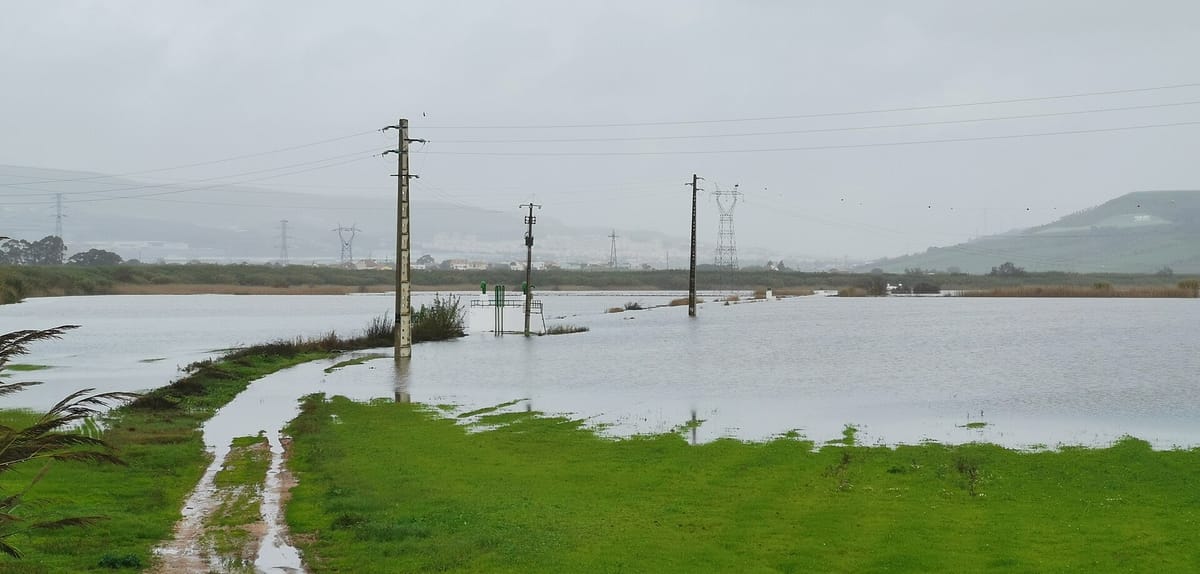
The European Commission proposed on Thursday to release 489 million euros from the EU Solidarity Fund for four countries hit by storms and flooding in January and February, and Portugal takes the largest share of it: 261 million euros.
The rest of the package goes to Spain (149 million euros), Italy (74.8 million euros) and Malta (3.72 million euros). The proposal answers applications from all four, filed after storm Harry struck Malta and Italy in January and after a run of storms flooded Portugal and Spain between January and February.
What the money is for
The Solidarity Fund does not compensate individuals or businesses for their losses. It reimburses the state for emergency and recovery work, and the Commission lists what qualifies: restoring energy, water, wastewater, telecommunications and transport infrastructure, and health and education services where relevant. It also covers clean-up operations, temporary accommodation and rescue services, plus measures to secure preventive infrastructure and protect cultural heritage.
In the Commission's own description of the Portuguese case, the storms "triggered floods and landslides, causing 18 fatalities as well as major infrastructure damage and evacuations".
"As natural disasters become unfortunately more frequent, Europe's solidarity remains unwavering," said Raffaele Fitto, the Commission's Executive Vice-President for Cohesion and Reforms. "Storms in Malta, Italy, Spain and Portugal have caused severe damage and cost lives. Today we are proposing support for the recovery after these tragic events."
Most of it has not been paid, and cannot be yet
Three of the four countries have already drawn advances against their claims. Portugal received 65.37 million euros, Spain 37.26 million and Malta 931,014 euros. Those advances come off the final bill, which leaves roughly 196 million euros still to reach Lisbon and 385.6 million euros still to reach the four capitals between them.
Thursday's announcement is a proposal, not a payment. It has to be approved by the European Parliament and the Council before the Commission can adopt the implementing decision that actually releases the balance. The Solidarity Fund sits inside the Solidarity and Emergency Aid Reserve, a special instrument that operates outside the normal ceilings of the EU budget, which is why its mobilisation needs a separate sign-off from the co-legislators each time.
Eight months, and a gap between the damage and the cheque
Portugal filed its application on 13 April, two months after the last of seven consecutive Atlantic storms that crossed the country between 22 January and 15 February. Lisbon put the damage at more than 5.3 billion euros, and Brussels confirmed in April that it was evaluating the request.
Set the two numbers side by side and the proportion is the story. A 261 million euro award against 5.3 billion euros of assessed damage is under 5 percent of the total. The fund was never designed to make a country whole; it is capped and calculated against eligible public emergency costs rather than against the loss. But the gap explains why almost every strand of the recovery has stayed a domestic budget problem.
Those strands are still open. Six months after the storms, 25 people still could not return to their homes. The Beira Baixa railway line, closed when an embankment slid away, is due to reopen on 20 September, seven months on. And in August the country's ombudsman, after reviewing how the response was handled, called for a national catastrophe fund, on the view that Portugal should not be assembling a financing answer from scratch after each event.
The Solidarity Fund itself has been doing this since 2002. In that time it has paid out more than 11 billion euros across 150 disaster events, 130 of them natural disasters and 20 health emergencies, in 25 member states, the United Kingdom and six accession countries. Portugal has drawn on it before, most notably after the 2017 wildfires.