Portugal Collected Almost 6 Billion Euros in Green Taxes in 2025, and Nearly Nine Tenths Came From Fuel and Cars
Environmentally related taxes rose 1.6 percent to about 6 billion euros in 2025, INE says, but fell to 1.9 percent of GDP, the lowest since 1995. Fuel tax, road tax and vehicle tax made up 87.8 percent of the total.
Portugal collected about 6 billion euros in environmentally related taxes in 2025, and almost nine euros in every ten came from fuel and cars. The figures were published on Thursday by the Instituto Nacional de Estatística (INE, the national statistics institute). The 2025 values are provisional.
The total, 5,956 million euros, was 1.6 percent higher than in 2024. All tax and social contribution revenue grew much faster, by 6.8 percent, so green taxes fell to 5.5 percent of the total, from 5.8 percent. Measured against the economy, they came to 1.9 percent of GDP, the lowest share since 1995, level with 2022.
Where the money comes from
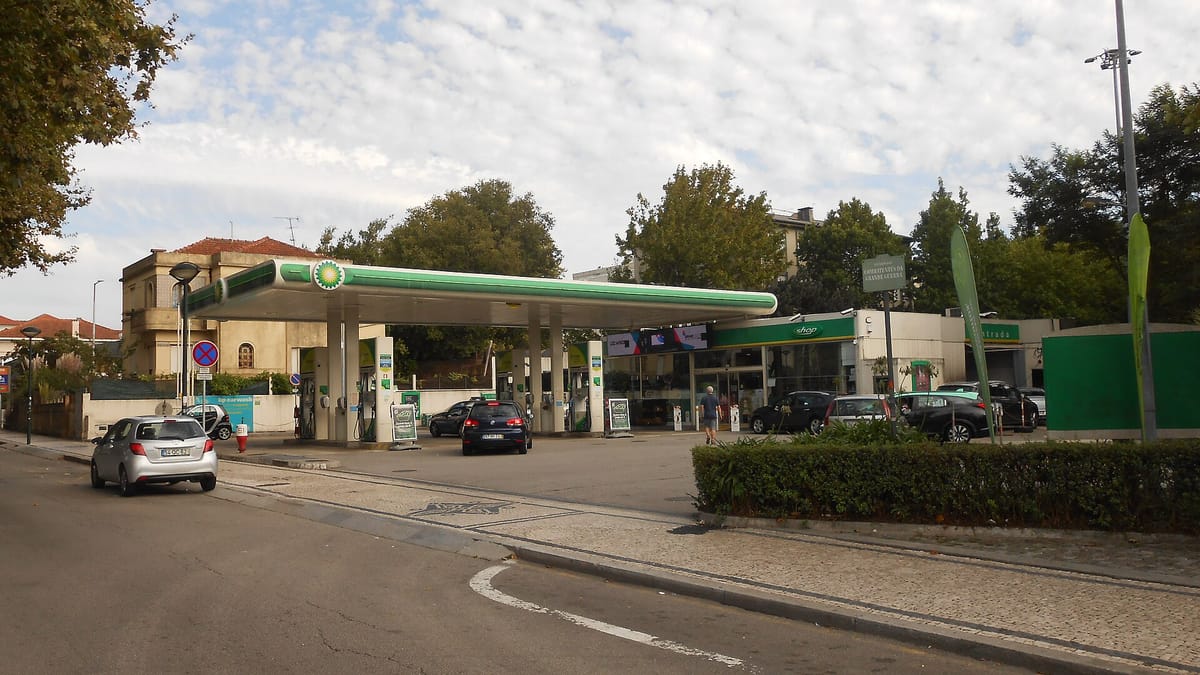
The Imposto sobre os Produtos Petrolíferos e Energéticos (ISP, the fuel and energy products tax) raised 3,865 million euros, 64.8 percent of the total. INE puts the year's increase at about 260 million euros and links it to the update of the carbon tax, the end of the exemption for advanced biofuels and the end of the extraordinary professional diesel scheme. Fuel sales helped too: according to the Direção-Geral de Energia e Geologia (DGEG, the energy directorate), diesel consumption fell 1.1 percent while petrol consumption rose 6.6 percent.
Car taxes added the rest of the motoring bill. The Imposto Único de Circulação (IUC, the annual road tax) brought in 915 million euros (15.4 percent of the total) and the Imposto sobre Veículos (ISV, the vehicle tax paid on buying or importing a car) 451 million euros (7.6 percent). Together, ISP, IUC and ISV made up 87.8 percent of all green taxes, up from 84.3 percent in 2024.
Revenue from greenhouse gas emission allowances, which INE counts as an energy tax, fell to 543 million euros from 745 million. The carbon tax on air and sea travel raised 61 million euros, up from 51 million.
These figures leave out VAT. INE excludes it from the definition because it is a neutral tax, so the VAT charged on top of ISP at the pump is not part of the 6 billion.
Who pays
INE's breakdown by payer stops at 2024. That year households paid 43.7 percent of green taxes and businesses and other sectors 56.3 percent. By our arithmetic, that put about 2.6 billion euros on households. Of what households paid, 72.5 percent was energy tax and 24.2 percent transport tax. They bore 41.8 percent of energy taxes, 46.4 percent of transport taxes and 89.8 percent of pollution taxes.
Within the EU, Portugal leans more on these taxes than most when measured against total revenue: 5.8 percent in 2024 against an EU average of 5.3 percent. As a share of GDP it was slightly below the average, at 2.0 against 2.1 percent.
Waste and sewage fees rose faster
INE also counts environmental fees, which pay for a service rather than going to the state as tax. They reached 2.3 billion euros in 2024, the latest year available, up 11.6 percent. Waste collection and treatment fees rose 13.4 percent and sanitation fees 7.6 percent; the two make up 86.5 percent of the total and reach most residents through their water bill. Fees for the packaging recycling system rose 32 percent, which INE attributes mainly to higher Ponto Verde unit values.
What this means for you
For a resident, most of this bill sits in the pump price and the yearly IUC. We have followed the weekly changes to the ISP discount, most recently when the fuel-tax discount was widened. A recent study also found that fuel tax bites hardest on middle-income households.