Portugal Calls In Foreign Water Bombers as Dozens of Councils Hit Maximum Fire Risk
Three extra firefighting aircraft were dispatched to Portugal from Italy and Spain under the European Civil Protection Mechanism as more than forty municipalities reached the highest fire-risk band. Over 15,000 hectares had burned in five days, and a rural fire in Fornos de Algodres drew 350 firefig
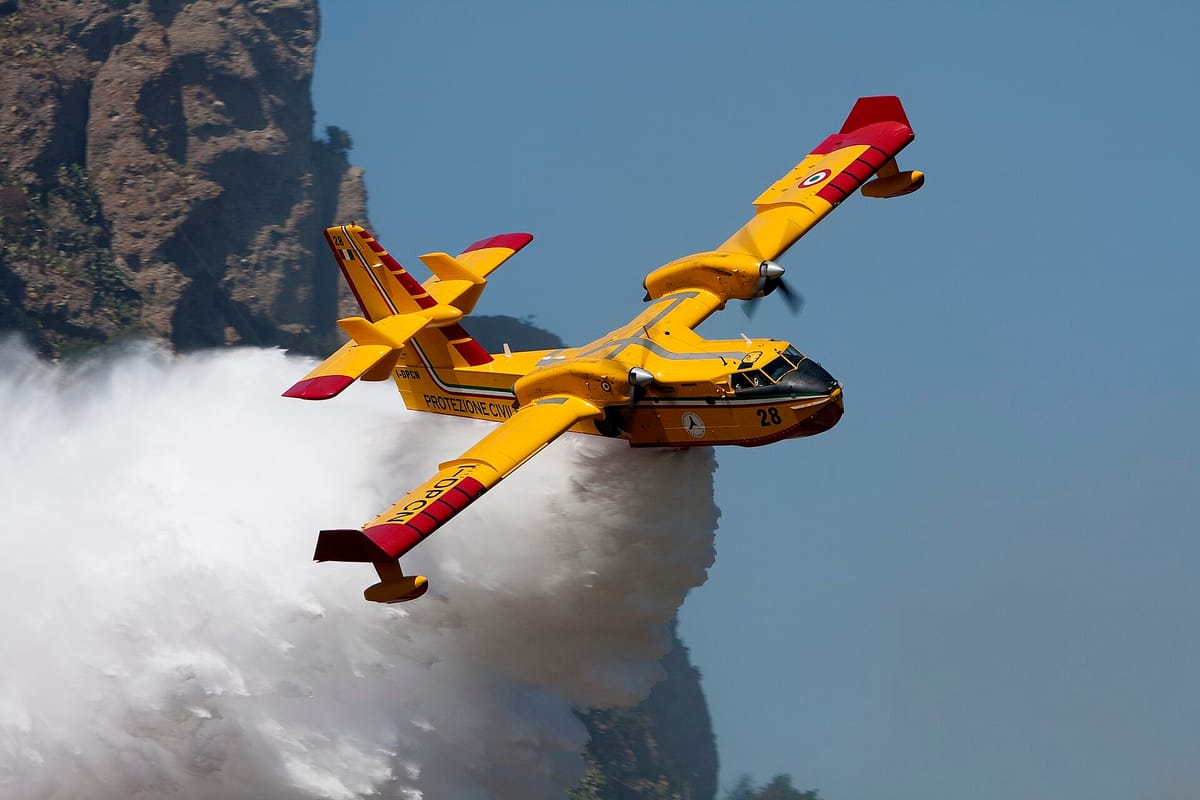
Portugal spent Friday fighting fire on two fronts at once — on the ground, where more than forty municipalities were placed at maximum risk of rural fire, and in the air, where the country turned to its European partners for extra water-bombing planes. The Autoridade Nacional de Emergência e Proteção Civil (National Authority for Emergency and Civil Protection, or ANEPC) confirmed that three additional firefighting aircraft were on their way from Italy and Spain under the Mecanismo Europeu de Proteção Civil (European Civil Protection Mechanism), reinforcing crews already stretched by a punishing week of heat.
The foreign help did not begin on Friday. A day earlier, 118 Spanish firefighters and some 45 vehicles had already crossed into Portugal to bolster the domestic response, part of the reciprocal aid that Iberian neighbours lean on each summer when both sides of the border burn at the same time. The three inbound aircraft add reach to an aerial fleet that commanders have been shuttling from blaze to blaze as new ignitions flare faster than they can be extinguished.
The scale of the danger was written into the day's weather bulletins. The Instituto Português do Mar e da Atmosfera (Portuguese Institute for the Sea and Atmosphere, or IPMA) placed more than forty councils across the interior North, the Centre and the Algarve in the highest fire-risk band, with roughly ninety more rated "very high" across sixteen districts. Castelo Branco touched 38 ºC, and the Faro district carried a yellow heat warning. In the five days to Friday, fire had already consumed more than 15,000 hectares nationwide, and the government's state of alert — which tightens rules on everything from farm machinery to countryside access — was extended in ten districts.
One fire showed how quickly a rural ignition can escalate into a municipal emergency. In Fornos de Algodres, in the Guarda district, flames advanced toward the neighbouring council of Celorico da Beira and drew a response of more than 350 firefighters, around 65 vehicles and up to 14 aircraft at its peak. By late afternoon ANEPC had downgraded the blaze to "in resolution," the stage at which crews believe the perimeter is held but remain on site to douse hot spots. It was only one of dozens of occurrences logged over the course of a single day.
For residents and visitors, the practical consequences are immediate. Under a state of alert, civil-protection authorities can restrict access to forests and protected areas, ban the use of fireworks and agricultural burning, and suspend works that throw sparks. Drivers are warned that smoke can close motorways with little notice, and municipalities in the worst-hit zones have urged people to keep phones charged and follow instructions from the emergency line 112 rather than social-media rumour.
The wider picture is a familiar one for Portugal, where a bone-dry July — the driest of the century in mainland records — left vegetation primed to ignite. Officials say the coming days will test whether the reinforced fleet, foreign crews and cooler nights are enough to keep the season from tipping into the kind of catastrophe the country suffered in 2017. For now, the message from Lisbon is one of vigilance: the fire risk, they stress, has not passed.