Portugal Bets Its Below-EU Electricity Prices Will Attract Green Industry Under a New 2040 Strategy
A government order in force from 25 June launches a Green Industrial Strategy to 2040, wagering that electricity prices around 30% below the EU average can draw decarbonisation-linked factories, data centres and green-hydrogen plants to Portugal.
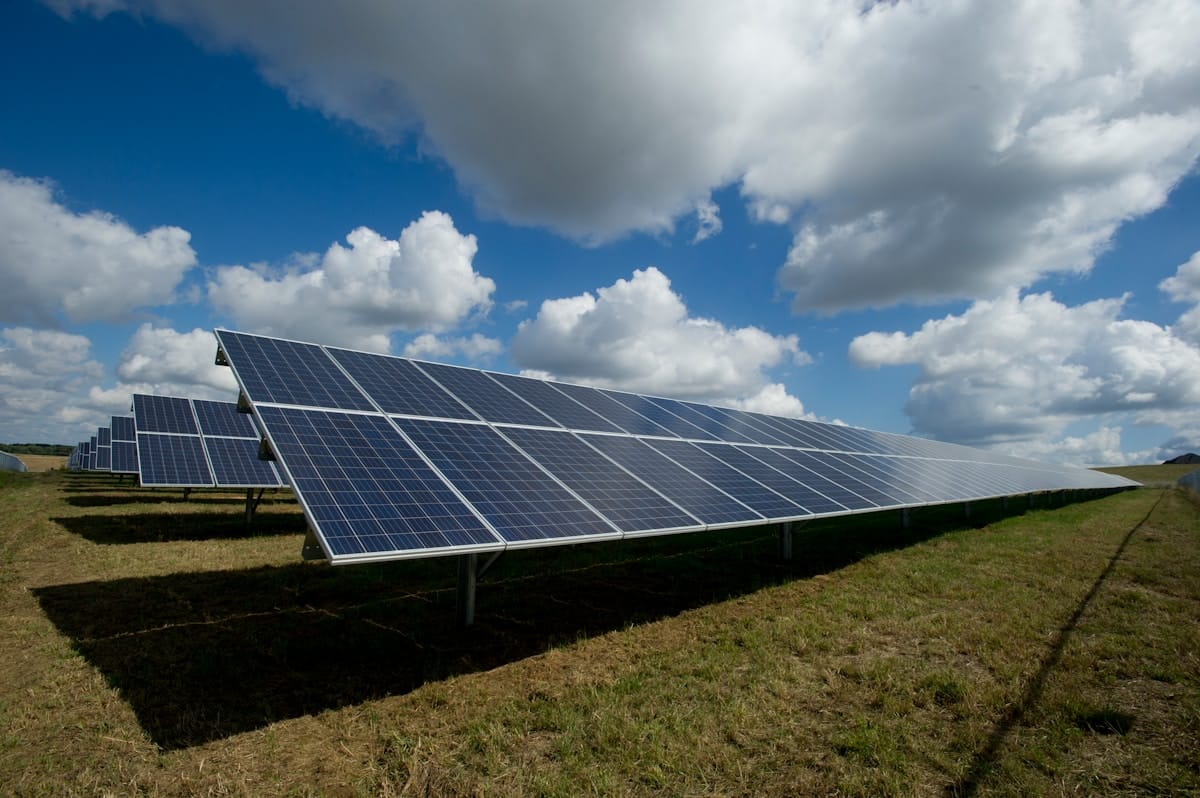
Portugal's government has set out to turn one of the country's quieter economic advantages — some of the cheapest electricity in Western Europe — into a magnet for industrial investment. A government order (despacho) that took effect on 25 June launches work on a long-awaited Green Industrial Strategy (Estratégia Industrial Verde), a framework intended to position Portugal as a competitive home for the factories, data and processing plants that the energy transition is expected to spawn over the next fifteen years.
The pitch rests on a single number that Lisbon has begun to repeat: wholesale electricity in Portugal has been running roughly 30 percent below the European Union average, the dividend of a power mix now heavily weighted toward wind, solar and hydro. The strategy's premise is that cheap, increasingly clean energy is not just an environmental achievement but an industrial selling point — one that can lower operating costs, lift productivity and draw decarbonisation-linked investment that might otherwise go elsewhere.
What the strategy is
The despacho, issued under the Ministry of the Economy led by Pedro Reis, does not itself contain the finished policy. It orders the drafting of a strategy with a horizon stretching to 2040, mandating a working group to map the obstacles that currently deter industrial investment and to identify the measures — regulatory, fiscal and infrastructural — needed to remove them. The stated goal is to "capture the economic value" of the energy transition rather than simply hosting renewable-generation projects whose benefits flow abroad.
The drafting brings together the country's economic and energy agencies: ADENE (Agency for Energy), IAPMEI (Agency for Competitiveness and Innovation), the National Laboratory for Energy and Geology (LNEG), the trade-and-investment agency AICEP, and the Directorate-General for Economic Activities (DGE), working in close consultation with industry and the scientific community.
The initiative also answers a long-running criticism. Portugal has been formally without a Green Industrial Strategy since early 2024, when an earlier legal commitment to produce one lapsed unfulfilled — a gap that industry associations and environmental groups alike had flagged as a competitive liability while neighbouring economies courted the same investors.
Why the energy angle matters
Portugal's structural cost advantage is real and growing. Renewables have repeatedly supplied the large majority of mainland electricity, and the country has logged stretches in which clean sources covered more than 70 percent of demand over a full month, displacing hundreds of millions of euros in gas imports. For energy-hungry industries — data centres, green hydrogen, battery and electronics manufacturing, electrified chemicals — a low and relatively stable power price is a decisive factor in where to build.
That logic is already playing out in concrete projects. The government has earmarked €200 million to anchor an Iberian bid for a European AI "gigafactory" at Sines, and a separate data-centre project at the same industrial hub, valued at up to €10 billion, is advancing despite a legal dispute over its cooling-water supply. A formal industrial strategy is, in effect, an attempt to convert these one-off wins into a repeatable system.
The obstacles the plan must confront
Cheap power alone has not been enough, which is precisely why the strategy exists. Investors in industrial projects in Portugal routinely cite slow and uncertain licensing, grid-connection bottlenecks, a shortage of large serviced industrial land, and skills gaps as deterrents. The energy advantage can also erode at the retail level: businesses do not always pay the low wholesale price, and grid charges, taxes and contract structures shape the bill that actually lands. The government has been tightening consumer and small-business protections in parallel, including a recent decree forcing large suppliers to offer fixed-price contracts.
Financing is the other half of the equation. Much of the public money available for industrial decarbonisation flows through the €22 billion Recovery and Resilience Plan and the Portugal 2030 cohesion funds, both of which carry firm spending deadlines. A strategy that looks to 2040 will need funding instruments that outlast those programmes.
What this means for expats
- Jobs and location decisions. If the strategy succeeds, the new industrial investment will cluster around energy and logistics hubs — Sines above all, but also Setúbal, Aveiro and the interior. For skilled foreign workers in engineering, energy and tech, that is where hiring is most likely to grow.
- An economy tilting toward energy and tech. The plan signals where Portugal wants its growth to come from over the next decade, which matters for anyone weighing a long-term move, a business relocation or a property purchase outside the established Lisbon–Porto corridor.
- Watch the gap between ambition and delivery. This is a mandate to write a strategy, not a finished policy with budgets attached. The detail — timelines, incentives, licensing reform — will arrive later, and Portugal's record on translating industrial ambitions into built projects is mixed.
- Energy costs cut both ways. The same cheap-power story that attracts factories is the one that shapes household bills. Understanding how the domestic and business electricity markets are structured is increasingly part of the cost-of-living calculation in Portugal.
The working group now has to turn a one-page advantage into a credible, fundable plan. Whether Portugal can convert the cheapest electrons in the neighbourhood into durable, high-value industry — rather than simply exporting the benefit — is the test the Green Industrial Strategy has set for itself.