Portugal's €22 Billion Recovery Plan Nears Its 30 June Project Deadline With Mobilising Agendas About 90% Complete
Five years of EU recovery money reach a hard stop on Tuesday. With execution near 90% and a backstop running to year-end, the government insists not a single euro will be lost.
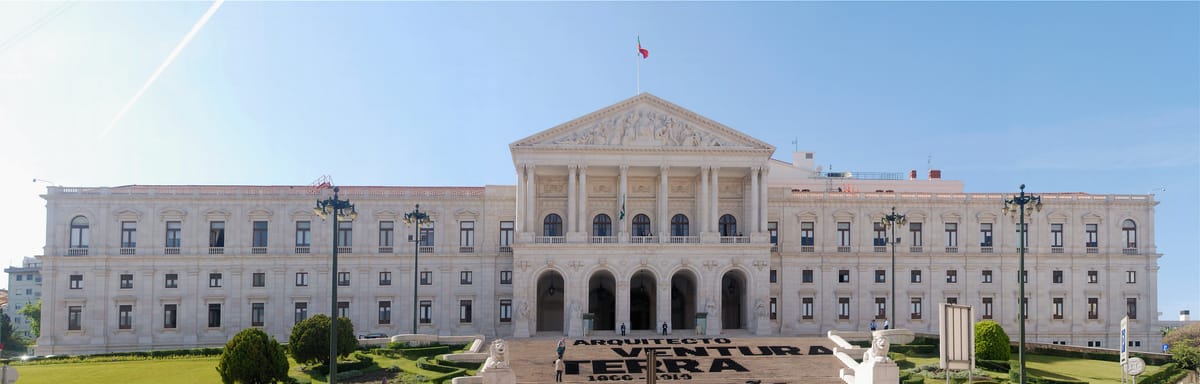
The clock that has governed much of Portugal's public investment since 2021 stops on Tuesday. 30 June is the deadline for completing projects under the Plano de Recuperação e Resiliência (Recovery and Resilience Plan, or PRR), the country's slice of the European Union's post-pandemic recovery fund, and the final days are being spent racing to close out the last unfinished work.
The numbers behind the plan are large. Portugal was allocated €16.32 billion in grants and a further €5.87 billion in loans, roughly €22 billion in all, to be channelled into housing, health, the digital and energy transitions, skills and a cluster of business-led innovation projects. As the deadline arrives, the government's headline message is one of reassurance rather than alarm.
The mobilising agendas
Among the most closely watched pieces are the so-called agendas mobilizadoras (mobilising agendas), 51 consortia that pair companies with research institutions to develop new products and technologies. Days before the deadline, their combined execution rate stands at "about 90%." Between them, the agendas have generated more than a thousand new products, processes and services, a portfolio that organisers say stretches from satellites built and launched for the space sector to next-generation medicines and batteries.
The money has flowed unevenly, however. Companies in the agendas have drawn down around €2 billion, but are still owed more than €1 billion, payments that will have to be settled even as the project window formally closes.
What the deadline actually means
The 30 June date marks the end of the period for carrying out the investments, not the absolute end of the process. Manuel Castro Almeida, the Minister of Economy and Territorial Cohesion (Ministro da Economia e da Coesão Territorial), has said Portugal will execute the entire PRR by 31 August and pledged that the country "will not waste a single euro" of the plan. Crucially, the proofs of financial execution, the paperwork that documents how the money was spent, can still be submitted until 31 December 2026, giving administrators a six-month tail to reconcile accounts.
That distinction matters because the PRR has long been dogged by warnings about the pace of spending, particularly in housing, where targets for publicly funded homes were repeatedly flagged as at risk. Reaching roughly 90% on the innovation agendas, if it holds, would count as a far smoother landing than many forecasts once allowed.
Life after the PRR
The expiry of the recovery plan does not switch off the flow of European money, but it does change its character. Attention now turns to Portugal 2030, the country's structural-funds programme, whose execution is expected to intensify precisely as the PRR winds down, smoothing what might otherwise be an abrupt drop in public investment in the second half of the year.
For five years the PRR has been the single biggest lever on Portuguese investment, blamed for bottlenecks and credited for momentum in roughly equal measure. Tuesday closes the building phase. The accounting, and the verdict on whether the money was well spent, will run for months yet.