A €10 Billion Sines Data Centre Hangs on an EDP–Government Court Fight Over Seawater
Start Campus says its up-to-€10 billion Sines data centre could be derailed by a court fight between EDP and the Government over the seawater channels it uses for cooling.
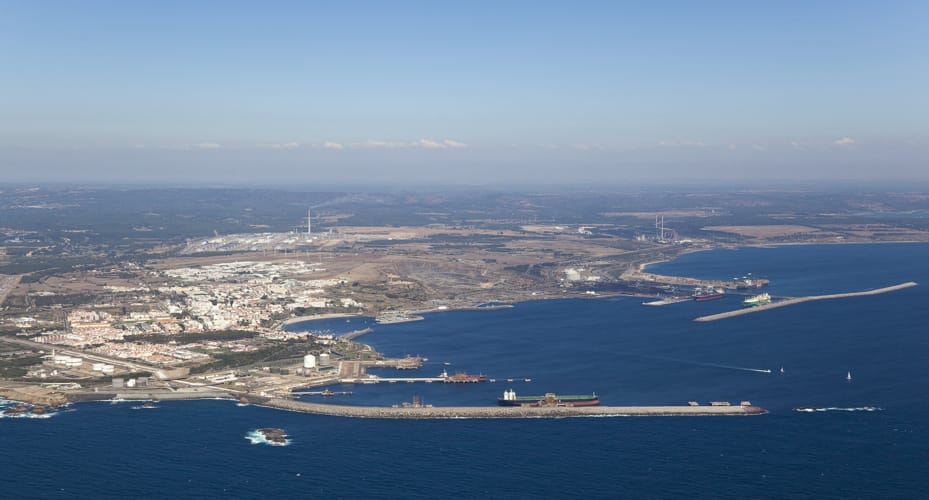
Start Campus, the operator of one of Europe's largest hyperscale data-centre campuses in Sines, acknowledged on 26 June 2026 that its €10 billion project could be derailed by an escalating court battle between EDP (Energias de Portugal, the country's former state electricity utility) and the Portuguese Government over who controls the seawater it relies on to keep its servers cool.
The campus, located on Portugal's southwest coast, is already partly live: its first building is operational and a second is under construction. But the company has warned that the remaining phases of the project hinge on a legal question that is now before the courts.
Why Seawater Is Mission-Critical
Like all large data centres, the Sines facility generates enormous heat as it runs. To manage it, the campus draws cold seawater from circulation channels built decades ago to serve the EDP thermal power plant at Sines, which closed in 2021. The water passes through the cooling systems and is returned to the sea up to 3°C warmer than when it was drawn. This approach avoids the heavy electricity and freshwater consumption that conventional cooling would demand, making continuous access to the channels the operational backbone of the entire site.
That access is now uncertain. Decree-Law 52/2026 transferred ownership of the seawater circulation channels to Águas de Santo André (Waters of Santo André), a regional water utility. EDP is contesting that transfer in court, arguing over the rightful ownership of infrastructure that was once part of its power-plant complex. Until the dispute is resolved, the long-term legal status of the channels, and the rights to use them, remains unsettled.
A Flagship Project in Limbo
Start Campus's Chief Operating Officer, Luís Rodrigues, said the company cannot complete its full planned infrastructure without confirmed long-term rights to access the seawater. For an investment of this scale, certainty over a critical input is not a detail but a precondition: lenders, equipment suppliers and prospective tenants all need assurance that the cooling system underpinning the campus will remain available for the project's lifetime. A dispute over ownership, even one between the state and a company it once owned, introduces precisely the kind of regulatory risk that can stall further commitments.
The stakes extend beyond a single operator. Sines is a strategic industrial and deep-water port hub, and Portugal has positioned it as a centrepiece of its ambitions in digital infrastructure and foreign investment. A campus valued at up to €10 billion ranks among the largest of its kind in Europe and serves as a showcase for the country's bid to attract hyperscale computing capacity. A protracted court fight over a piece of legacy infrastructure threatens to send a cautionary signal to the international investors Portugal hopes to court.
With the first building running and the second rising, the outcome of the EDP-Government dispute will determine whether the Sines campus grows into the flagship it was designed to be, or stalls midway as its operator waits for the courts to settle who owns the water that keeps it cool.