Portugal and Eight Other Countries Ask Brussels to Extend the Right to Pause the EU's New Biometric Border Checks Past September
Portugal has joined eight other European countries in asking Brussels to keep the escape hatch open on the European Union's new biometric border system. In a joint letter to Magnus Brunner, the European Commissioner for Home Affairs, Portugal,...
Portugal has joined eight other European countries in asking Brussels to keep the escape hatch open on the European Union's new biometric border system. In a joint letter to Magnus Brunner, the European Commissioner for Home Affairs, Portugal, Belgium, France, Germany, Greece, Italy, Malta, the Netherlands and non-EU Switzerland have requested that the temporary right to partially suspend the Entry/Exit System (EES) be allowed to continue beyond its scheduled end date of 6 September 2026.
The EES replaces the old manual passport stamp with a digital record — including fingerprints and a facial image — for non-EU nationals entering the Schengen area. It began rolling out in October 2025 and became fully operational in April 2026. To ease the transition, member states were given a mechanism to switch back to lighter, manual checks when queues built up. That flexibility is what the nine signatories now want to preserve. The scheduled end of the partial-suspension mechanism on 6 September, they warned, is "a matter of serious and legitimate concern" for member states and for the transport sector as a whole.
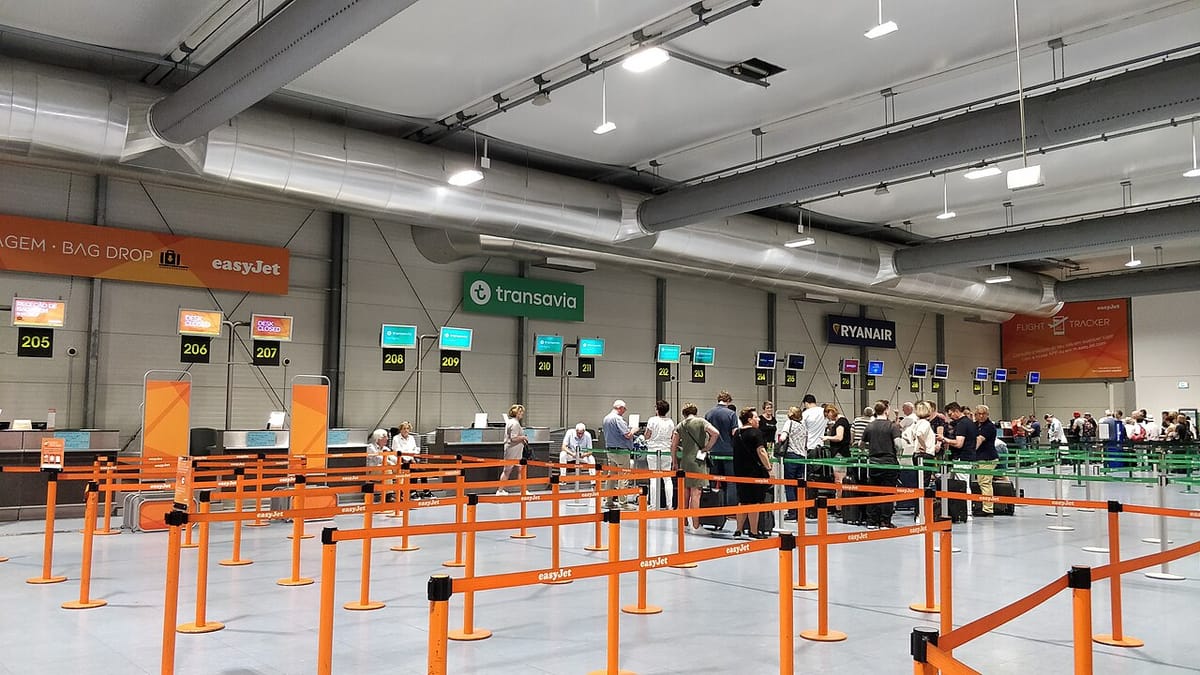
Portugal's interest is not abstract. The letter was co-signed by Luís Neves, the Minister of Internal Administration (ministro da Administração Interna), and Lisbon's Humberto Delgado Airport has been one of the worst pinch points in Europe, with border-control waits reported at up to five hours during peak periods this year. Losing the ability to fall back to manual checks in September — as autumn traffic and the tail of the summer season overlap — could see those queues return with no pressure valve.
Lisbon has spent the year scrambling to add capacity at the frontier. The government has installed new documentary-control desks, brought in more electronic gates at the main airports, and stationed hundreds of additional PSP officers on airport borders for the summer. Even so, biometric enrolment takes longer per passenger than a stamp, and the physical infrastructure at Lisbon in particular has struggled to keep pace with arrival volumes.
The request is separate from — though often confused with — ETIAS, the EU's forthcoming €20 travel authorisation for visa-exempt visitors, which was itself pushed back to 2027. EES governs how travellers are processed at the border; ETIAS governs whether they are cleared to travel at all. For the millions of non-EU visitors — including many British, American and Brazilian travellers with homes or family in Portugal — the practical takeaway is the same: the machinery of Europe's smart borders is still being built in mid-flight, and the countries operating it are not yet confident it can run without a manual override. On the flexibility the border forces have just lost, our account of what expired at the biometric border on 6 September, why the six-hour partial suspension ran that late, and what Portuguese airports have left when a queue builds sets the latest reference.