After Eleven Years, Campo Maior Readies Millions of Handmade Paper Flowers to Drape Its Streets for August's UNESCO-Listed People's Festival
For the first time since 2015, the Alentejo town of Campo Maior stages its UNESCO-listed Festas do Povo from 8 to 16 August, with thousands of residents making paper flowers to blanket up to 100 streets in a festival held only when the townspeople decide.
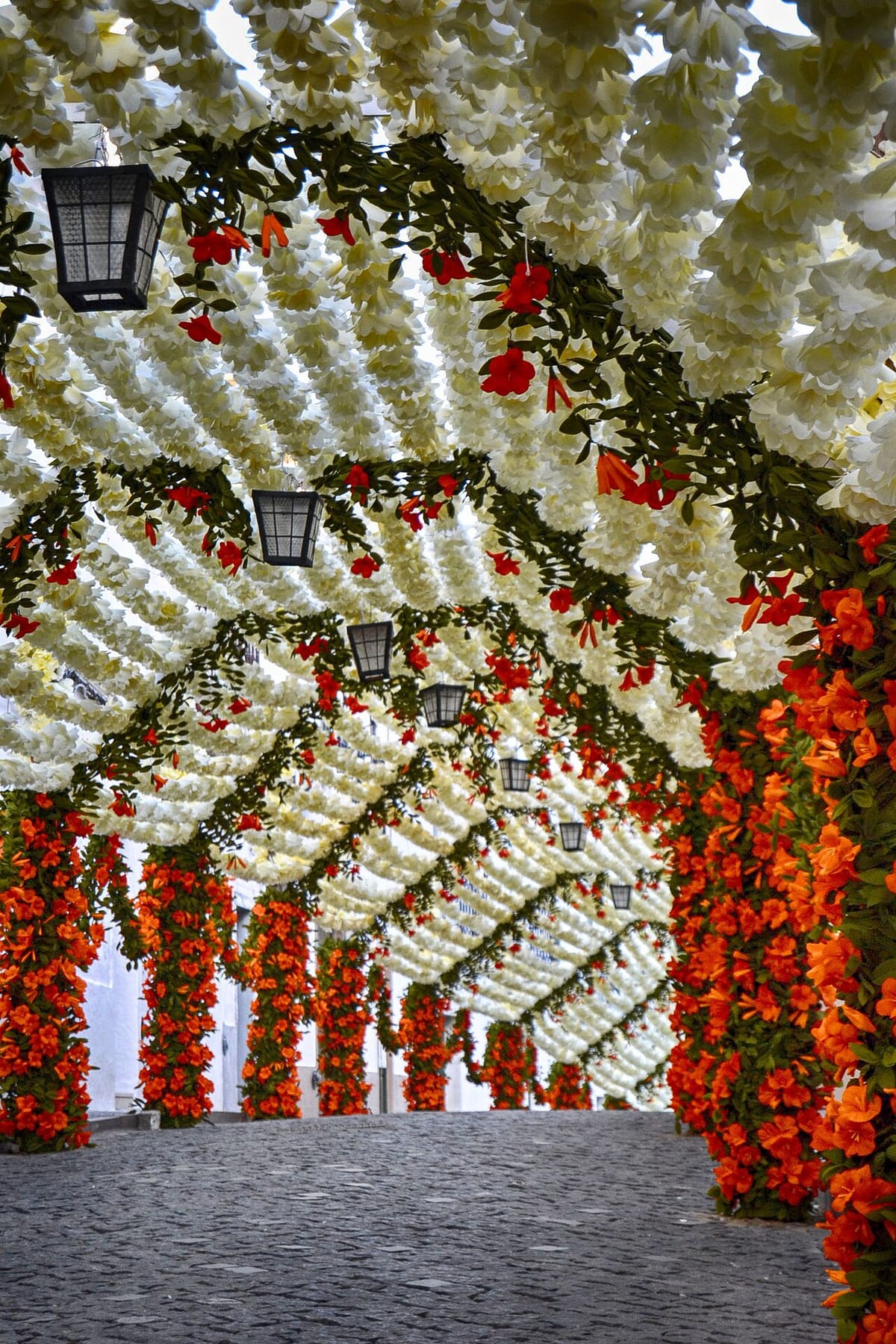
In the Alentejo border town of Campo Maior, thousands of residents are once again threading crepe paper into flowers — millions of them — to bury their own streets under a canopy of colour. For the first time since 2015, the town is staging its Festas do Povo (People's Festival), the UNESCO-listed spectacle in which entire neighbourhoods are roofed over with handmade paper blooms. This year's edition runs from 8 to 16 August 2026, and the organisers say they are "very close" to their goal of decorating 100 streets.
What makes the festival singular is not only the scale of the decoration, known as the enramação, but the way it is called into being. There is no fixed calendar: the Festas do Povo happen only when the townspeople decide they want them, a choice signalled roughly three months in advance. That popular trigger was one of the traits highlighted when UNESCO inscribed the festival on its list of Intangible Cultural Heritage of Humanity in 2021 — making 2026 the first full staging since that recognition.
A town-sized volunteer effort
The numbers behind the flowers are substantial. This year's celebration carries an investment of more than €600,000; the 2015 edition cost around €1 million and drew some four to five thousand residents into the workshops. Preparation typically begins months ahead, in the quiet of winter, as families cut and assemble the blooms by hand before hoisting them across the streets in the days before the opening.
"These festivals are held when the people want them," João Manuel Nabeiro, president of the Associação das Festas do Povo de Campo Maior (Campo Maior People's Festival Association), told reporters, framing the UNESCO seal as "more responsibility" and the ambition as staging "the best festival ever." This year's editions will also feature decorative work contributed by other Portuguese regions and by neighbouring Spain, a nod to the town's position on the raia, the Portuguese-Spanish frontier. Visitors can trace the tradition year-round at the Centro Interpretativo das Festas do Povo (People's Festival Interpretation Centre), the "Casa das Flores," opened in 2022 after an investment of over €1.2 million.
What this means for you
- Mark the dates. The streets are open and free to walk from 8 to 16 August; the decoration is best seen by day for the colour and by night, under lantern light, for the atmosphere.
- Plan the trip around Elvas and Badajoz. Campo Maior sits in the Portalegre district near the Spanish border, an easy add-on to the fortress town of Elvas (itself a World Heritage site) or a day across the frontier in Badajoz.
- It is a rare window. With editions staged only when the town chooses — and an eleven-year gap since the last one — there is no guarantee when the next will fall, which makes this summer the one to catch it.
- Coffee lovers, take note. Campo Maior is the home of Delta Cafés, the roaster built by the Nabeiro family, so the festival pairs naturally with a visit to the town's coffee heritage.
For expats building a calendar of Portugal's living traditions, the Festas do Povo belong in the same bracket as the country's other recently revived or recognised cultural draws — from Silves reopening its award-winning cork museum to the Buçaco woodland's new status as the peninsula's first therapeutic forest. Few of them, though, ask an entire town to build the attraction by hand.