Porto Wants Owners of Vacant Buildings in Its Historic Centre to Pay Ten Times the IMI in 2027, After Writing to 6,400 of Them
The mayor will put a tenfold property-tax rise on empty buildings in the Centro Histórico into the 2027 budget. What the IMI Code allows, who decides, and the 33 million euros developers paid instead of building affordable homes.
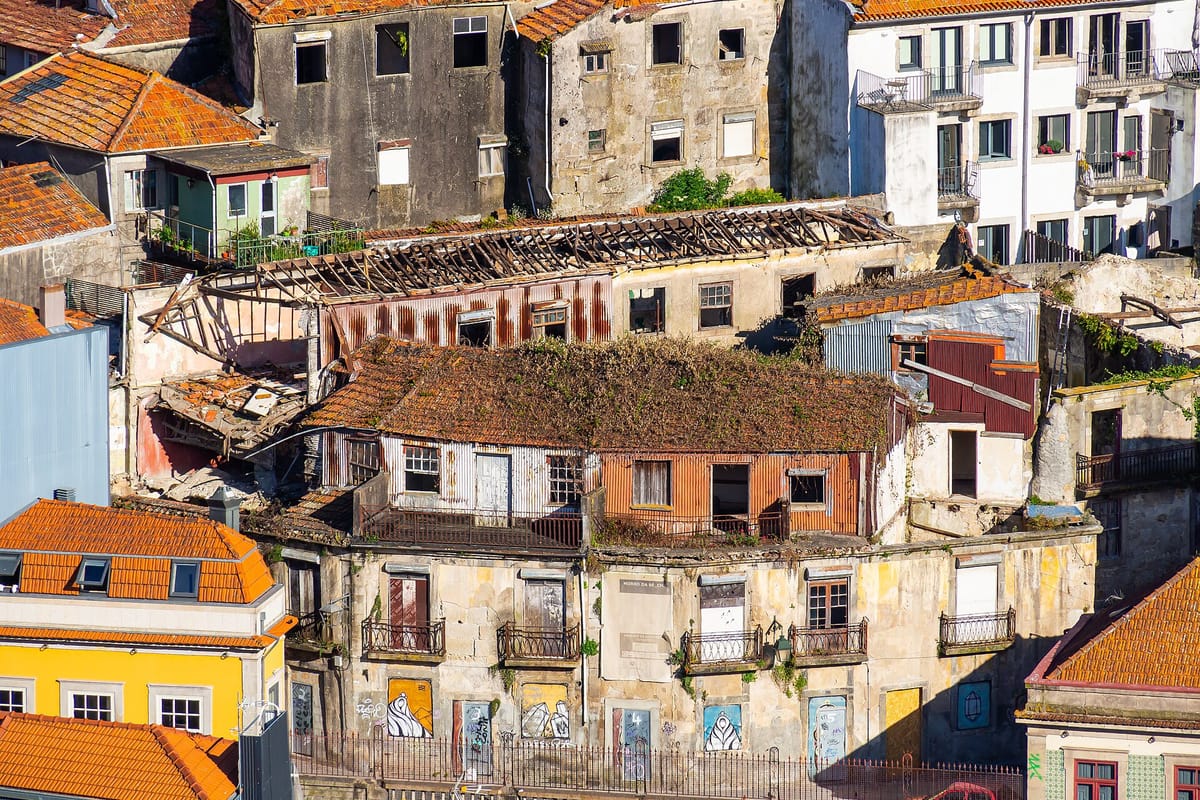
Porto City Council wants owners who leave buildings empty in the city's historic centre to pay ten times the municipal property tax (IMI, Imposto Municipal sobre Imóveis) they pay now. The mayor, Pedro Duarte, said on Wednesday that the council executive will put the increase forward in its municipal budget so that it applies in 2027, according to Lusa, as reported by ECO and Observador.
"We have not voted on it yet, but our proposal will be that IMI in the historic area is raised to ten times its current value," he told reporters. "I think it will be a very significant penalty that, I hope, makes owners think twice before keeping that house vacant or empty and off the market." For now the increase would cover buildings only. Duarte said the council could later look at empty plots, although they are a "residual" case in the Centro Histórico.
How many buildings, and what happened before
In a note on its website on 1 October, quoted by Lusa, the council said it had identified 6,400 buildings showing signs of being vacant across the city. It has written to their owners to point them to the municipal tools for restoring a building and bringing it back onto the housing market. Owners who do not act face IMI "up to three times the current value, or up to ten times more" where the building is in an area of high housing pressure, the note said.
The council declares buildings vacant, and raises their IMI, once a year. According to the same note, the higher rate covered 379 buildings in 2022 and 531 in 2023. There was no political decision to apply it in 2024, and in 2025 the procedure did not go ahead because of the change of municipal executive.
What the tax code allows
The multipliers come from the IMI Code (Código do IMI). On ordinary urban property, councils set a rate of between 0.3 and 0.45 percent of the tax value (valor patrimonial tributário). On top of that:
- Anywhere in the country, under article 112.º(3), the rate is tripled every year for urban buildings that have been vacant for more than a year, and for buildings in ruins unless a natural disaster or calamity caused their state. Where only part of a building is vacant, the higher rate applies to that part.
- In an area of high housing pressure (zona de pressão urbanística), article 112.º-B replaces the tripling: the rate is raised tenfold, and by a further 20 percent in each later year, up to a ceiling of 20 times the normal rate. The same rule covers buildings in ruins and building plots zoned for housing.
- The municipal assembly can lift that ceiling by 50 percent for a home that is neither let as housing nor the owner's permanent residence, and by 100 percent where the owner is a company.
- Any revenue above what the ordinary tripling would raise must go to the council's housing policies.
The rates are decided by the Assembleia Municipal (municipal assembly), not by the council executive alone. Under article 112.º, the decisions must reach the tax authority (AT) by 31 December to take effect the following year, and councils must publish the list of vacant buildings and plots taxed under article 112.º-B on their website and in their municipal bulletin.
Who is affected
The higher rate is aimed at owners who keep a building empty for more than a year. A property that is let or lived in is not covered. The council's stated aim is to get the buildings "onto the market", and its letters point owners to the municipal tools for restoring them. The 2027 State Budget would also extend the IMI and IMT breaks on restored old buildings to 2031. IMI has grown far more slowly than the tax on buying a home, as we reported on Tuesday.
33 million euros in place of affordable homes
At the same event, the launch of the new name of the transport company Mobt Porto (until now STCP Serviços), Duarte said the council has received about 33 million euros since 2021 from developers who paid compensation instead of building affordable housing in the city's inclusive zoning area, in "16 or 17 cases", according to Lusa, as reported by Observador. The money goes into a municipal housing fund. He said he would take a change to the regulation to the next executive meeting, removing the option to pay compensation for hotel and tourist developments. The council is under pressure over seven such cases approved this month, which it has said it may revoke, as we reported on Monday. Municipal planning staff were due to meet opposition councillors on Thursday afternoon.