Porto Records 1,765 Species but Tree Cover of Just 5 Percent, and Sets a Target of 15,000 New Trees by 2030
A council survey confirms 201 bird species and 448 pollinators in Porto, but green space covers no more than 25 percent of the city and tree canopy 5 percent. The council wants 30 more hectares of public green space and 15,000 new trees by 2030.
Porto has confirmed 1,765 species living within its 41 square kilometres, but trees shade only about 5 percent of the city and green space covers no more than a quarter of it. Those are the main findings of a biodiversity survey that the Câmara Municipal do Porto (Porto City Council) published on Wednesday, together with the targets it has set itself for 2030, including planting 15,000 trees.
The survey is the groundwork for the city's first Estratégia Municipal de Biodiversidade (Municipal Biodiversity Strategy). Its results were debated on 4 November by the committee overseeing the strategy, which brings together council staff, the city's municipal companies, researchers, environmental groups and specialists.
What the survey found
The diagnosis was carried out by the consultancy Floradata, using fieldwork, records from citizen-science platforms and published studies. It confirmed 1,765 species in the city between 2021 and 2025, which the council calls "a remarkable richness" for a small and densely built city. Among them:
- 201 bird species.
- 448 pollinator species, 54 percent of the invertebrates recorded.
- Eight habitat types protected under the EU Habitats Directive, one of them a priority habitat: the alder woods that line watercourses.
The survey identifies three main hubs of biodiversity:
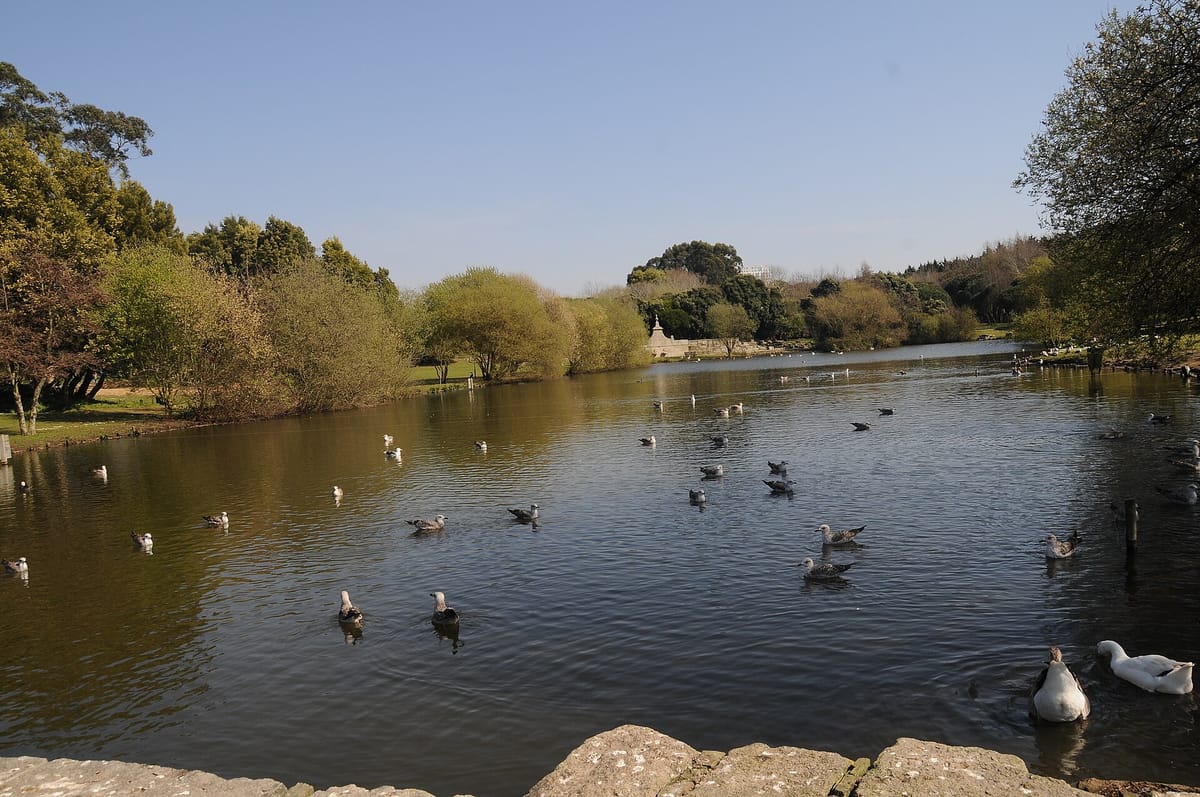
- Parque da Cidade, with the coastal strip and the Nevogilde and Ervilheira streams;
- Serralves and Pasteleira, with the corridor down to the salt marsh at the mouth of the Granja stream and the riverfront as far as the Botanical Garden;
- Parque Oriental, in the east of the city, with the valleys of the Tinto and Torto rivers, Freixo and the Parque de Cartes.
It also singles out Quinta do Covelo, Parque da Asprela and the planning areas of Currais and Aldoar as places of high importance.
The weak points are space and shade. Green space makes up no more than 25 percent of the municipality, tree canopy covers only 5 percent, and what green there is is broken into fragments, which makes it harder for species to move between areas.
The 2030 targets
By 2030, the council says it wants to:
- add 30 hectares of green space open to the public;
- raise the ecological value of 10 hectares of existing green space;
- remove the sealed surface from 15 hectares of ground, so that rain can soak in again;
- plant 15,000 trees;
- increase the number of habitats and species by 10 percent.
The council has not yet said where the trees or the new green space will go, or what the plan will cost. That is the next stage: the committee has been asked to comment on the proposed actions by the end of November.
"Biodiversity goes well beyond environmental responsibility. It has an impact on urban planning, on health, on people's quality of life and on economic questions too. It is a real, living urban infrastructure," said Catarina Araújo, the deputy mayor responsible for the environment. In a city as densely built as Porto, she added, the council has a duty "to restore degraded spaces, recover watercourses, gardens and natural habitats" so that they work as a single system.
Why tree cover now has an EU deadline
The council ties the strategy to the EU's biodiversity strategy for 2030 and to the Nature Restoration Regulation, Regulation (EU) 2024/1991. Article 8 of that law requires each member state to ensure there is no net loss in its total national area of urban green space and urban tree canopy cover by 31 December 2030, compared with 2024. From 2031, tree canopy cover must show a rising trend in every urban area the law covers, measured every six years.
Cities whose urban centres already exceed 45 percent green space and 10 percent tree canopy can be left out of the no-net-loss count. Porto's citywide figures, as the council reports them, are well below both thresholds, although the regulation measures them over urban areas that each country maps for itself. Every member state had to send the European Commission a draft national restoration plan by 1 September 2026, setting out how it will meet these targets. Portugal filed its draft on 28 August, third of the 27.