Poland Fined Jerónimo Martins 525 Million Zloty for Running a Pact That Kept Lorry Drivers From Changing Employer
The Polish competition regulator says the owner of Biedronka organised an agreement among the hauliers at its distribution centres not to hire one another's drivers, and enforced it by barring drivers who moved. Twenty-nine carriers and eight individuals were fined alongside it.
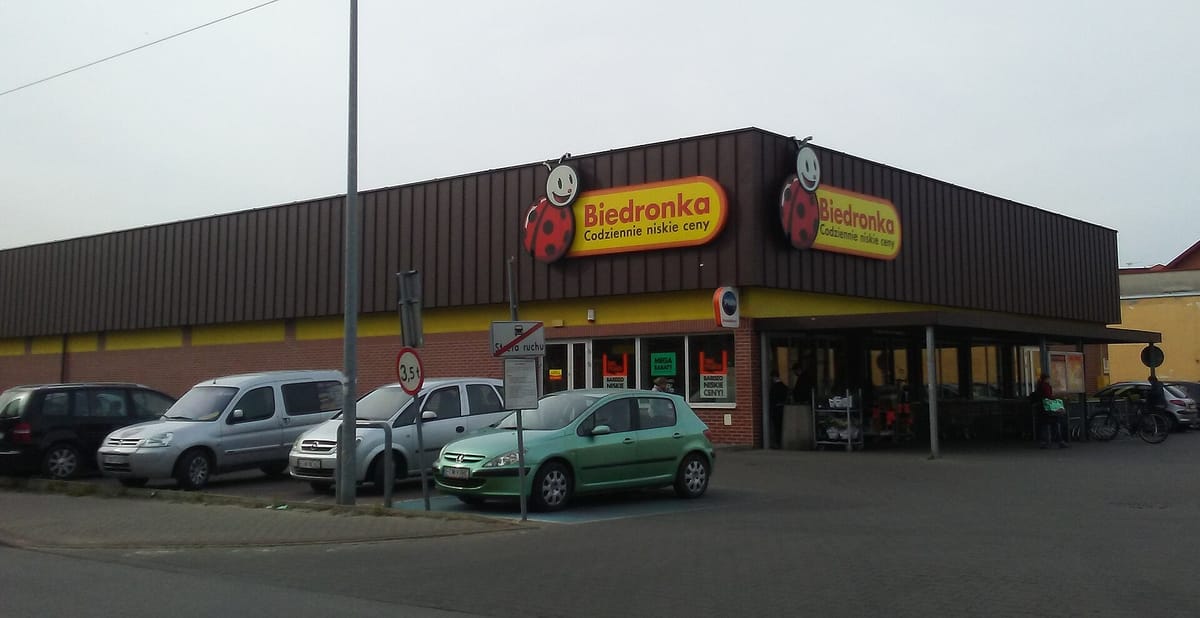
Poland's competition regulator fined Jerónimo Martins 525.5 million zloty on Monday, about 121.5 million euros, for organising an agreement among the hauliers serving Biedronka's distribution centres that stopped lorry drivers moving from one employer to another.
The decision, number DOK-4/2026, was issued by the President of the Urząd Ochrony Konkurencji i Konsumentów (Office of Competition and Consumer Protection, or UOKiK) and dated 14 September 2026. Jeronimo Martins Polska, the company that runs the Biedronka chain, is the largest of thirty-eight parties penalised. Twenty-nine transport firms and eight individuals were fined alongside it, bringing the total to 572 million zloty, roughly 132 million euros.
The finding is not about the price of groceries. It is about the price of labour. UOKiK classified the arrangement as a sharing of the market for the acquisition of lorry drivers' services, an infringement of Article 6(1)(3) of Poland's competition act and of Article 101(1)(c) of the Treaty on the Functioning of the European Union. It ran from June 2017 until at least February 2024, when investigators searched the companies.
How the arrangement worked
Carriers working the same Biedronka distribution centre agreed not to compete for each other's staff. A driver who wanted to switch to a rival serving the same warehouse needed his existing employer's consent. Without it he was placed under a block and could not work at that distribution centre for a set waiting period, a karencja running to several months depending on the site.
That made hiring a competitor's driver close to pointless, because the driver would sit idle for months and the rival gained nothing by offering better pay. UOKiK found that Jeronimo Martins Polska was the organiser: it enforced the agreed terms, passed information between the carriers, and decided who was allowed through the gates, barring drivers who had moved in breach of the understanding.
The regulator says the retailer also benefited indirectly, because weaker competition for drivers meant less upward pressure on driver pay and therefore on the rates the carriers charged Biedronka. It notes that the company's own internal documents acknowledged the practice might breach the law, and that it carried on regardless.
The correspondence quoted in the decision is blunt. One carrier asked in 2022 for a waiting period to be applied to a particular driver, reasoning that "if we do not stick to clearly defined rules we will create 'unhealthy' competition between carriers". Another complained in 2021 that "now we have a 'rat race' among drivers over who will pay more, and the carriers inside Biedronka are outbidding each other", and worried that opening the gate would leave lorries with nobody to drive them.
Several thousand drivers
UOKiK puts the number of drivers whose employment terms were affected at several thousand, in a period when qualified drivers were scarce. Tomasz Chróstny, the regulator's president, said workers "have the right to look for better pay and working conditions", and that an agreement removing that right "strikes at the basic principles of fair competition".
The European Commission was consulted on the draft decision and agreed that competition law had been broken. One haulier applied under the leniency programme, and because it came forward after proceedings had begun its fine was halved rather than waived. The eight individuals penalised were owners, partners or managers at the carriers, the largest of those fines being 390,000 zloty. UOKiK also ordered the parties to stop the practice to the extent they had not already done so.
What this means for residents of Portugal
- This is Portugal's biggest retailer, in its biggest market. Jerónimo Martins owns Pingo Doce and Recheio at home, but Biedronka is by some distance the group's largest business. A penalty on this scale lands on a company that sits in the PSI index and in a great many Portuguese pension and savings products.
- No-poach deals are competition law, not just employment law. Regulators across the EU now treat agreements not to hire each other's workers as cartels in their own right, because the thing being fixed is pay. The legal basis here includes Article 101 of the EU treaty, which applies in Portugal exactly as it does in Poland.
- The figures are the regulator's. Every number above comes from UOKiK's decision and its accompanying statement. Jerónimo Martins had published no response through its own newsroom when this was written, and the company's account is worth waiting for before treating the matter as closed.
The detail that will follow this case around is not the size of the fine. It is the finding that the supermarket group was not a bystander to an arrangement among its contractors, but the party holding the gate.