Paying Portugal's Motorway Tolls in 2026 — A Practical Guide to the Two Toll Systems, Via Verde, and the Easytoll, TollCard and Visitor Options for a Foreign-Plated Car
Portugal runs two toll systems on the same motorways, and one has no barriers at all — a camera reads your plate and expects payment arranged in advance. A practical 2026 guide to Via Verde, the electronic-only roads, and the Easytoll, TollCard and visitor options for a foreign-plated or rental car.
Few things catch out new arrivals and holidaymakers in Portugal more reliably than the tolls. The country runs two quite different toll systems on the same motorway network, and one of them has no barriers, no booths and no way to hand over cash — a camera simply reads your number plate and expects you to have arranged payment in advance. Get it wrong in a foreign-registered or rental car and the first you hear of it may be a fine weeks later. This guide explains how the two systems work, how residents use Via Verde, and which options exist for a car on foreign plates in 2026.
The two toll systems
Most of Portugal’s older motorways use traditional toll plazas (portagens) with physical barriers. You either take a ticket when you join and pay when you leave, or pay at a single gate. At these plazas you can pay with cash or a bank card in the manual lanes, or glide through the green Via Verde lanes if you have an electronic transponder fitted.
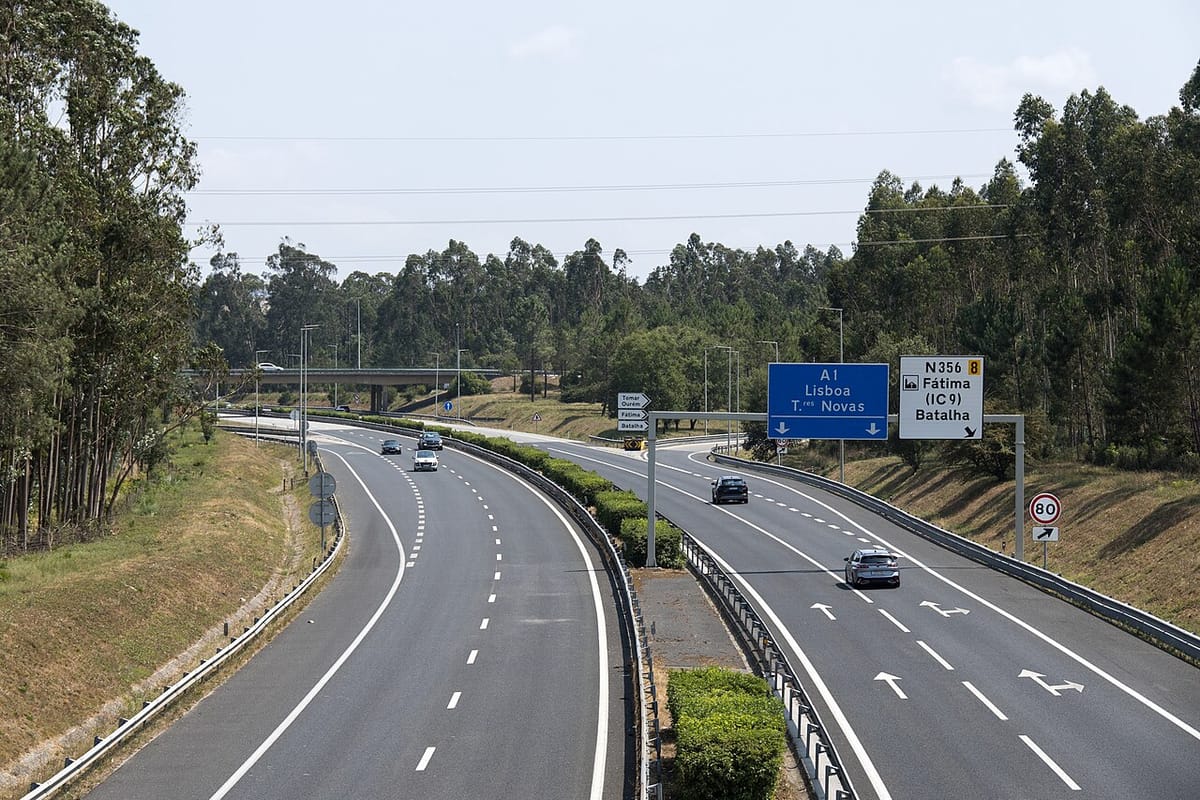
The catch is the second network: the exclusively electronic tolls, the former SCUT motorways, which have no barriers at all. Overhead gantries photograph your plate and read any transponder as you pass at full speed. There is nowhere to stop and pay, so you must have a registered means of payment linked to the vehicle before you drive on them, whether that is a Via Verde device or one of the visitor products below. These roads are scattered around the country and are easy to join without realising a toll is being charged.
One important recent change: in 2025 the government abolished tolls on a swathe of interior motorways and on the Algarve’s A22, so several roads that once billed electronically are now free. Plenty of electronic-only stretches remain elsewhere, however, so the rule of thumb still holds — if you are driving beyond the main barrier motorways, assume a toll may be charged by camera and make sure you are covered.
Via Verde: the resident’s default
If you live in Portugal and drive with any regularity, the standard solution is Via Verde. You fit a small transponder (the identificador) to the inside of your windscreen and link it to a Portuguese bank account or card; tolls are then read automatically on every road, barrier or electronic, and billed to you, usually monthly. At manned plazas you use the dedicated Via Verde lanes and never stop. The same device also pays for many car parks, some fuel stations, ferries and drive-throughs. You can order one online or pick it up at Via Verde stores, CTT post offices, motorway service areas and Lojas do Cidadão, typically for a small monthly device fee on top of the tolls themselves.
Options for a foreign-plated car
If your car is registered abroad — because you are visiting, or have not yet legalised and re-plated it in Portugal — you cannot simply set up a normal Via Verde direct debit. Instead the national toll operator runs a set of visitor products, most of which you register before or on arrival. Buy or activate them before you drive, and make sure the validity covers your first day on the road:
- Easytoll — links your bank card directly to your number plate. You register online or at a Welcome Point (there are booths near the main border crossings and airports), swipe your card, and tolls are debited automatically. It is valid for 30 days and covers the electronic-only roads.
- Via Verde Visitors — a rented transponder that behaves exactly like a resident’s device. It is the only visitor product that also lets you use the Via Verde lanes at the barrier plazas without stopping, so it is the most convenient if you are covering a lot of ground on mixed motorways.
- TollCard — a prepaid card loaded with a fixed amount (€5, €10, €20 or €40), activated by linking it to your plate, usually by SMS. It is valid for a year after activation and is drawn down as you use the electronic tolls — handy for a short trip with no bank-card link.
- TollService / CTT temporary device — a pre-loaded device sold through CTT that works only on the exclusively electronic motorways.
- 3-Day Virtual Card — unlimited journeys for three days, available for Class 1 and Class 2 vehicles (cars and motorcycles), useful for a weekend visit.
Renting a car? Most rental vehicles come with a transponder already fitted, and the company charges the tolls back to you afterwards — often with a daily service fee that can dwarf the tolls themselves. Check the rental agreement before you set off so you know how it is billed, and do not add a second payment method that could double-charge you.
Vehicle classes and what you pay
Tolls are priced by vehicle class, set mainly by the number of axles and the height of the vehicle over the first axle. Class 1 covers ordinary cars and motorcycles (under 1.1 metres at the first axle); Classes 2 to 4 rise with larger vans, vehicles with trailers and heavy goods vehicles. A roof box or a caravan can push you into a higher class, so the figure on the price table is not always the one you expect.
What happens if you do not pay
On the electronic-only roads, an unpaid toll is not immediately a fine. You are given a short window — a few days after the trip — to settle it, and you can pay in cash at CTT post offices or Payshop agents, or online, quoting your plate. Miss that window and the toll converts into a coima (administrative fine) with hefty surcharges added on top of the original few euros. Foreign-registered vehicles were long able to slip the net, but enforcement and cross-border collection have been tightening, and the gap has become a running complaint from the motorway concessionaires. The safe course is simple: sort a payment method out on day one, keep it valid for the whole trip, and pay any electronic toll promptly if you find one on your account.
One last practical note: tolls are separate from the annual road tax every Portuguese-registered vehicle owner pays, the Imposto Único de Circulação. If you have just put your car on national plates, our guide to paying the IUC explains that side of the bill.