Parliament Debates Wednesday Whether to Let the Government Rewrite Rental Law by Decree: Two Months of Arrears to End a Lease and No Cap on Deposits
Government Bill 103 seeks a 180-day authorisation to amend the NRAU. The annexed draft decree ends the cap on starting rents, allows three months of rent in advance and any deposit, and speeds up evictions. DECO and the PS object.
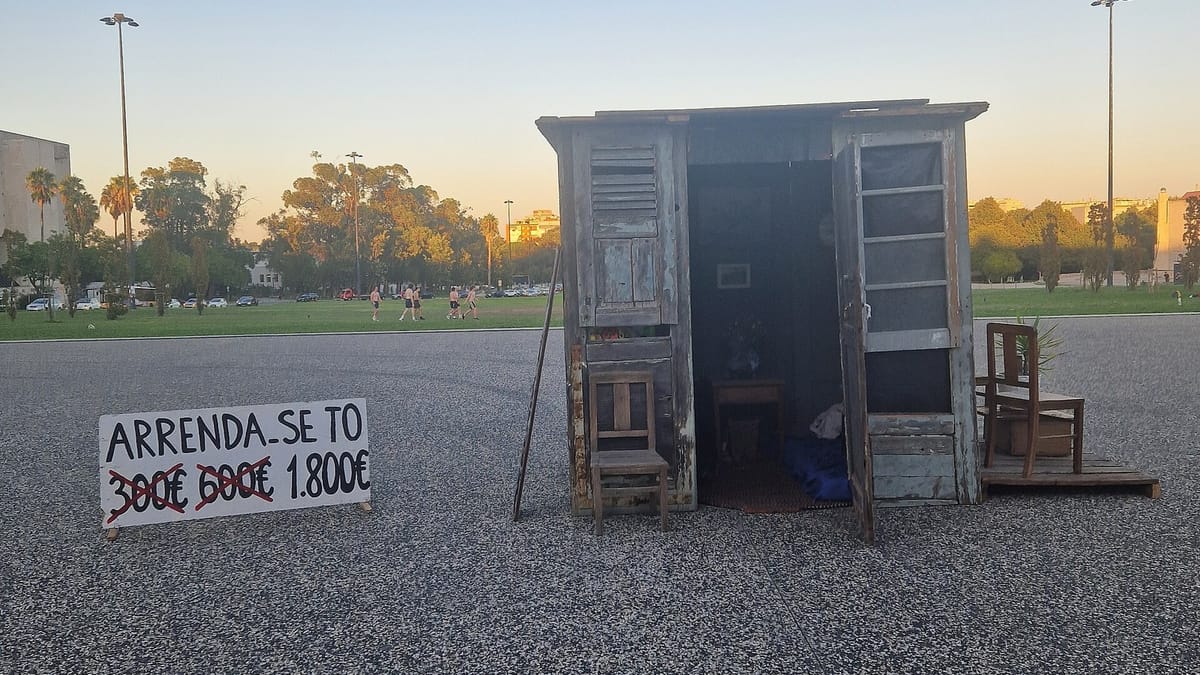
Parliament debates on Wednesday, 30 September, the bill that would let the government rewrite Portugal's rental law by decree. Proposta de Lei n.º 103/XVII (Government Bill 103) asks the Assembleia da República (Assembly of the Republic) for a 180-day legislative authorisation to amend the Novo Regime do Arrendamento Urbano (New Urban Lease Regime, NRAU), the Civil Code, the Code of Civil Procedure and six related laws. The general debate is scheduled jointly with bills from the PCP, IL, BE, Livre and PS, and resolutions from BE, JPP and PAN, according to the parliamentary record.
The Council of Ministers approved the proposal on 9 July, as we reported at the time. It was filed on 12 August and admitted on 1 September. The signed text, with the draft decree-law annexed article by article, shows what tenants and landlords would face if the authorisation passes.
What the draft decree would change
- Rent arrears. A landlord could end a lease once rent is two months late, instead of three. Paying more than eight days late would also justify ending the lease if it happens more than three times in 12 months, or more than four times in 18 months.
- Starting rents. Article 34 of Lei n.º 56/2023 (Law 56/2023, the "Mais Habitação" housing package), which limits the rent a landlord can set when one residential lease follows another, would be repealed, along with that law's limits on rent updates.
- Upfront payments. Tenant and landlord could agree in writing to pay up to three months of rent in advance, and the parties could agree any deposit, with no cap.
- Open-ended leases. A landlord could end an indefinite contract by giving at least three years' notice, and the minimum length for automatic renewal of fixed-term leases would go.
- Pre-1990 leases. If landlord and tenant do not agree, an old contract would move into the NRAU as a fixed five-year lease. Tenants aged 65 or over, or with a disability of 60 percent or more, would keep their old contract unless they agree otherwise, and rents could only be raised extraordinarily where household income is above five annual minimum wages.
- Notices and evictions. Letters could go by email where an electronic address was agreed, and the special eviction procedure would be simplified, though a judge must still authorise entry to a tenant's home.
The government's explanatory memorandum argues that successive changes to rental law "limited private autonomy", pushed homes off the market and helped drive an "unprecedented" rise in rents. It cites a 2021 census estimate of about 375,000 empty homes that are neither for sale nor for rent.
The objections
The consumer association DECO sent its comments to parliament's housing committee on 16 September. It says the reform should not transfer risk "disproportionately" to tenants. It points out that current law allows no more than two months of advance rent and caps the deposit at two months' rent, so the new rules would raise the cost of simply moving in. "A consumer may be able to afford a given monthly rent and, at the same time, not have the cash for the first rent, advance rents and a high deposit," DECO wrote.
The Socialist leader, José Luís Carneiro, attacked the method as well as the content on Sunday. Speaking in Cabeceiras de Basto, he said the government wanted to decree "the liberalisation of evictions" outside parliamentary scrutiny, and urged it not to legislate "on the margins of the Assembly". About forty people held a vigil outside parliament on Wednesday asking MPs not to give the government a "blank cheque".
If the authorisation passes its general vote, it goes to committee before a final vote. The decree the government then approves must stay within the "sense and extent" set out in the bill. Separately, two new state rental schemes took effect on 1 September.