Parliament Backs Compulsory Helmets for E-Scooter and E-Bike Riders at First Reading, but the €30 to €150 Fines Still Face Committee and a Final Vote
Parliament has backed compulsory helmets for e-scooter and e-bike riders at first reading. The PSD bill, with €30 to €150 fines and a night-time reflective-clothing rule, now goes to committee before a final vote.
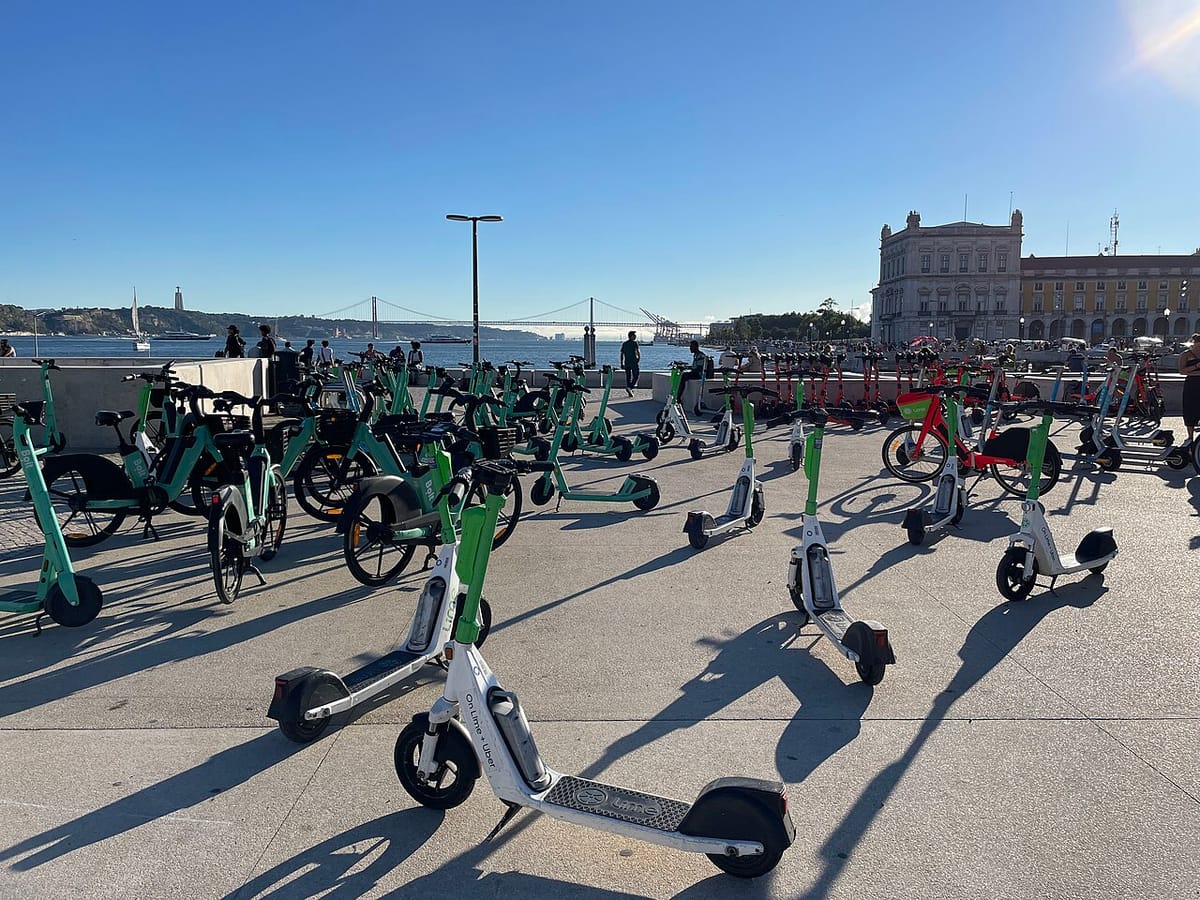
The Assembleia da República (parliament) voted on Wednesday 30 September to approve, on general principles, a bill that would make helmets compulsory for riders of electric scooters and electric bicycles in Portugal. The measure is not yet law: the vote "na generalidade" (first reading) only sends the text to committee, where it can be rewritten before a final vote, and the President must then sign it before it is published.
The main text is the PSD's Projeto de Lei n.º 622/XVII/1.ª (draft law 622), filed on 22 May, which we reported on at the time. A narrower Socialist Party bill, Projeto de Lei n.º 774/XVII/2.ª, filed on 18 September, was debated alongside it and also passed. Both now go to the Comissão de Infraestruturas, Mobilidade e Habitação (Infrastructure, Mobility and Housing Committee), which parliament lists as the committee responsible on each initiative page.
How the parties voted
According to the tally reported by Portuguese media on Wednesday evening (the parliament's initiative pages had not yet recorded the votes), the PSD bill passed with votes in favour from the PSD, Chega, the PS, Iniciativa Liberal, CDS-PP, the PCP, Bloco de Esquerda and JPP. PAN abstained and Livre voted against. The PS bill passed with no votes against, with PAN and Chega abstaining.
Two non-binding recommendations to the government were debated in the same sitting. The PS's Projeto de Resolução n.º 1264/XVII/2.ª, which was reported as approved, asks the government to step up enforcement against scooters and bikes ridden on pavements, to regulate speed limiters for scooters and similar devices, and to study a pilot scheme of disposable helmets, with shared and occasional users in mind. PAN's Projeto de Resolução n.º 1273/XVII/2.ª, on making helmets more accessible to riders, was reported as rejected.
What the PSD bill would change
Portugal had a helmet rule for these vehicles until Decreto-Lei n.º 102-B/2020 (a December 2020 decree-law amending the Código da Estrada, the Highway Code) repealed it with effect from 8 January 2021. Since then, as the PSD's explanatory statement points out, there has been no general duty to wear a helmet on an e-scooter or a pedal-assist e-bike that stays within the legal limits for vehicles treated as bicycles.
The bill would restore that duty by rewriting article 82 of the Highway Code. As filed, it requires a properly fitted and fastened helmet for:
- riders and passengers of "velocípedes com motor" (pedal-assist e-bikes, whose motor of up to 1.0 kW must cut out at 25 km/h or when the rider stops pedalling);
- riders of electric scooters, electric unicycles, self-balancing boards and similar powered devices treated as bicycles under article 112 of the code.
It also adds a duty, in article 90, to wear reflective clothing or retroreflective equipment between dusk and dawn, and whenever weather or other conditions reduce visibility. The PSD's explanatory statement says this does not mean a high-visibility vest: reflective strips, reflective technical clothing or reflective accessories on clothing or the helmet would do. The minimum standard would be fixed later by a portaria (ministerial order) from the minister responsible for mobility, on a proposal from the Instituto da Mobilidade e dos Transportes (IMT, the transport regulator).
In the text as filed, not wearing a helmet is fined at €30 to €150, and riding without the reflective gear is also fined at €30 to €150. Some reports on Wednesday put the scooter helmet fine at €60 to €300; that is not what the filed text says, although the figures can still change in committee.
The bill would enter into force 30 days after publication. The reflective-clothing duty would only bite 30 days after the portaria takes effect, and the government would have 120 days from publication to approve it.
The narrower PS alternative
The PS bill takes a different line on e-bikes. Its explanatory statement says ordinary pedal-assist e-bikes that meet the legal limits should stay treated as bicycles, with no general helmet duty. It would require helmets only on e-bikes that exceed those limits (more motor power, assistance that does not cut out when the rider stops pedalling, or a top speed above 25 km/h) and on electric scooters and similar devices. It contains no reflective-clothing rule. Its helmet fine is the same €30 to €150.
The committee will now have to reconcile the two texts. The PSD bill's initiative page notes that a public consultation is open and stays open until the committee votes on the detail.
What it would mean for riders
Nothing changes yet. Until a final text is passed, signed by the President and published in the Diário da República (the official gazette), riding an e-scooter or a legal pedal-assist e-bike without a helmet remains lawful.
If the PSD version survives, the rule would apply to anyone riding these vehicles on Portuguese roads. Neither bill distinguishes between privately owned and shared vehicles, or between residents and visitors, so tourists and foreign residents using shared scooters or bikes in Lisbon, Porto or elsewhere would be covered in the same way as owners. Shared-fleet users would in practice need to bring their own helmet unless operators or councils provide one, which is the gap the PS recommendation on disposable helmets is meant to address.
Under the PS version, most people on an ordinary e-bike would be unaffected, while scooter riders would still need a helmet. The detail stage will decide which approach becomes law, and the final wording could differ from both texts.
The PSD bill cites Guarda Nacional Republicana (GNR, the national guard) figures showing e-scooter accidents rose from under 25 a year up to 2021 to 706 in 2024, with more than 1,900 accidents, 10 deaths, 88 serious injuries and 1,442 minor injuries recorded over the last seven years.