Only Georgia and Russia Fell Further: Portugal Lands Among Europe's Largest Democratic Retreats Since 2020
Representation still puts the country in the world's top 20. Rule of Law dropped twelve places, Participation twenty, and freedom of expression recorded one of the ten steepest five-year falls anywhere.
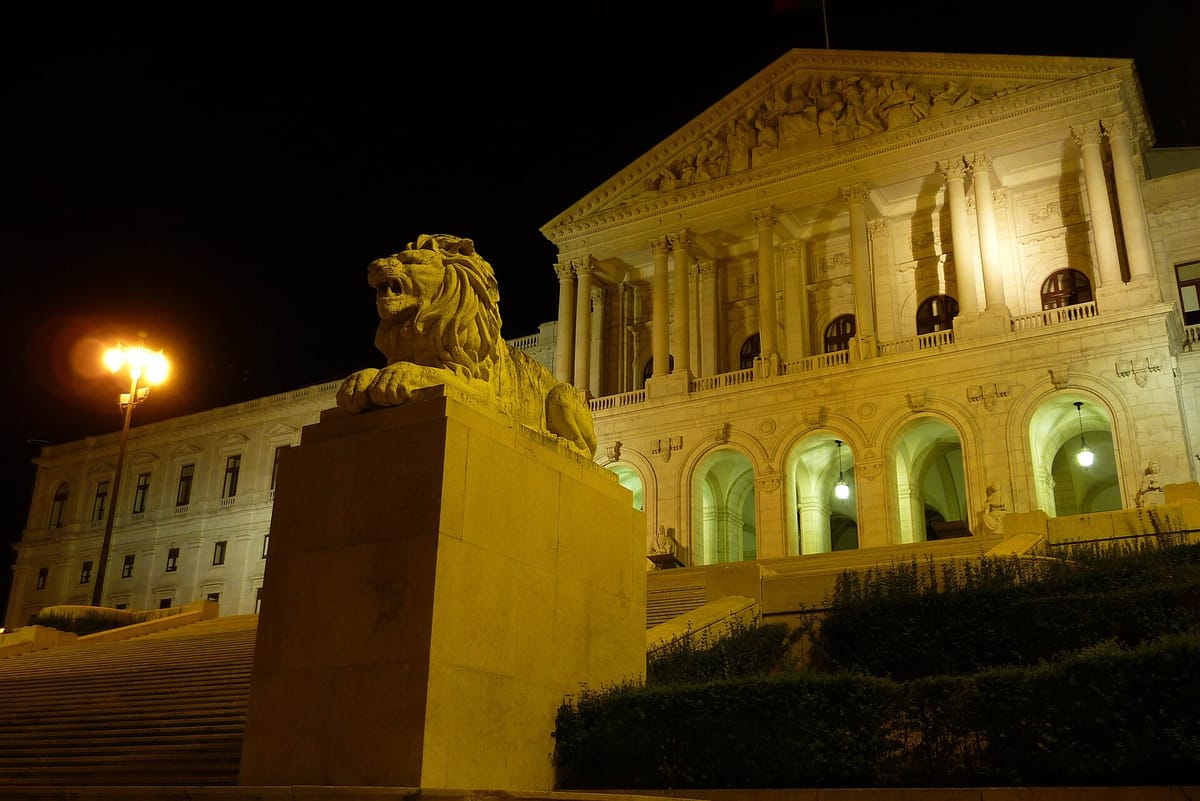
Portugal is named in a report published on Tuesday as one of the high-performing democracies that lost ground between 2020 and 2025, and within Europe only Georgia and Russia slipped further.
The finding comes from The Global State of Democracy 2026: Democracy in an Age of Conflict, the eighth edition of the annual assessment produced by International IDEA, the intergovernmental body based in Stockholm. The report covers 174 countries against data running back to 1975, and scores each of them in four categories: Representation, Rights, Rule of Law and Participation.
Where Portugal actually sits
Representation remains the country's strongest suit by a distance, and keeps Portugal inside the world's top 20. The direction of travel elsewhere is what the report picks out. On Rule of Law, Portugal comes 45th, twelve places lower than in the previous edition. On Participation it comes 75th, a fall of 20 places.
Within Europe, Portugal is grouped among the countries with the largest retreats over the five years to 2025, level with Armenia and Slovakia. The report puts it alongside Germany and the United Kingdom as examples of established democracies where civil liberties and electoral quality have eroded without the overall system being called into question.
The sharpest single result concerns freedom of expression. Portugal registers one of the ten steepest five-year falls recorded anywhere on that measure, behind only Afghanistan and Myanmar. The other countries in that group are Burkina Faso, Mali, Russia, Peru, Germany and Denmark, a list that mixes states under military rule with wealthy European democracies, which is part of the report's point.
Eleven separate indicators stood lower in 2025 than in 2020: freedom of expression, gender equality, freedom of political parties, civil liberties, predictable enforcement of the law, economic equality, rule of law, access to justice, political equality, credibility of elections and freedom of the press.
"Not a catastrophic decline"
Alexander Hudson, an adviser to International IDEA, told the Lusa news agency that the numbers should be read carefully. This is "not a catastrophic decline", he said, meaning the scores are nowhere near the range at which democracy itself comes under threat as a system of government.
He also conceded that the pattern resists easy explanation. "It is difficult to attribute these generalised declines to a specific cause," he said, framing the result instead as "a moment to pay attention and to ask what could be done differently".
A continent, and a world, moving the same way
Portugal's result sits inside a broader European picture the report describes as negative. Across the continent, 77 declines at the level of individual factors outnumbered 42 advances between 2020 and 2025. Europe accounted for 27 percent of all democratic declines recorded worldwide, and for 46 percent of the global falls in freedom of the press. More than half of European countries registered at least one decline.
Globally, 2026 marks the eleventh consecutive year in which more countries fell back than moved forward. Fifty-seven percent of countries, 98 in all, declined on at least one factor, while 32 percent advanced on at least one. Seventy-one countries score low on Rule of Law.
The report's second half links those numbers to violence. Drawing on the Uppsala Conflict Data Program, it counts 65 violent conflicts in 2025, including eight between states, the highest totals in records that begin in 1946.