Nearly Three Quarters of Portugal's Gender Pay Gap Has No Measurable Cause, ISEG Study Shows on Equal Pay Day
Women earned 11.9 percent less base pay than men in 2024, and an ISEG study published for Equal Pay Day says 73.8 percent of the adjusted gap cannot be explained by education, job, sector or employer.
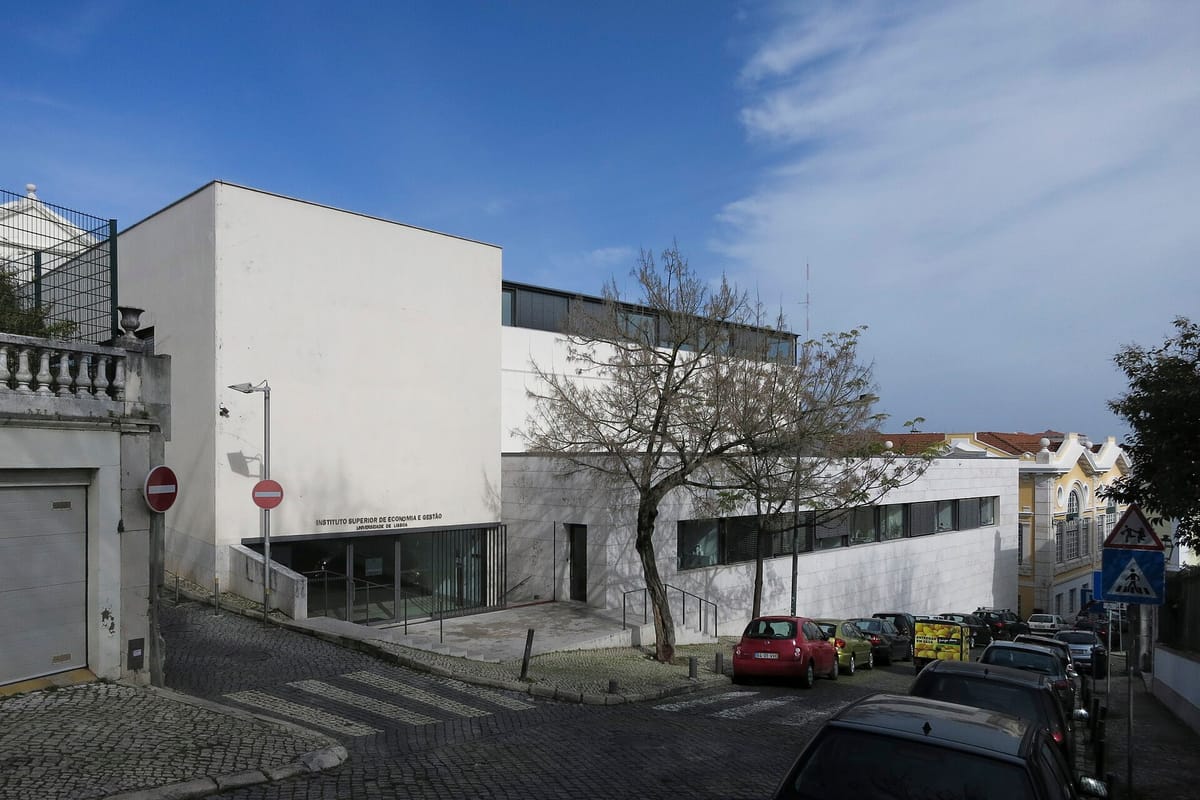
Almost three quarters of the pay gap between women and men in Portugal cannot be explained by differences in age, education, job, sector or employer, according to a study published for today's National Equal Pay Day (Dia Nacional para a Igualdade Salarial). The Gender, Work and Power Observatory at ISEG, the economics and management school of the University of Lisbon, puts that unexplained share at 73.8 percent in 2024. The authors say this "suggests the possibility of structural inequalities based on gender".
As Público reported this morning, that is up from 71 percent in 2023 and the highest figure since the Observatory began this analysis in 2018, even though the gap itself keeps narrowing slowly.
How big is the gap?
The answer depends on how it is measured. The study works from the Quadros de Pessoal, the annual staff returns every employer files with the labour ministry's statistics office (GEP/MTSSS), covering about 2.76 million workers in 2024.
- On the ministry's own measure (full-time workers, monthly pay), women earned 11.9 percent less base pay than men in 2024, and 14.5 percent less once regular bonuses, allowances and overtime are counted. The base-pay gap has fallen 6.3 percentage points since 2010.
- That 11.9 percent is what sets today's date: it equals about 43 days a year in which women in effect work unpaid, says the Commission for Equality in Labour and Employment (CITE).
- Comparing like with like (hourly earnings for all workers, adjusted for age, schooling and length of service), the Observatory finds a gap of 17.2 percent, down from 17.5 percent in 2023. On that basis the symbolic date would have been 30 October.
What "unexplained" means
The researchers split the gap into a part accounted for by measurable factors (personal traits, contract and hours, occupation, sector, company size and region) and a residue those factors do not explain. Only 26.2 percent is explained. Sector and occupation do most of that work: if women and men were spread more evenly across industries and jobs, the authors estimate the gap could shrink by about 58.5 percent.
Education pulls the other way. Women in the sample are better qualified (31.4 percent hold a degree, against 21.8 percent of men), and without that edge the gap would be roughly 23.7 percent larger. Yet the adjusted gap is widest among graduates (21.5 percent), senior managers (24.3 percent), workers aged 50 to 64 (20.7 percent) and firms with 50 to 249 staff (21.6 percent).
For immigrants, the adjusted gap between men and women of foreign nationality is smaller, at 10.8 percent against 18.2 percent among Portuguese nationals. The authors suggest foreign workers are concentrated in lower-paid jobs.
What it means for you
- Portuguese law already requires equal pay for equal work or work of equal value, and Lei n.º 60/2018 added measures to enforce it. If you think you are paid less than a colleague of the other sex for comparable work, CITE handles equality in pay and employment; its free helpline is 800 204 684, and its general line is 215 954 000.
- Stronger rules are coming. The EU Pay Transparency Directive (Directive (EU) 2023/970) will oblige employers to be open about pay, and the Observatory says its transposition into Portuguese law "should happen soon".
The study also notes that on Eurostat's narrower measure (firms with ten or more staff), Portugal's 2024 gap was 7.0 percent, below the EU average of 11.1 percent. For the wider picture, see our report on Portugal's ninth place in Europe's Gender Equality Index, and on how the pay gap carries into retirement in women's old-age pensions.