Nearly Four Catalytic-Converter Thefts a Day: GNR Records a 19% First-Half Rise, Led by Setúbal
The GNR logged 685 catalytic-converter thefts in the first half of 2026, up nearly 19% year on year — about four a day. Setúbal, Porto and Lisboa were worst hit, but interior districts saw the sharpest jumps as thieves chase the platinum, palladium and rhodium inside.
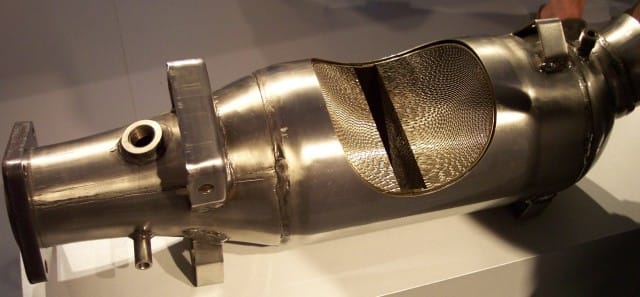
Thieves are now stripping catalytic converters from cars in Portugal at a rate of nearly four a day. The GNR (Guarda Nacional Republicana — National Republican Guard) recorded 685 such thefts in the first half of 2026, up almost 19% from 577 in the same period last year, an increase of 108 offences that the force released on Friday and described as a "criminal dynamic" spreading from the coast into the interior.
Where it is happening
The problem is heavily concentrated around Lisbon and Porto, but the sharpest proportional jumps are inland. The worst-hit districts were:
- Setúbal — 135 cases, 40 more than a year earlier
- Porto — 113 cases (+14)
- Lisboa — 93 cases (+21)
- Aveiro — 59 cases (+22)
Interior districts saw the steepest percentage rises — Portalegre up 200%, Viseu up 150% and Leiria up 71% — which the GNR reads as a sign of the "high geographic mobility" of organised networks moving off the coast in search of easier targets. Of the total, 178 cases were formally classed as robbery. The wider count also captures the growing use of battery-powered angle grinders, which let a thief cut a converter free from underneath a parked car in under a minute.
Why converters, and why now
A catalytic converter is the part of a car's exhaust that cleans harmful gases, and it does so using tiny quantities of platinum-group metals — rhodium, platinum and palladium. Those metals are scarce, industrially essential and, per gram, worth far more than gold; their prices have spiked again in 2026. Because the part sits accessibly under the vehicle and carries no serial number, a stolen converter can be sold to an unscrupulous scrap dealer for a few hundred euros with little risk of being traced. The GNR says it has stepped up inspections of scrapyards, recycling operators and vehicles in response.
What this means for drivers in Portugal
- Some cars are far more exposed: older petrol models and hybrids sit higher off the ground and carry more valuable metals, making them prime targets. Vans and SUVs are also easy to slide under.
- The first sign is usually the noise: a car whose converter has been cut will start with a loud, aggressive roar. If your vehicle suddenly sounds like that, do not keep driving it — the exhaust is now open and the car will fail inspection.
- Prevention is cheap relative to the loss: park in a garage or a well-lit, overlooked spot where possible; a mechanic can weld a protective cage or shield over the converter, or etch the part with your registration number to make it harder to fence.
- Check your cover: a stolen converter typically costs €1,000 or more to replace. Comprehensive insurance (seguro contra todos os riscos) usually covers it, but the standard third-party policy most drivers hold does not.
- Report it: file a report with the GNR or PSP even for what feels like a minor theft — the force's figures, and its ability to target the scrap trade that fuels the crime, depend on incidents being logged.
The trend is not unique to Portugal — catalytic-converter theft has surged across Europe on the back of high metal prices — but the GNR's first-half numbers confirm it is now firmly established here, and moving into towns that had largely been spared until this year.