Nationality Is Not One of the Nine Priorities in Portugal's School Enrolment Rulebook, and Chega Has Tabled a Bill to Add It
Two bills filed on Thursday would give children of Portuguese or EU nationality precedence for school places, and children of Portuguese-origin households whose parents pay social security precedence for creche places, whenever applicants outnumber vacancies.
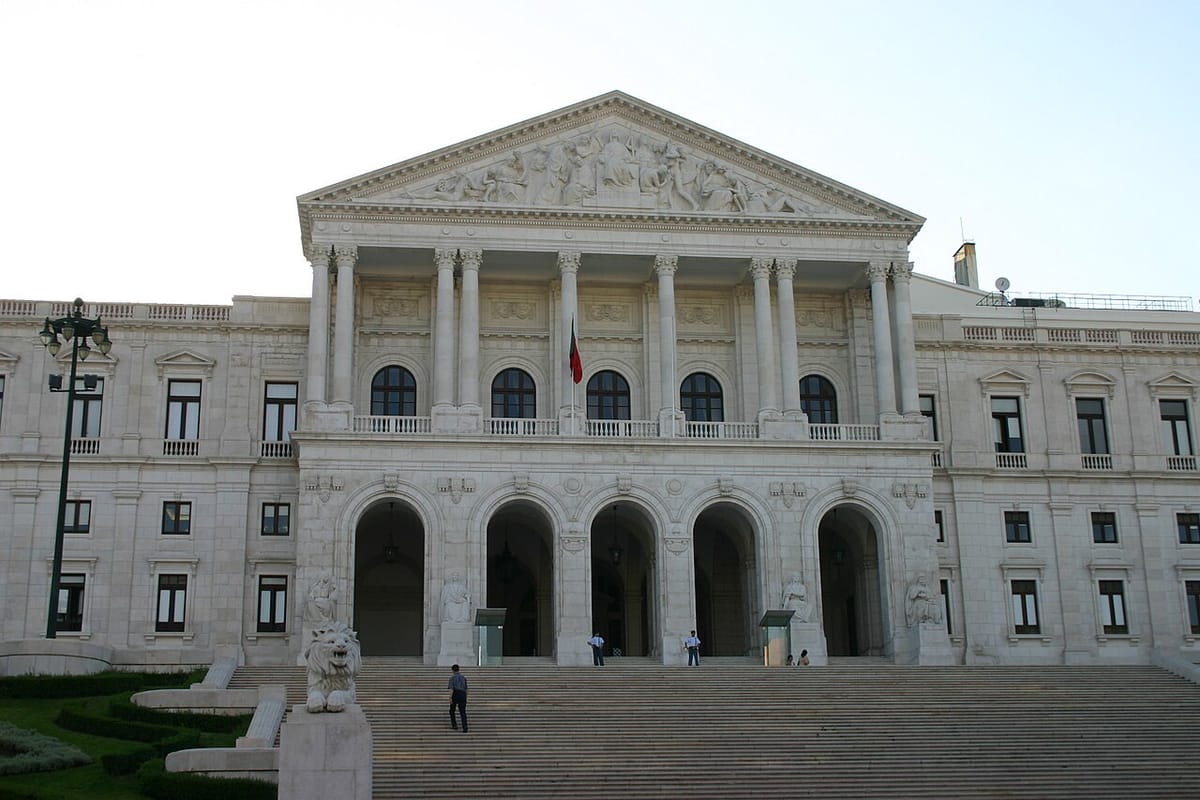
Chega filed two bills in Parliament on Thursday that would insert nationality into the queue for public school and creche places. The first would give priority at matrícula (enrolment) and its annual renewal to children of Portuguese nationality, children of Portuguese parents, and children of citizens of other European Union member states. The second, narrower, would do the same for creche places, but only for households "of Portuguese origin" whose parents contribute to the social security system.
Both would apply only "when the number of candidates exceeds the number of available places", and both are stated to operate "without prejudice to the priority granted to children and pupils with specific educational needs".
Chega's case, and its denial
The party's exposition of motives leans on the Constitution's guarantee of education, then argues that "whenever installed capacity is insufficient, the absence of transparent and objectively fair criteria converts a fundamental right into an administrative competition between families". The deputies deny that this excludes foreign pupils: the distinction, they write, "is not founded on an undifferentiated opposition between nationals and foreigners" but on "Portuguese or European citizenship", and the text "does not exclude any child from the education system nor compromise the guaranteed placement of pupils covered by compulsory schooling".
The rulebook it would amend
Enrolment priorities sit in Despacho Normativo n.º 6/2018 (Regulatory Order 6/2018), amended as recently as April by Despacho Normativo n.º 7/2026. Article 11 sets nine ranked priorities for ensino básico (basic education), in this order: pupils with specific educational needs; pupils who attended pre-school or basic education in the same school grouping last year; pupils with siblings or household members already at the grouping; pupils on ASE social support whose guardians live in the catchment area; ASE pupils whose guardians work in the catchment; pupils whose guardians live in the catchment; pupils who attended a social-sector pre-school in the catchment; pupils whose guardians work in the catchment; and, last, the older applicant.
Pre-school runs differently under Article 10, ordering by age first with eight tie-breakers behind it, and there is a separate 5 percent quota for the children of contract military personnel. Nationality appears nowhere in either article. The current ordering is built on need, continuity, siblings, social support and geography.
The constitutional question
Article 13 of the Constitution says nobody may be "privileged, benefited, prejudiced, deprived of any right or exempted from any duty" on grounds that expressly include ancestry, language and territory of origin. Article 15 says foreigners and stateless persons who are in or reside in Portugal enjoy the rights and are subject to the duties of Portuguese citizens, excepting political rights, public functions that are not predominantly technical, and rights the Constitution and the law reserve exclusively to Portuguese citizens. Whether the ordering of a scarce school place can be one of those reservations is precisely what the bill puts to the house.
The two bills also bite differently. Compulsory schooling obliges the state to place every child, so the school bill reorders a queue for particular schools. Creches sit under Segurança Social (Social Security) and the IPSS network rather than the education ministry, capacity there is genuinely short, and the creche bill adds a contributory test on top of origin.
What this means for foreign residents
- Nothing changes now. These are projetos de lei. They need a vote in the generalidade before any of it is law, and three accompanying resolutions (on the Escola Segura policing programme, municipal training for the non-teaching staff who support pupils with specific needs, and travel allowances for school technicians) carry no legal force at all.
- What actually decides your place today is proven residence or workplace inside the catchment area, and siblings already enrolled at the grouping. ASE social-support status ranks above plain residence.
- The pattern is familiar. Chega conditioned its vote on the single social payment on a five-year contributory wall for immigrants in June. The creche bill's social security condition is the same instrument applied to childcare.
- Background reading: our guide to creches, schools and family benefits.
The bills arrive a fortnight before term starts, which is when placement grievances are loudest and least abstract. The substantive fight will not be about whether Portuguese children should have schools. It will be about whether Article 15 leaves room to sort a queue by passport. Update: the Education Minister told parliament that 380 pupils enrolled in the first week of October, 73 percent of them foreign while 1,301 teaching timetables were still unfilled.