André Ventura Conditions Chega's PSU Generalidade Vote on a Five-Year Contributory Wall for Immigrant Access — Friday Parliament Vote Precedes the 11 June Montenegro Labour-Package Meeting
Chega leader André Ventura confirmed on 8 June that the party could let the Prestação Social Única pass at generalidade if PSD accepts a five-year contributory wall on immigrant access — and announced a 'final meeting' with PM Montenegro on the labour-reform package on Thursday 11 June.
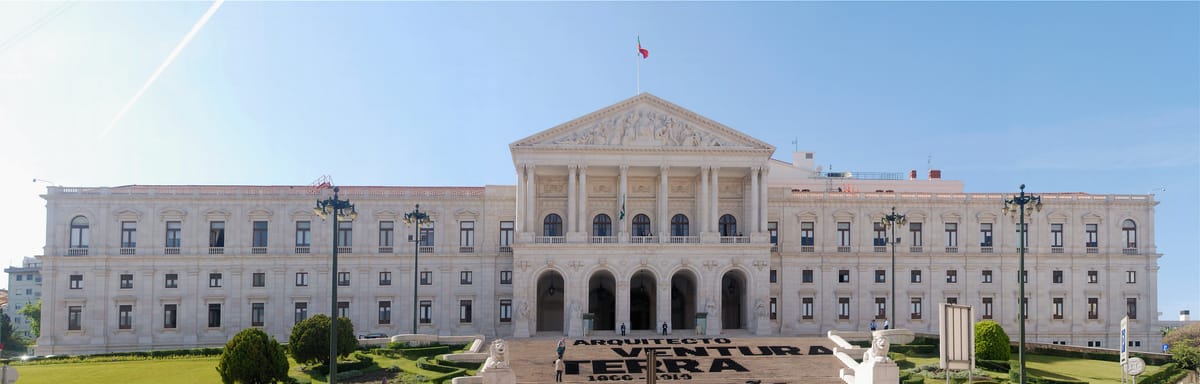
Chega leader André Ventura announced on Sunday, 8 June 2026, that his party is willing to let the Prestação Social Única (PSU, Single Social Benefit) pass at the generalidade (general-principle) vote scheduled for Friday 12 June in the Assembleia da República — but only on two conditions: a five-year minimum contributory wall before immigrants can access the consolidated benefit, and a redistribution of the Rendimento Social de Inserção (RSI, Social Integration Income) envelope toward other social pathways. He also confirmed a "final meeting" with PM Luís Montenegro on the labour-reform package, expected Thursday 11 June.
What the PSU Is
The Prestação Social Única is the Montenegro government's headline social-policy consolidation: it folds several existing means-tested transfers — RSI, Complemento Solidário para Idosos (CSI, Solidarity Top-Up for the Elderly) components, and parts of the abono and prestação de pais cycle — into a single transfer with a unified means test and a single application path. The Ministério do Trabalho, Solidariedade e Segurança Social (MTSSS) frames it as a simplification and as a tool to cut the take-up gap on existing benefits. The opposition has divided on it: PS demands transparency on the financial envelope; Chega frames it as "a fraud" in its current drafting but is willing to push it to the specialty stage where amendments can be tabled.
The Two Chega Conditions on the PSU
- Five-year contributory wall for immigrants: non-Portuguese residents would need at least five years of recorded contributions to Segurança Social before being eligible for the consolidated PSU benefit. This would tighten access materially relative to the current RSI residence-based test of one year for most categories (and longer for some), and would have a direct effect on a population that has expanded sharply since the 2017 nationality reforms and the 2022 expansion of the Manifestação de Interesse channel.
- RSI envelope redistribution: Ventura wants part of the existing RSI spend channelled into other social-policy lines — he has previously pointed to pensions and to disability supports.
Ventura framed both as preconditions to a viabilizar (enabling) vote at generalidade. PSD has not publicly endorsed either condition; the question for Friday is whether the party negotiates the contributory-wall language inside the generalidade text, agrees to negotiate it during the specialty stage, or rejects it and looks for votes elsewhere.
Why the 11 June Montenegro Meeting Matters
The Thursday meeting with the Prime Minister is the procedural climax of months of Chega-PSD trench warfare on the pacote laboral (labour-reform package): the package of changes to the Código do Trabalho (Labour Code) covering termination flexibility, collective-bargaining rules and the bancos de horas regime. Chega has been the determining vote on whether the package clears parliament, and the meeting will fix the final perimeter on which Chega will or will not allow the package through. Ventura said the destino (fate) of the labour reform will be decided in the meeting.
Why This Pair of Decisions Lands Together
The PSU generalidade and the labour-reform decision are not formally linked, but the Chega negotiating play is to bundle them. Both decisions point at the same constituency (lower- and middle-income workers and employers) and both touch immigrant inclusion in the Portuguese social model. A PSU vote that clears with Chega support after a contributory-wall amendment, in the same week that the labour reform also clears with Chega support, would give the Montenegro II government its biggest legislative win since the 2026 General State Budget vote.
What This Means for Expats
- Foreign residents on or near means-tested support: if the contributory-wall amendment lands as drafted by Chega, a five-year contribution record at Segurança Social would become the new floor for access to PSU. This would materially affect newcomers — even those with valid residence permits — whose Segurança Social contributory history is shorter than five years.
- Employers and HR teams: the labour-reform decision on Thursday will fix the new framework for termination, collective bargaining and working-time flexibility for the next political cycle. Expect first portarias and regulamentos within 30–60 days of a clearing vote.
- Workers — Portuguese and foreign: the operational change windows on labour-reform clauses typically run 60–120 days after publication in the Diário da República. Watch contract-renewal cycles and overtime cap clauses in particular.
- Political watchers: Friday is the highest-stakes parliamentary day Montenegro II has faced. The combination of PSU and labour-reform outcomes will set the read on whether PSD-Chega parliamentary cooperation has firmed up or hit a structural ceiling.
The next checkpoints are the Thursday Montenegro-Ventura meeting, the Friday generalidade vote on PSU, and the technical drafting of any contributory-wall amendment during the specialty stage. The specialty timetable is what determines whether a substantive contributory-access change actually lands in the final law or gets diluted in committee. On the rights-and-identity side of the file, Portugal's new ban on full-face coverings in public sets out what the 'lei das burcas' does, its fines and its many exceptions.