Naming Party Donors Would Help Catch Financing Crimes, Portugal's Prosecution Council Advises Parliament
The Superior Council of the Public Prosecution Service backs the aim of three bills to reopen the donor lists that went dark after a data-protection ruling, while faulting the PS text for vagueness and the BE text for lacking any proportionality.
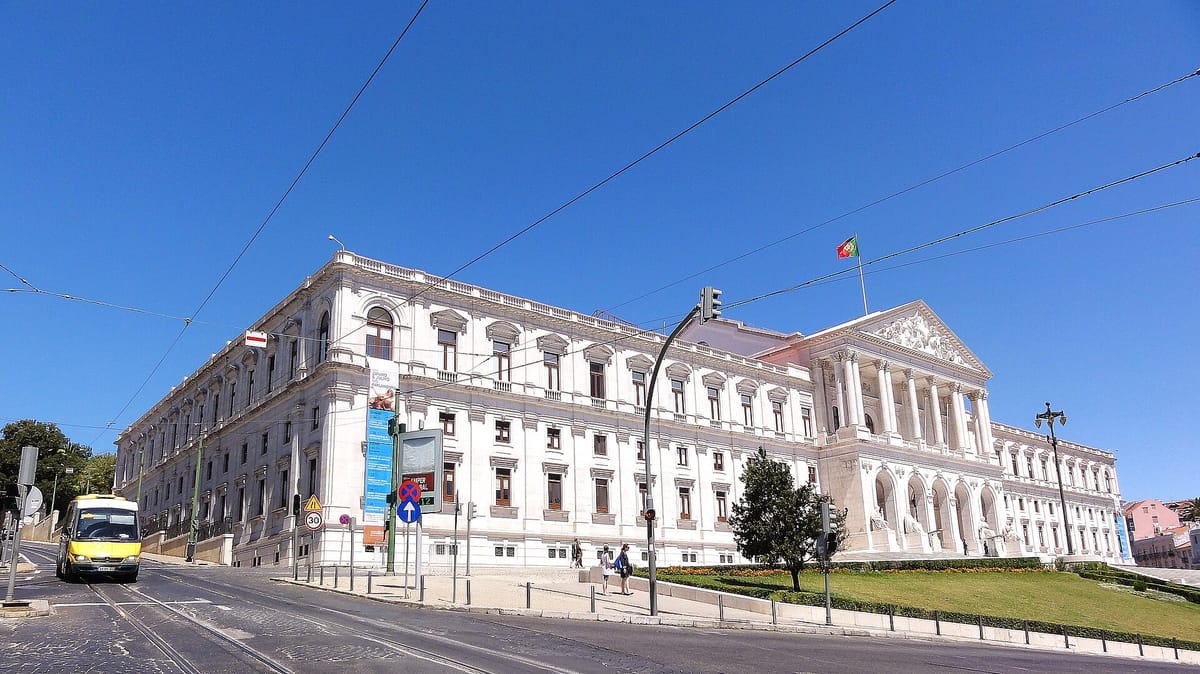
The body that governs Portugal's public prosecutors has told parliament that making the names of party donors public again would help detect crimes in political financing. The opinions land in a dispute that has kept the identity of people who fund Portuguese parties out of public view for most of this year.
The Conselho Superior do Ministério Público (Superior Council of the Public Prosecution Service, CSMP) sent three opinions to the Assembleia da República between July and August, one on each of the bills tabled by the Partido Socialista (PS), Livre and the Bloco de Esquerda (BE). Their content was reported by Lusa on Wednesday and carried by Observador and ECO.
How the donor lists went dark
Until last winter, the Entidade das Contas e Financiamentos Políticos (Political Accounts and Financing Entity, ECFP), which audits party finances, made donor identities available. It stopped after the Comissão de Acesso aos Documentos Administrativos (Commission for Access to Administrative Documents, CADA) issued an opinion finding that the identity of a party donor reveals political convictions and is therefore sensitive personal data under the EU's General Data Protection Regulation. Since then the entity has released donation amounts with the donors' names removed.
As we reported in April, three parties answered with bills to restore access by law.
What the prosecutors' council said
The CSMP's central point is practical. Stronger public access to where donations come from "is capable of facilitating the detection of possible infringements of the party financing regime", it wrote, "contributing indirectly to the effectiveness" of the Public Prosecution Service's work. Breaches of the financing rules can be administrative offences or crimes, and either route can bring prosecutors in.
The council did not wave the bills through. In its opinions on the BE and Livre texts, it accepted CADA's premise that a donor's identity can reveal political preferences, which places it in the special category of personal data under Article 9 of the GDPR and calls for a particularly demanding treatment regime. Whether to override CADA's reading by statute, it said, is a political choice that is not for the council to judge.
On each bill it had something specific to say:
- PS. The council praised the bill for weighing proportionality and data minimisation, since it expressly treats a donor's tax number, bank account, address and contacts as irrelevant to public scrutiny. It found the text vague about what would be published, and said it should state that disclosure covers, at the least, the donor's identity and the amount.
- BE. The council said it was unclear whether the list of donors given to the ECFP would actually become public, and faulted the bill for having no proportionality mechanism, such as treating large and small donations differently.
- Livre. No specific technical comment. Livre's bill would make public the identity of anyone giving 600 euros or more.
The earlier round of opinions
The prosecutors are not the first to review the texts. In May, the ECFP and CADA also sent opinions to parliament, both pointing out flaws. The ECFP called the PS wording ambiguous and asked whether Livre's 600 euro threshold applied to a single gift or to a donor's total for the year. CADA said the BE bill, in practice, kept the current regime in place. CADA also stressed that its own opinions, including the one that ended public access, are not binding. The PS said at the time, through its deputy Pedro Delgado Alves, that it would revise its bill.
None of the reports published on Wednesday gives a date for a debate or a vote on the three bills. Until parliament acts, the ECFP's lists remain anonymous, and anyone wanting to know who funds a Portuguese party can see how much was given but not by whom.