Moura and Barrancos Would Trade Their Free A2 Run for a Toll-Free A6 Under a Socialist Change to the 2027 Budget
A PS amendment approved in committee moves the two Beja district towns into the A6 toll exemption towards Évora, Elvas and Spain, and out of the A2 one. How the Alentejo resident exemption works and what is still unclear.
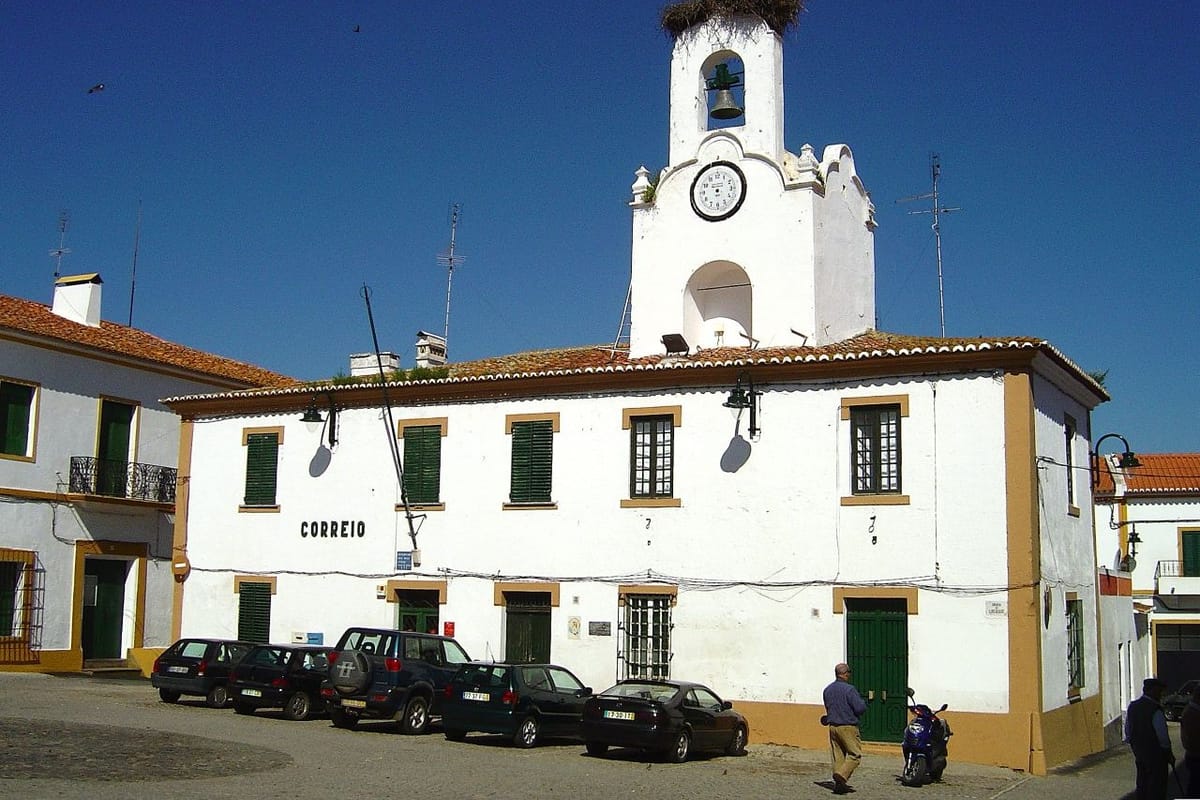
Residents and businesses in Moura and Barrancos, two border municipalities in Beja district, are set to drive toll-free on the A6 motorway towards Évora, Elvas and Spain from next year. The change comes through a Partido Socialista (PS, Socialist Party) amendment to the 2027 State Budget. What the party's announcement on Wednesday 25 November left out is the other half of the amendment: the two towns lose their toll exemption on the A2, the motorway south towards Almodôvar and the Algarve.
The exemption as it stands
The 2026 budget, Lei n.º 73-A/2025, created a toll exemption for people and companies resident or based in each motorway's "area of influence" (article 203). It covers two stretches:
- the A6 from the A2/A6/A13 junction to Caia, on the Spanish border at Elvas, for residents of the Alto Alentejo and Alentejo Central sub-regions (broadly, Portalegre and Évora districts);
- the A2 from the same junction to Almodôvar, for residents of the Baixo Alentejo and Alentejo Litoral sub-regions (Beja district and the coastal Alentejo municipalities in Setúbal district).
The areas follow the NUTS III statistical map, which puts Moura and Barrancos in Baixo Alentejo and therefore on the A2 list. The amendment's own justification says that left them without the exemption "precisely on the stretch they typically use", because their main link to the rest of the country is the A6.
What changes
Amendment 2140C rewrites the definition of the two areas. The A6 area gains "the Municipalities of Moura and Barrancos". The A2 area becomes Baixo Alentejo and Alentejo Litoral "excluding the Municipalities of Moura and Barrancos". The PS calls this "perfect normative symmetry": the towns switch motorway rather than getting both. The roads covered and the rest of the scheme are unchanged.
Parliament's records show the budget committee approved it on 23 November, with votes in favour from Chega, the PS, Livre, the PCP, the Bloco de Esquerda and PAN, abstentions from the PSD and CDS-PP, and the Iniciativa Liberal against. The budget passed its final vote on Tuesday. It still has to be signed by the President and published, and the government bill sets 1 January 2027 as its start date. The change applies to about 14,700 people: 13,258 in Moura and 1,438 in Barrancos at the 2021 census, according to INE (Instituto Nacional de Estatística, the national statistics institute).
In a statement reported by Lusa, the PS federation for Baixo Alentejo said the change "corrects a territorial injustice" and followed consultation with the two towns' mayors.
How the exemption works
The rules are in Portaria n.º 131/2026/1, in force since 1 April 2026:
- only people and firms with an electronic toll contract, such as Via Verde, can use it;
- you apply online to your electronic toll provider to have your on-board device linked to the exemption, attaching the vehicle's registration certificate, or for a leased car a document from the leasing company showing your name and address;
- the exemption runs for one year from the date of the request, and the documents must be sent again every year, 30 days before it ends;
- if they are not, the provider can unlink the device, and a new application carries an administrative fee;
- exempt vehicles must use the electronic toll lanes at the toll plazas.
The amendment contains no transition rule, so it does not say whether drivers in Moura and Barrancos already registered for the A2 will be moved to the A6 automatically or must apply again. Neither the government nor the toll providers have published guidance on that yet.
Sources: Lei n.º 73-A/2025, article 203; Portaria n.º 131/2026/1; PS amendment 2140C to Proposta de Lei n.º 110/XVII and Parliament's budget vote records; INE Census 2021 (all in Portuguese). PS statement as reported by Lusa via Observador.