Portugal's 2027 Budget Clears Parliament on Socialist Abstentions, and the Government Now Decides Which Opposition Changes It Will Carry Out
Only the PSD and CDS-PP voted for the 2027 budget on 24 November; the PS and JPP abstained. The government says opposition changes push it to a 0.2 percent deficit and will review each one, as Brussels warns spending is growing too fast.
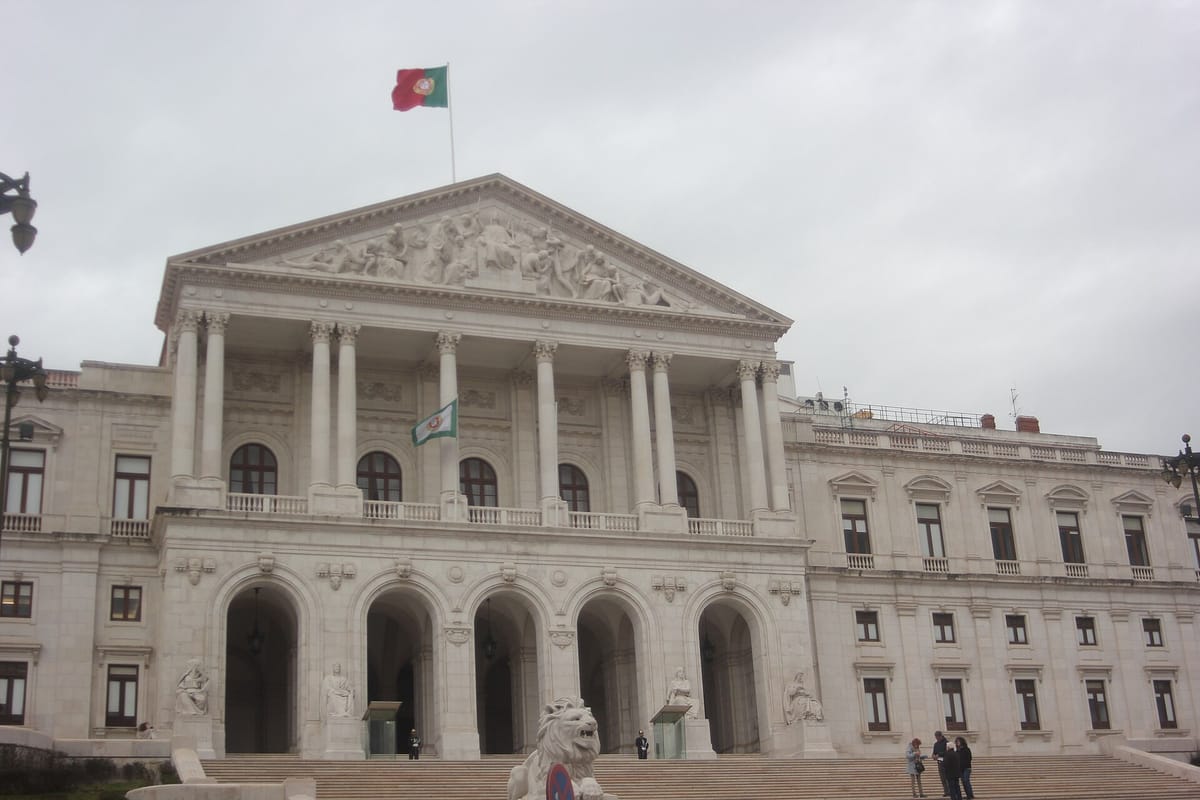
Portugal's State Budget for 2027 passed its final vote in the Assembleia da República (Parliament) on Tuesday 24 November, but it is not the budget the government sent in. Only the governing PSD and CDS-PP voted in favour. The Partido Socialista (PS, the Socialists) and the single JPP MP abstained, which was enough to let it through. Chega, the Iniciativa Liberal (IL), Livre, the PCP, the Bloco de Esquerda and PAN voted against, RTP and the Lusa news agency reported (in Portuguese).
As at the first vote on 29 October, the Socialist abstention carried it; PAN, which abstained then, voted against this time. In between, during the article-by-article committee votes, the PS and Chega joined forces several times to change the bill against the government's wishes.
What the opposition wrote in
Among the changes approved against the governing parties' votes, several of which we have covered as they happened:
- Zero VAT on a basket of essential foods from January to March 2027;
- this year's one-off pension bonus turned into a permanent rise;
- the 10 percent IRS rate for landlords letting at moderate rents repealed;
- public university fees frozen for 2027/2028.
Other measures passed with broader support, such as the higher income line for the social energy tariff. Some changes were defeated: a move to close IFICI, the tax regime for incoming researchers and skilled workers, failed after a Chega U-turn. A rule requiring the public broadcaster RTP to show bullfights, written in by Chega with PSD and CDS-PP votes, also stayed in.
A deficit of 0.2 percent, on the government's figures
In the closing debate the Secretary of State for the Budget, José Maria Brandão de Brito, said the changes cut the budget balance by 800 million euros, which on the government's own figures turns the planned small surplus into a deficit of 0.2 percent of GDP. The PS rejected that. Its deputy leader in Parliament, António Mendonça Mendes, accused the government of having booked some spending as financial assets rather than as expenditure, and said budget execution would show who was responsible for any deficit. Last weekend the Finance Minister had put the cost of the PS and Chega changes at a deficit of up to 0.7 percent.
Prime Minister Luís Montenegro told Parliament that if the government simply carried out what the PS and Chega had approved, the deficit would be 0.2 percent, "but we are not going to have that deficit", because the government would spend the year correcting what he called the opposition's errors. He said the government would "do everything to avoid a political and constitutional crisis" and would distinguish between opposition rules that are binding and those that are only recommendations. He named the three-month VAT cut on essential foods as one measure he considered bad for people.
What happens next
The Finance Minister, Joaquim Miranda Sarmento, told CNN Portugal on Tuesday night that "each one" of the approved changes would now be analysed and that the government would take its decisions in due course, ECO reported (in Portuguese). He would not confirm that families can count on zero VAT on food from January, and said the PS had not specified which foods it covers. According to Observador, as cited by ECO, the government is weighing whether to take some measures, including the VAT exemption and the permanent pension rise, to the Tribunal Constitucional (Constitutional Court). No decision has been announced.
Under the Constitution (in Portuguese), the final text now goes to the President of the Republic, António José Seguro. He has 20 days from receiving it to sign it into law or veto it (article 136). Within the first eight days he can instead ask the Constitutional Court to review any rule before it takes effect (article 278). Once the law is in force, the Prime Minister is among those who can ask the court to strike down a rule (article 281).
Brussels: compliant, but spending grows too fast
On the same day, the European Commission published its formal opinion on Portugal's 2027 draft budget, which assesses the government's plan as submitted on 9 October, before the opposition's changes. It finds that the plan complies with the EU's Stability and Growth Pact, because the budget is projected to be close to balance and public debt keeps falling.
- The Commission's autumn forecast puts the 2027 deficit at 0.1 percent of GDP, against the 0.1 percent surplus in the draft, and public debt at 83.2 percent of GDP at the end of 2027.
- Net spending, the EU's main yardstick, is forecast to grow by 4.3 percent in 2027, against a ceiling of 1.2 percent set by EU finance ministers. After allowing for extra defence and energy-security spending, the cumulative overshoot since 2023 reaches 2.0 percent of GDP, well above the 0.6 percent threshold.
- The Commission concludes that Portugal "is at risk of materially exceeding" its spending ceiling in 2027 and says rising global bond yields call for "prudent fiscal policy".
Asked about the government's new 0.2 percent figure, the Economy Commissioner told reporters in Brussels that such a deficit would in theory still count as close to balance, but that the Commission regularly reassesses member states' budgets, RTP reported. Its autumn forecast last week already saw small deficits returning from 2027. The next formal assessment comes in the Commission's spring package, due in early June 2027.