Mota-Engil Spins Its African Mining Arm Into a Standalone Company, Clearing a Path for Outside Investors
Mota-Engil has hived off its mining-services business -- 11 contracts across Africa and Armenia that earned EUR732 million in 2025 at a 30% margin -- into a new company, Mota-Engil Mining Services, a move that could open the unit to outside investors.
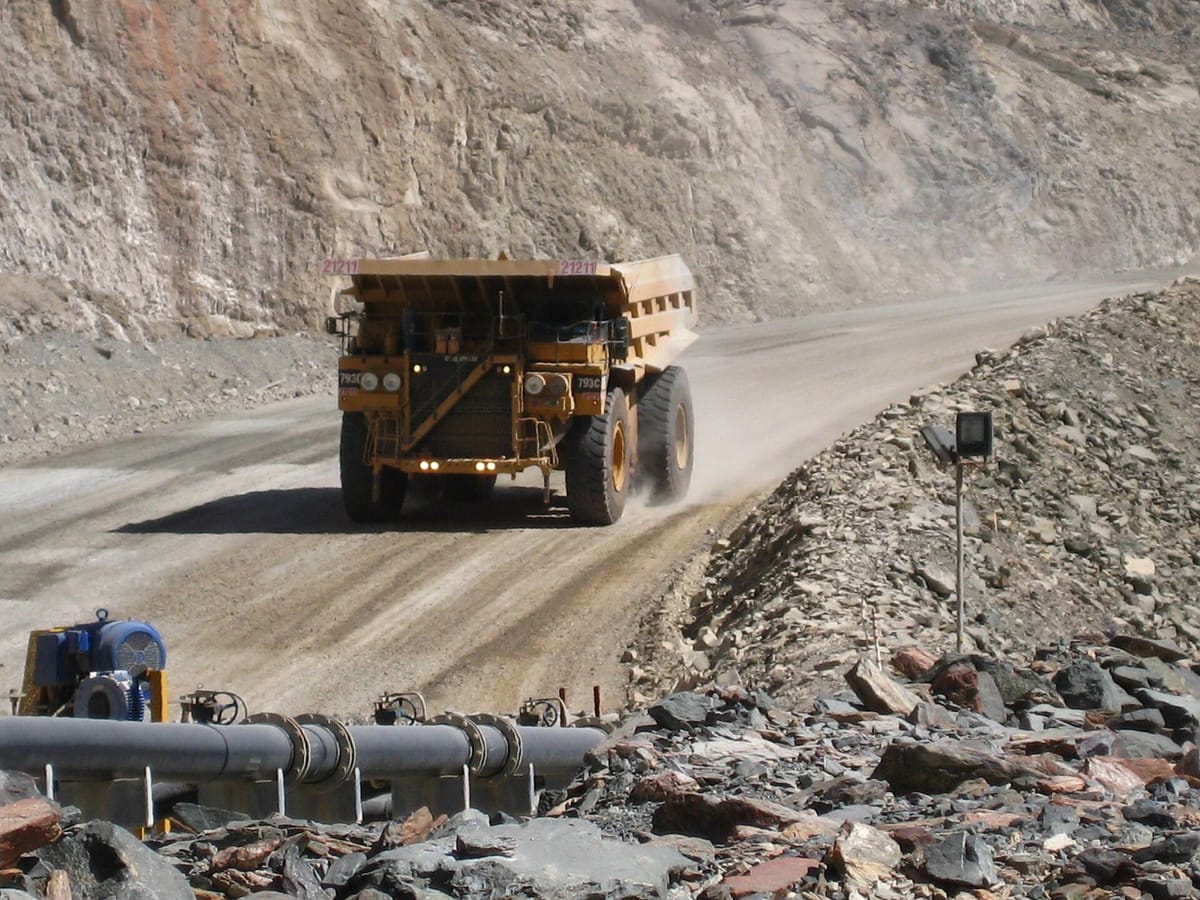
Mota-Engil, Portugal's largest construction group, has carved its fast-growing mining business out into a company of its own — a corporate reshuffle that tidies up a lucrative sideline and quietly sets it up for outside money. The group constituted a new vehicle, Mota-Engil Mining Services, last week, and will fold into it the mining-services contracts it currently runs, according to reporting by the business daily Jornal de Negócios.
The unit is small in headcount but not in earnings. Mota-Engil holds 11 mining-services contracts, concentrated in Africa — where the group has spent two decades building roads, dams and railways — with one further contract in Armenia. Together they generated €732 million in revenue in 2025 at an EBITDA margin of around 30%, a level of profitability that outstrips the thinner margins of traditional civil construction. Under a mining-services contract, Mota-Engil does not own the ore; it is hired by a mine operator to do the heavy work of extraction and earth-moving, billing for the service rather than betting on commodity prices.
Autonomising that activity into a standalone company is the kind of move that usually precedes a search for partners. The group's vice-chief executive, Manuel Mota, flagged as much in March, when he presented the company's strategic plan to 2030 and acknowledged that opening the capital of the mining business to new investors was a possibility under study — one that would depend on the offers that materialised. Housing the contracts, staff and margins in a single, clearly bounded entity makes it far easier to value, to ring-fence and, if the price is right, to sell a slice of.
It also fits a broader ambition. Mota-Engil has signalled that it wants to move up the value chain from merely servicing other companies' mines toward exploring and operating its own, a step that would give it exposure to the minerals — including the critical raw materials prized by the energy transition — rather than just a fee for digging them out. A well-capitalised, separately managed mining arm is the natural platform for that leap, and a way to fund it without loading the parent's balance sheet.
The company is one of the heavyweights of the Lisbon stock market and one of the few Portuguese multinationals with genuine global reach, employing tens of thousands of people across Africa, Latin America and Europe. Its fortunes have long been tied to emerging-market infrastructure spending, which makes the higher-margin, more resilient mining business an attractive counterweight to the boom-and-bust of public works.
For readers in Portugal, the reshuffle is less about day-to-day life than about the shape of a homegrown champion. Mota-Engil is a bellwether for how Portuguese capital travels abroad and how it plans to profit from the scramble for the metals that will wire the coming decades. Turning a profitable African sideline into a company that can stand — and raise money — on its own is a bet that mining, not just building, is where the group's next chapter lies.