More Than a Third of Portugal's Medical Students Are Weighing a Move Abroad, According to a Survey of 700 by Their Association
ANEM surveyed about 700 students at Portugal's 11 medical schools: 36 percent are considering working abroad, and most want shorter hours and better pay. Official data show 469 specialist training places went unfilled this year.
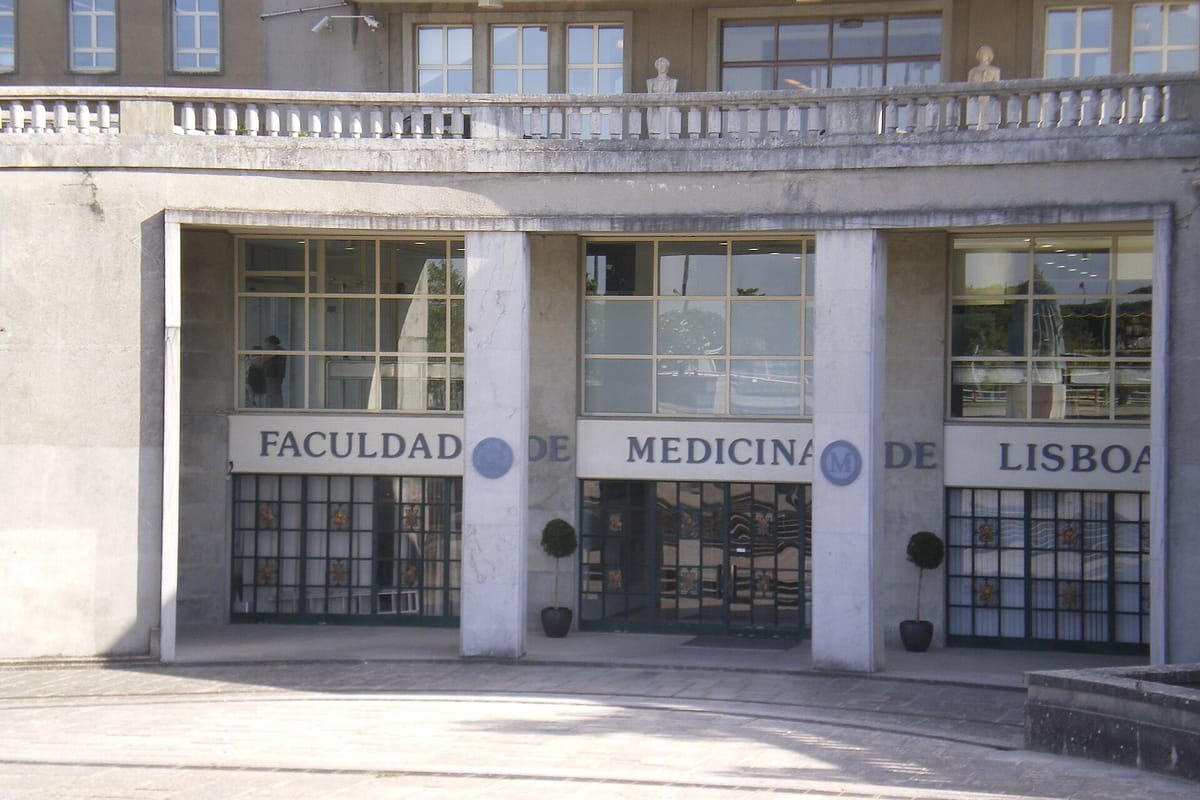
More than one in three medical students in Portugal are considering emigrating once they qualify, according to a survey by the Associação Nacional de Estudantes de Medicina (ANEM, National Association of Medical Students). The study, "Presente e Futuro I: A Visão dos Futuros Médicos" (Present and Future I: the view of future doctors), was presented on Wednesday and reported by the Lusa news agency, whose story ran on Observador and RTP.
About 700 students from Portugal's 11 medical schools took part. Of them, 36 percent said they are weighing a move abroad, 29.4 percent are undecided and 34.8 percent ruled it out. The full report is not yet on ANEM's website, so details such as how the students were recruited and when they answered are not known, and the figures below are ANEM's as reported by Lusa.
What the students want changed
Asked what most urgently needs to change in the profession, 49.8 percent named working hours, overtime and work-life balance, and 46.1 percent named pay. Students also listed career progression, professional recognition and paperwork, which they say eats into time with patients. They rated workload, bureaucracy, short consultation time and poor equipment as worse in the Serviço Nacional de Saúde (SNS, the national health service) than in the private and social sectors.
The SNS is still a career option for most, but the majority want to split their time between public and private work. ANEM's president, Maria Fontão, told Lusa that students may no longer choose the SNS's full-dedication regime. The survey also found a stronger pull towards hospital work than primary care, and a link between the school a student attends and the region where they want to practise.
Training places already go unfilled
The survey lands on top of official figures showing that the SNS struggles to fill its training posts. Data on the SNS Transparency Portal show that, of the 2,323 specialist training places for doctors who started in January 2026, 469 were left empty. Family medicine accounted for almost half of them: 229 of its 690 places went unfilled. Four years earlier, only 50 places in all specialties were left empty.
ANEM said in March that many young doctors now put off specialist training when the specialty they want is not available, rather than take another. Fontão repeated the point on Wednesday, and called for more incentives to draw doctors into the specialties that are short of them.
What it means for patients
Most residents, foreign residents included, see an SNS doctor through their local health centre. In June 2026, 1,672,130 people registered with SNS primary care had no family doctor assigned, 15.5 percent of the 10.8 million registered, according to the Transparency Portal. That is about 2,400 more people than a year earlier, although the share fell slightly, from 15.7 percent, because more people are registered. The family doctors' association has said every patient could have one by 2029, but that depends on new specialists staying in the SNS, and four in ten incentivised posts in underserved areas went unfilled in 2025.
What happens next
This year's vacancy map offered 2,338 specialist training places, chosen online for the first time. The next Prova Nacional de Acesso (National Access Exam), which ranks candidates for specialist training starting in 2027, takes place on 25 November 2026, according to the Administração Central do Sistema de Saúde (ACSS, Central Administration of the Health System). No response from the Health Ministry to the survey had been reported by Wednesday evening. ANEM says it wants the findings used in planning the health workforce, so that Portugal not only trains doctors but keeps them.