Metal Detecting in Portugal in 2026: A Practical Guide to the Lei 121/99 Ban, the One-Year Licence Only the Culture Ministry Can Grant, the 48-Hour Rule on Anything You Find, and the Detector the State Confiscates
Portugal prohibits metal detecting for anything of historical, artistic, numismatic or archaeological interest, then licenses a narrow exception one year at a time. Carrying an unlicensed detector across a classified site is itself an offence, and the penalty takes the machine.
Most countries regulate metal detecting. Portugal starts from the other end: it prohibits it, and then allows a narrow, licensed exception. If you have moved here with a detector in a box in the garage, or you have seen one for sale in a Portuguese shop and assumed that selling it implies you may use it, this is the guide to what the law actually says, who issues the licence, what you must do in the 48 hours after you dig something up, and what the state takes off you if you get it wrong.
The prohibition comes first
The governing statute is short. Lei n.º 121/99, de 20 de agosto, ten articles long, is titled simply "Utilização de detectores de metais" (Use of metal detectors). Article 1(1) states that "the use of metal detectors in searching for objects and artefacts relevant to history, art, numismatics or archaeology is prohibited".
Article 1(2) adds a second, wider ban: the use and the transport of unlicensed metal detectors for the purpose of prospecting at classified monuments and archaeological sites, or ones in the process of being classified, is prohibited. Note the word transport. Walking across a classified site with a detector in your rucksack, having switched it off, is inside the prohibition.
The law as enacted cross-referred to Lei n.º 13/85, the old cultural heritage framework. That was repealed and replaced by Lei n.º 107/2001, de 8 de setembro, which is the classification regime the reference now runs to.
The one-year licence
Article 2 of Lei 121/99 creates the exception. It is the member of government responsible for culture, acting through the body charged with protecting cultural heritage, who may authorise the use of a metal detector by granting a licence. That body is now Património Cultural, I. P., created by Decreto-Lei n.º 78/2023, de 4 de setembro, which took over the attributions of the former Direção-Geral do Património Cultural (Directorate-General for Cultural Heritage).
Three things about that licence matter in practice:
- It is discretionary and purpose-bound. The decision is made "in function of the objectives to be achieved, the locations to be prospected and the scientific suitability of the applicant". That last phrase, idoneidade científica, is doing most of the work. The licence is designed for archaeological research, not for a hobby.
- It lasts one year. Article 2(2) fixes the validity at twelve months, on application.
- The application names the ground. The requerimento must contain the applicant's identity, the objective of the prospection, the locations to be prospected, and the characteristics of the detection device. You cannot get a general licence to sweep the country.
The same duty appears from the heritage side. Article 75(6) of Lei 107/2001 provides that the use of metal detectors, and of any other detection equipment or process intended for archaeological investigation, depends on the prior issue of a licence.
Where archaeology becomes a regulated profession
Article 77 of Lei 107/2001 defines archaeological works as all excavation, prospection and other investigation aimed at discovering, understanding, protecting or valuing archaeological heritage, and specifies that prospecções are surface explorations without removal of ground. Article 77(4) requires such works to be directed by archaeologists and authorised by the competent heritage body. The Regulamento de Trabalhos Arqueológicos (Regulation of Archaeological Works), Decreto-Lei n.º 164/2014, de 4 de novembro, sets out the qualification requirements in detail.
There is one useful carve-out. Article 77(5) says chance finds, and finds occurring as a consequence of earth removal, demolition or works of any kind, are not archaeological works for the purposes of the law. Turning something up while digging a foundation does not retroactively make you an unlicensed archaeologist. It does trigger the next rule.
The 48-hour rule
Article 78(1) of Lei 107/2001 is the provision every resident should know, detector or no detector:
Whoever finds, on public or private land, or in a submerged environment, any archaeological testimony is obliged to give notice of the find within forty-eight hours to the competent cultural heritage administration or to the police authority, which will secure the custody of those testimonies and immediately inform the former.
Two points follow. The clock is 48 hours from the find, not from when you get around to it. And a police station counts: you do not need to reach a heritage office. Article 78(2) then provides that the chance discovery of movable archaeological goods with commercial value gives the finder a right to a reward.
Underwater, and what counts as underwater
Anything in or under water has its own statute, Decreto-Lei n.º 164/97, de 27 de junho, and its definition of "património cultural subaquático" is far wider than shipwrecks. Article 1 covers the territorial sea, watercourses, lakes, lagoons, quays and ditches, together with their beds and margins; waters subject to tidal influence in rivers and lakes; marshes; groundwater; the water in wells and reservoirs; and periodically flooded or silted-up zones. Article 1(2) adds objects washed ashore.
Article 2 is the one that surprises people: goods covered by Article 1 with no known owner are the property of the State. Anything not recovered by its owner within five years of being lost, abandoned or otherwise separated from them is treated as having no known owner.
The procedure runs like this:
- Report within 48 hours (Article 12) to the customs post, the local maritime authority with jurisdiction over the spot, any other police authority, or the heritage body directly.
- Late reporting forfeits your rights. Article 12(3): absent justified cause, failure to report within the deadline means the finder loses their rights, without prejudice to civil, criminal and administrative liability.
- An auto de achado fortuito is drawn up (Article 13), recording the nature of the find, the place, day and hour of discovery, and the finder's identity. You are entitled by law to a copy of it and a receipt for the deposit of the object.
- The reward is half. Article 20(1): the finder is entitled to half the value of the chance find that is subsequently inventoried. Where the find is a coherent, delimited archaeological complex rather than an object, the reward runs off a scale set by joint ministerial portaria.
- Works stop. Article 15: where dredging, earth or sand removal or prospecting turns up covered goods, the works must be suspended immediately, and the heritage body has ten days from receiving the auto to decide whether they may continue.
Because the definition reaches tidal zones and beaches, the maritime authority rather than the GNR is often the body that turns up when a detector is being used on the shoreline.
What the Civil Code says, and why it usually does not help
People reach for the treasure rule. Article 1324 of the Código Civil provides that whoever discovers a hidden or buried movable thing of some value and cannot determine its owner becomes owner of half of it, the other half belonging to the owner of the thing or land in which it was hidden. Article 1324(2) requires the finder to announce the find or notify the authorities, except where it is evident the item was hidden or buried more than twenty years ago. Article 1324(3) is the sting: a finder who does not comply, or who keeps the find knowing who the owner is, or conceals it from the owner of the land, forfeits those rights to the State.
Article 1323 covers ordinary lost property: announce the find in the manner most appropriate to its value and local practice, notify the authorities, and if nobody claims it within a year, it becomes yours.
Neither article rescues an unlicensed detectorist. If what you found is archaeological, the heritage statutes govern and the 48-hour duty applies. And Article 1324's twenty-year exemption is precisely the window in which something starts becoming interesting to an archaeologist, so relying on it is a poor bet.
What it costs to get it wrong
The fines are still written in escudos, which is a reliable sign that nobody has revisited them since the currency changed. Converted at the fixed rate of 200.482 escudos to the euro:
- Lei 121/99, Article 5. Breaching Article 1 (the prohibition) or Article 3 (the sales rules) is a contraordenação punishable by a fine of 500,000$00 to 1,000,000$00 for an individual, which is 2,493.99 to 4,987.98 euros, and 1,500,000$00 to 9,000,000$00 for a company, or 7,481.97 to 44,891.81 euros. Negligence is punishable at half those minima and maxima. Attempt is punishable.
- Lei 121/99, Article 6. The accessory sanctions are the ones that hurt: forfeiture of the metal detector used, and forfeiture of any archaeological, historical, artistic or numismatic goods found. If the conviction becomes final and declares them forfeit to the State, the culture minister decides what happens to them.
- Lei 107/2001, Article 105(a). Violating Article 75(6), the licence requirement, is a serious contraordenação: 350,000$00 to 3,500,000$00, or 1,745.79 to 17,457.93 euros for an individual, and 3,500,000$00 to 20,000,000$00, or 17,457.93 to 99,759.58 euros, for a legal person.
- Lei 107/2001, Article 105(b). The same bracket applies to breaching Article 78(1), the 48-hour notification duty.
- Lei 107/2001, Article 103. Destroying archaeological traces, goods or indications through non-observance of legal or regulatory provisions is a crime, punishable with up to three years in prison or a fine of up to 360 days.
- Decreto-Lei 164/97, Article 22. Underwater breaches run from 30,000$00 (149.64 euros) at the bottom of the scale to 750,000$00 (3,740.98 euros) for individuals, with company brackets reaching 9,000,000$00, or 44,891.81 euros. Article 24 allows forfeiture of the vessels, instruments or equipment used, and a ban on the related activity.
The rule the shop has to follow
Article 3 of Lei 121/99 puts obligations on sellers, not buyers. All advertising for metal detectors must reproduce the text of Article 1 and the penalties in the law, and the same text must be handed to the buyer by the retailer at the moment of sale. A warning in Portuguese must be applied to the packaging in a way that is easily visible.
So if you bought a detector in Portugal and received no such document, the shop was in breach, not you. That does not make your use of it lawful. But it does explain why so many Portuguese detector owners have never heard of the prohibition: the notice that was supposed to tell them was never handed over.
Enforcement, and who to call
Article 4 of Lei 121/99 puts supervision on the heritage body, and says complaints about breaches may be filed with it. Article 7 splits the contraordenação files between the heritage body and the inspection service for cultural activities, depending on which one raised the notice; the heritage body applies the fines and accessory sanctions. On the ground, the GNR and PSP have general powers, and the Polícia Marítima covers the shoreline and inland waters. Article 9 divides the fine revenue 60 percent to the State and 40 percent to the heritage body.
What this means for you
- If you own a detector and want to use it legally: the only clean route is a licence application to Património Cultural, I. P., naming your objective, the specific locations and the device, and demonstrating scientific suitability. Realistically that means a research context, which for most people means joining a project rather than applying alone.
- If you were planning to sweep a beach for lost rings: a modern wedding band is not an object "relevant to history, art, numismatics or archaeology", so it falls outside Article 1(1) on its face. But beaches, tidal zones and river margins sit inside the underwater heritage definition, coins turn up constantly, and the moment something old surfaces you are in the 48-hour regime with an unlicensed detector in your hand. Detectors have been seized on Portuguese beaches.
- If you are near a classified monument or site: Article 1(2) bans carrying an unlicensed detector there at all. Check the heritage search on patrimoniocultural.gov.pt and your municipality's PDM archaeological charter before you go anywhere with one. Protection zones extend beyond the monument itself.
- If you find something by accident: stop, leave it where it is if you can, photograph it in place, note the coordinates, and report it within 48 hours to the nearest GNR or PSP post or to Património Cultural, I. P. On or in water, report to the maritime authority or customs post and insist on a copy of the auto de achado fortuito, because that document is what secures your entitlement to a reward.
- If you are a landowner and someone asks permission to detect on your land: your permission does not substitute for the licence, and under Article 1324 of the Civil Code half of any treasure would in principle be yours anyway. Under the heritage regime, archaeological material is not.
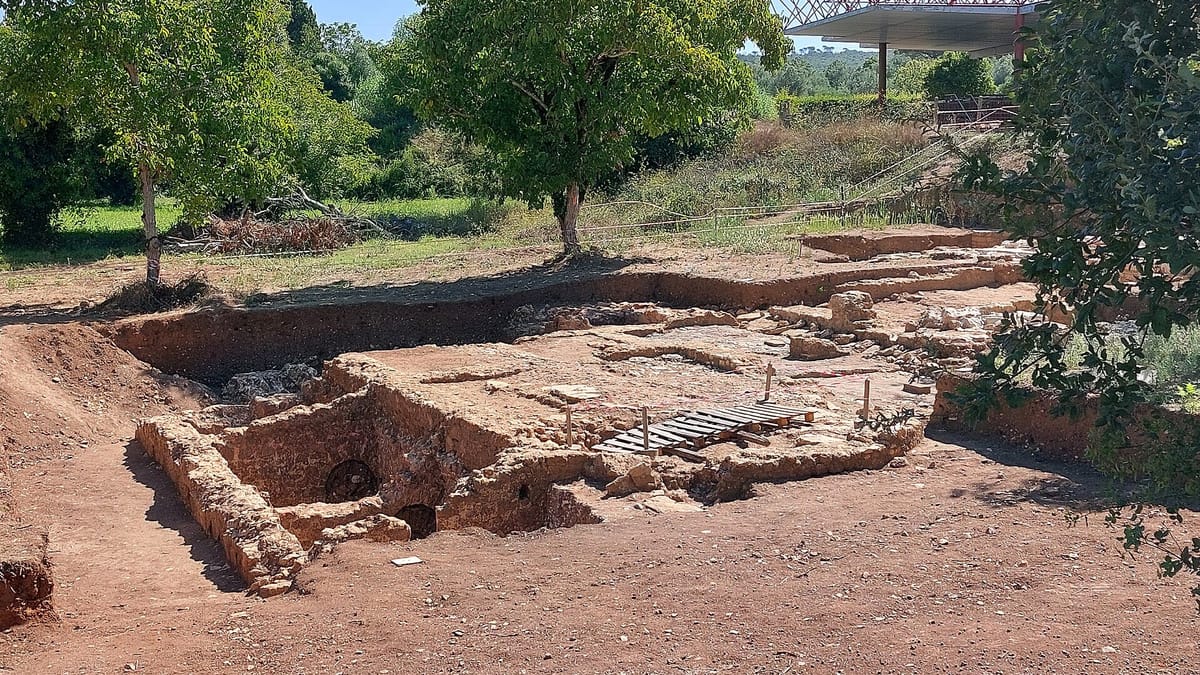
- If you want the hobby without the risk: Portugal runs public archaeology programmes, and municipalities open working excavations to visitors, as Almada did with its castle and old-town digs. The Jornadas Europeias da Arqueologia each summer are the other regular entry point.
The pattern here is the same one that governs felling a tree on your own land or putting a line in a Portuguese river: the activity is not framed as a freedom with limits, but as a restriction with a licensed exception. With metal detectors the exception is unusually narrow, the accessory penalty takes the machine as well as the money, and the 48-hour clock applies to everybody, including the person who was not looking for anything at all.