Markets, Business & Tech Briefing: PSI Slips as State Re-enters REN
📋 In This Edition
- Market Wrap: A Softer Monday as Retail and Grid Names Lead the Retreat
- The Big Story: The State Buys Its Way Back Into REN After 12 Years
- Pharol: Frankfurt Clears João Moreira Rato for the Chair
- Bonds and the Euro: Lisbon Holds Firm as Core Europe Sells Off
- The Day Ahead
Market Wrap: A Softer Monday as Retail and Grid Names Lead the Retreat
Lisbon reopened the week on the back foot. The PSI index (Portuguese Stock Index) closed Monday, 17 August, at 9,219.73 points, down 0.38% — a fall of about 35 points that unwound the last of Friday's flat 9,254.52 finish and left the benchmark chasing a broadly red session across Europe. The damage was concentrated in two corners of the market. The retail heavyweights led the slide, with the pan-European grocer Jerónimo Martins off 1.57% to €16.94 and the retail-to-telecoms group Sonae the day's biggest faller, down 1.58% to €1.99. They were joined by the grid operator REN — Redes Energéticas Nacionais (National Energy Networks), which slipped around 0.9% to €3.51 as investors digested news of a change in its shareholder register (more below).
The cushioning, as so often this summer, came from energy. The oil major Galp Energia rose 0.87% to €20.99, the single biggest prop under the index, while the bank Banco Comercial Português (BCP) added 0.46% to €1.10 and the renewables developer EDP Renováveis (EDP Renewables) held flat at €13.59. Elsewhere the tape was gently negative: the utility EDP eased 0.64% to €4.52, the paper-and-pulp maker Navigator gave up 0.62% to €3.21 and the telecoms group NOS dipped 0.17% to €4.84. With the year's earnings season now behind it, Lisbon was left to trade off headlines and the mood in the wider region — and on Monday both pointed mildly lower.
The Big Story: The State Buys Its Way Back Into REN After 12 Years
The week's defining corporate story is a return of the state to the country's electricity backbone. Parpública, the government's holding company, has agreed to acquire 91,723,676 shares in REN — about 13.7% of the grid operator's capital — from Pontegadea Inversiones, the investment vehicle of the Zara founder Amancio Ortega. Priced against REN's €3.54 close last Friday, before the deal became public, the stake is worth roughly €324.7 million. It is a landmark move: the transaction marks the Portuguese state's first direct holding in REN in 12 years, since it sold its last roughly 11% position in 2014 during the post-bailout wave of privatisations.
The mechanics reshuffle REN's top table. Pontegadea had been the operator's second-largest shareholder, and its exit hands that position back to the state; the single biggest holder remains China's State Grid, with 25%. For a company that owns and runs Portugal's high-voltage electricity network and its gas transmission grid — infrastructure at the heart of energy security and the multibillion-euro build-out the country needs for its renewables push — the identity of the anchor investors is more than a footnote. The deal still has a hurdle to clear: completion is subject to sign-off by the Tribunal de Contas (Court of Auditors), which vets major public commitments. The market read the news cautiously, nudging REN's shares lower on the day, but the strategic signal is unmistakable — Lisbon wants a seat back at the table of a business it considers a national asset.
Pharol: Frankfurt Clears João Moreira Rato for the Chair
A long-running governance change at Pharol — the listed holding company that was once Portugal Telecom SGPS and whose main asset is a stake in Brazil's Oi — cleared its final gate on Monday. The Banco Central Europeu (European Central Bank) gave its green light for João Moreira Rato to take over as chairman of Pharol's board, the last approval needed after shareholders elected him at an extraordinary meeting on 30 July for a term running to the end of 2028. He succeeds Luís Palha da Silva.
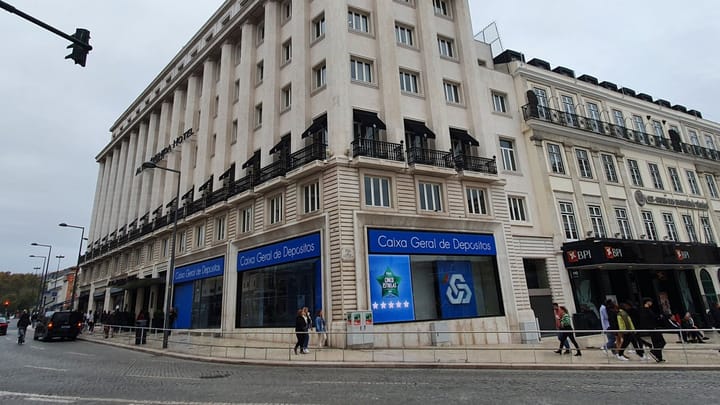
The reason the appointment needed a nod from Frankfurt is itself telling: Moreira Rato sits as a non-executive director at Caixa Geral de Depósitos (CGD), the state-owned bank, and the ECB signs off on the fitness of anyone straddling a supervised lender and another board of consequence. His is a familiar name in Portuguese finance — an economist who ran the IGCP (Treasury and Debt Management Agency), the body that manages the country's public debt, between 2012 and 2014, during the sharpest years of the sovereign crisis. The clearance draws a line under Pharol's leadership question and lets a shareholder base long frustrated by the Oi saga turn to the harder task of salvaging value from it.
Bonds and the Euro: Lisbon Holds Firm as Core Europe Sells Off
The more striking action on Monday was in government bonds, where the periphery outshone the core. Portugal's 10-year Obrigações do Tesouro (Treasury bonds) barely moved, yielding around 3.56% — all but unchanged on the day — even as the eurozone's benchmark issuers sold off hard. German 10-year Bund yields pushed to roughly a 15-year high and French yields to their highest since 2009, driven by a familiar cocktail of sticky inflation, heavy defence and infrastructure spending, and a fresh bout of geopolitical nerves around the Strait of Hormuz. That Lisbon held its ground while Berlin and Paris gave way is the quiet good-news story of the session: it keeps the spread Portugal pays over the German Bund near its historically slim levels, the reward for a run of budget surpluses and a debt pile falling below 90% of output. On the currency, the euro held broadly steady, trading around $1.16, with no fresh catalyst to shift it before the next run of United States data.
The Day Ahead
Tuesday brings a light domestic calendar, so Lisbon will again take its cue from abroad: the trajectory of core-Europe bond yields will set the tone for the PSI's rate-sensitive banks and utilities, while the oil price decides whether Galp can keep doing the index's heavy lifting. Closer to home, watch for any detail on the timeline and conditions attached to Parpública's REN purchase as it heads toward the Court of Auditors — the first test of how cleanly the state can slot back into a company it left behind more than a decade ago.